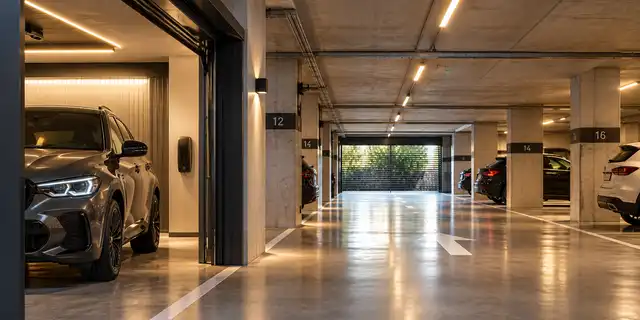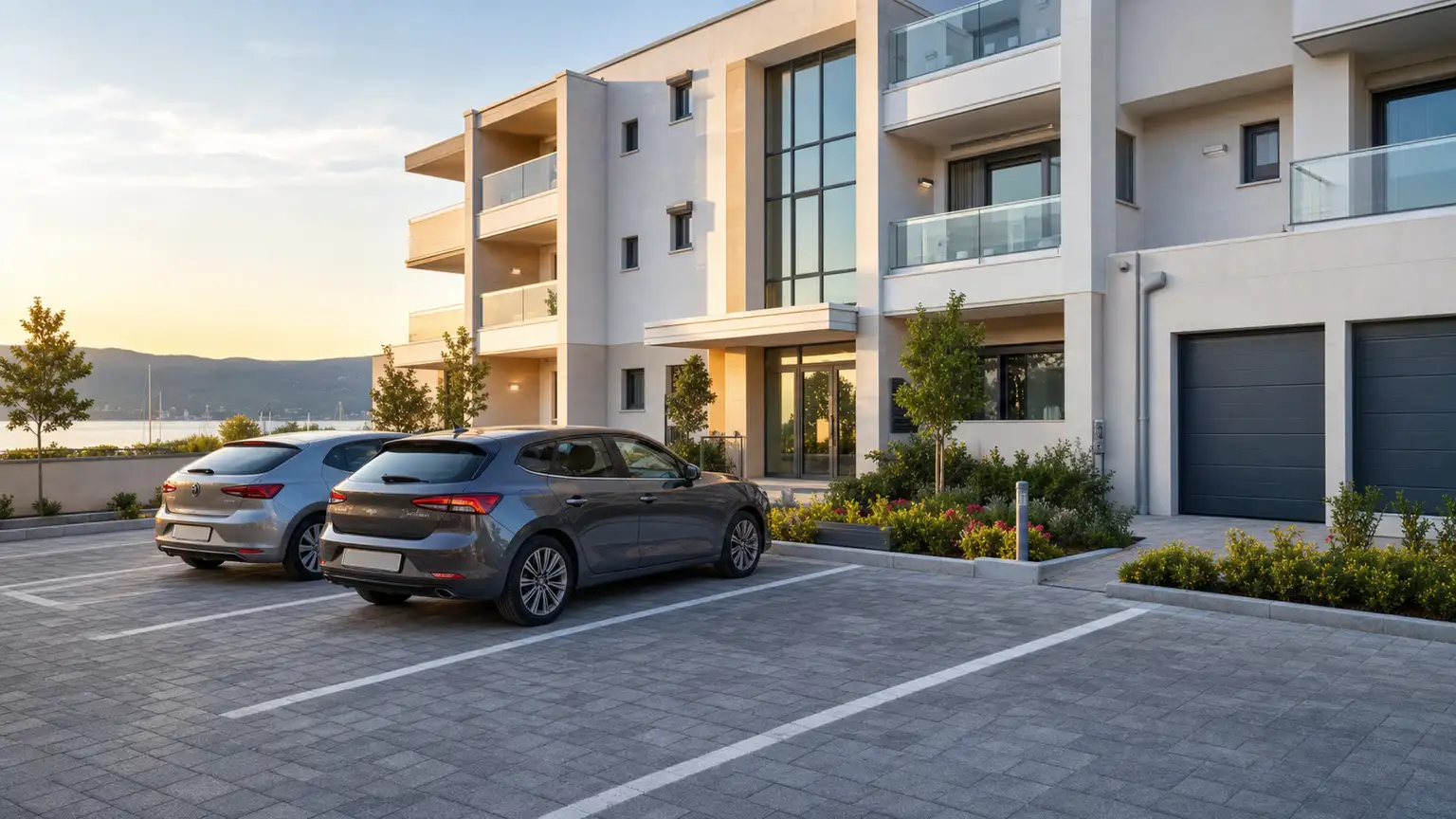
Renting a parking space in a residential building depends on whether it is a separate property, an apartment unit, or a common area for all co-owners. If the parking space is registered as your ownership or an apartment unit, you can rent it out without the consent of other co-owners, with the obligation to report income to the Tax Administration.
For common areas of the building (basement, roof, facade, shared garage), rental is only possible with the consent of co-owners according to the inter-ownership agreement and the new Law on Building Management and Maintenance. Income from renting a parking space or a common part of the building is generally taxed as income from property, at a rate of 12% on 70% of the income, and in practice, a portion of the co-owners' community income is often paid into the reserve fund. This form of rental is increasingly common in Croatian cities, especially in Zagreb, where parking space prices can reach over 200 EUR per month.
Before concluding a contract, it is mandatory to check the registration in the land registry, the provisions of the inter-ownership agreement and the house rules of the building, and to ensure a written contract and proper reporting to the Tax Administration.
Renting a parking space: ownership or co-ownership share?
The legal status of a parking space determines everything: who can rent it, under what conditions, and what kind of contract needs to be concluded. The difference between a garage parking space and a garage lies precisely in the ownership form and legal status.
There are three basic categories:
- Ownership refers to a situation where a parking space is registered as a separate property in the land registry with its own title deed – for example, an independent garage or a separate parking space. In this case, the owner can rent it out without the consent of other co-owners, in compliance with tax regulations.
- Condominium ownership means that the parking space is part of a residential building, but has the status of a separate part of the property connected to a co-ownership share; condominiumization can explicitly also refer to parking spaces. A garage parking space in newer buildings is most often condominium ownership and registered as a separate part in the land registry, so the co-owner of that part can independently conclude a lease agreement.
- Co-ownership share implies that the parking space is not separately allocated, but is part of the common property of the building's co-owners (e.g., a shared courtyard or a non-condominiumized garage). In this case, renting requires a decision by the co-owners and the consent of the majority by co-ownership shares, in accordance with the inter-ownership agreement and the Law on Building Management and Maintenance.
Most users do not distinguish between a garage parking space and a garage as a separate property, and this distinction directly affects the type of contract and rental conditions. For example, an underground garage in a new building in Zagreb often contains parking spaces under condominium ownership, while older buildings may have parking lots that are common areas for co-owners. Checking the land registry is the only reliable way to determine the legal status of your parking space, and case law emphasizes that without clear registration, there is no ownership of a separate part, but rather it is a common part of the building.
Who can rent a parking space and under what conditions?
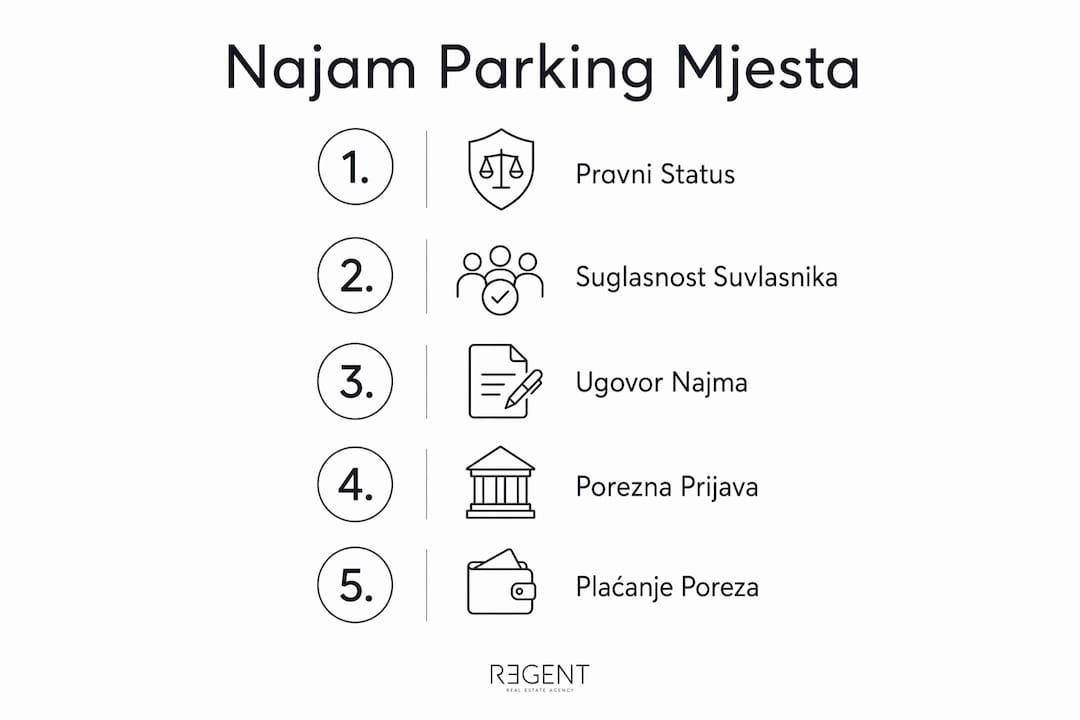 The right to rent a parking space depends on the legal status of the space and the consent of other co-owners where required. The inter-ownership agreement determines the conditions of use and rental of common areas, and the building manager implements the decisions of the co-owners.
The conditions for legal rental of a parking space or common area are as follows:
- Verification of legal status in the land registry or with the building manager. Without a clear legal status (separate part or co-ownership share), the lease agreement may be challenged, and case law on the use of common parts of a building confirms that ownership of a separate part cannot be established over a part that is common.
- Obtaining co-owners' consent when it concerns a common area (basement, non-condominiumized garage, courtyard parking, roof, facade). The new Law on Building Management and Maintenance stipulates that decisions on the disposal of common parts are made by a majority of co-ownership shares, unless a greater majority is provided for in the inter-ownership agreement.
- Compliance with the building's house rules. House rules, which are part of the internal regulations of co-owners, may limit or prohibit certain ways of using common areas (e.g., commercial use of the basement or roof).
- Conclusion of a written lease agreement that clearly defines the duration, price, rights, and obligations of both parties, including rules for using access systems, garages, ramps, and any additional costs.
- Reporting the agreement to the building manager when it concerns common areas, so that records of common property are in order and the representative of the co-owners is informed about income and expenses.

Without the consent stipulated in the inter-ownership agreement, the rental of a common area is not legally valid. This means that the tenant can be evicted without legal protection, and the landlord exposed to a lawsuit from other co-owners or a request to annul the contract. In practice, the representative of the co-owners cannot independently decide on the rental of a common part, but implements decisions adopted by the co-owners by majority of shares.
Professional tip: Before concluding a contract, request a written confirmation from the building manager regarding the legal status of the parking space and a copy of the relevant provisions of the inter-ownership agreement. This documentation protects both parties in case of a dispute.
Tax and legal obligations for parking rental
Income from renting a parking space or common area is subject to income tax in Croatia as income from property. Landlords must report income and adhere to legal rules for taxing rental income.
The tax model is essentially simple:
- Income tax on property (rental/lease of real estate, including parking spaces) is paid on the rental amount reduced by 30% of recognized expenses, at a rate of 12%. This means that tax is calculated on 70% of gross income, and the effective tax rate on total income is 8.4%.
- The lease agreement is submitted to the Tax Administration for determining income tax; the application can be submitted on the prescribed form (e.g., PO-SD) or via the ePorezna system, in accordance with current instructions from the Tax Administration.
- The Tax Administration issues a decision on the determined income tax from property, and the landlord pays the advance tax according to the decision, usually quarterly or monthly depending on the amount.
- Income from parking space rental is generally considered final income – the tax liability is settled through the decision and advance payments, so this income does not necessarily have to be included in the annual tax return, unless the taxpayer submits an annual return for other reasons.
Keeping records of rental income is useful for each calendar year, as the Tax Administration may request insight into contracts and payments. VAT liability arises only if the total annual income from taxable supplies exceeds the legal threshold for entering the VAT system; for most individuals who occasionally rent out one parking space, this threshold is not reached.
The most common mistake of landlords is not reporting the lease agreement to the Tax Administration or reporting it only after receiving an inquiry. The Tax Administration has the right to collect overdue tax with interest for periods in which the rental was not properly reported, which can result in a significant financial burden.
When renting common areas of a building, the situation is more complex. Income generated by the co-owners' community (for example, from renting a facade for an advertising billboard) is often paid into the building's joint reserve fund and used for building maintenance costs, or distributed to each co-owner proportionally to their co-ownership share if so determined by the inter-ownership agreement. Each co-owner then independently reports their share of income to the Tax Administration as income from property, and the building manager is obliged to provide co-owners with a calculation of distributed income.
Professional tip: When contracting a parking space rental, ask the Tax Administration or a tax advisor for written confirmation of the application of the 12% on 70% income model and check if your income remains outside of VAT obligations.
Common areas of the building: basement, roof, facade
A special case is the rental of common areas such as basements, roofs, or facades for advertising billboards. The new Law on Building Management and Maintenance clearly defines common parts (load-bearing structure, roof, facade, structural parts, installations, common rooms), with the possibility for co-owners to regulate the method of use in more detail through an inter-ownership agreement. For the facade and roof, which are common parts of the building, a decision by the co-owners with an appropriate share and consent according to the inter-ownership agreement is required.
Income from such rental is shared among co-owners proportionally to their co-ownership shares, unless the inter-ownership agreement provides otherwise – for example, that the income is fully used to increase the reserve fund or finance capital works on the building. In practice, many co-owner communities pay income from renting roofs or facades for advertisements into the reserve account of the newly opened OIB (Personal Identification Number) of the building and use it for the costs of maintaining roofs, elevators, or facades.
Professional tip: If you are considering renting common areas (basement, roof, facade), insist that the decision of the co-owners be made at a recorded assembly, that the income be credited to the reserve fund, and that the building manager prepares clear records of the distribution and use of funds.
Practical examples and tips for successful rental
Scenario 1: Owner of a condominium parking space in Zagreb
The owner of an apartment in a new building owns a parking space registered as condominium ownership. They can freely rent it out without the consent of other tenants, as it is a separate part of the property linked to their co-ownership share. They conclude a written contract, submit it to the Tax Administration for income tax determination, and pay advance tax at a rate of 12% on 70% of the income. Parking space rental prices in Zagreb generally range from approximately 50 to over 200 EUR per month, depending on the location (city center, wider center, new neighborhoods like Lanište), type of space (garage, covered, outdoor), and market demand.
Scenario 2: Co-owner who wants to rent a basement
The basement is a common area of the building. The co-owner must initiate a procedure at the co-owners' assembly, obtain the necessary majority consent by co-ownership shares, and only then conclude a contract with the tenant. The income is distributed to all co-owners proportionally to their co-ownership shares or used for the reserve fund, depending on the inter-ownership agreement.
Scenario 3: Long-term parking rental in Rijeka
Parking rental can be seasonal or long-term, with prices around 117 EUR per month for covered spaces. For business and long-term rentals, it is more advantageous to negotiate directly with parking managers, which offers better conditions than individual advertisements.
What to check before concluding a contract:
Legal status in the land registry – Confirms the landlord's right to rent the parking space or common area.
Provisions of the inter-ownership agreement – Define the required consent of co-owners and conditions for using common parts.
Building house rules – May limit or prohibit certain ways of using parking spaces or common areas (e.g., storage in hallways, commercial advertisements).
Costs of maintaining access systems and garage – Some contracts stipulate that the cost of maintaining ramps, doors, or video surveillance is borne by the tenant; this should be clearly agreed upon.
Tax obligations – Determine the method and deadlines for reporting income and the obligation to apply a rate of 12% on 70% of parking space rental income.
Professional tip: Always conclude a parking space lease agreement in writing, with a clearly stated rental amount, payment deadline, contract duration, and termination conditions. Unwritten agreements are the most common cause of legal disputes between co-owners and tenants.
The most common mistakes in renting are unwritten agreements, unclearly defined contracts, and non-compliance with house rules, which can lead to legal disputes. Legal review of the contract before signing is recommended, especially when it concerns common areas or multi-year rentals.
Key insights
- Legal rental of a parking space requires verification of the legal status of the space, a written contract, and proper reporting of income to the Tax Administration.
- Legal status is fundamental: before concluding a contract, check whether the parking space is ownership, condominium ownership, or a co-ownership share.
- Co-owner consent is mandatory: for common areas of the building, co-owner consent is required according to the inter-ownership agreement and the provisions of the new Law on Building Management and Maintenance.
- Tax must be reported: submit the lease agreement to the Tax Administration without delay after conclusion, and rental income is subject to income tax at a rate of 12% on 70% of the income.
- A written contract protects both parties: unwritten agreements are the most common cause of disputes and do not provide sufficient legal protection.
- Maintenance costs should be agreed upon: clearly define who bears the costs of access systems, garage, video surveillance, and parking space maintenance.
Frequently Asked Questions (FAQ)
Can I rent a parking space without the consent of co-owners?
Yes, but only if the parking space is registered as your ownership or condominium ownership in the land registry. For common areas of the building (courtyard parking, basement, roof, facade), co-owner consent is mandatory according to the inter-ownership agreement and the Law on Building Management and Maintenance. In short: without co-owner consent, you can only rent parking spaces that are clearly registered as your separate part.
What is the price of a parking space for rent in Zagreb?
Parking space rental prices in Zagreb generally range from approximately 50 to over 200 EUR per month, depending on the location, type of space (garage, covered, outdoor), and whether the parking space is linked to an apartment or commercial premises. Advertised prices on portals show that in newer neighborhoods with underground garages, rents can be higher, while in less attractive locations they are lower.
Do I have to report parking space rental income to the Tax Administration?
Yes. You need to submit the parking space lease agreement to the Tax Administration for determining income from property, and income tax is paid at a rate of 12% on 70% of the income (with 30% recognized expenses). Rental income is generally considered final income, so tax is settled according to the Tax Administration's decision and does not necessarily have to be included in the annual return, unless you have other reasons for submitting it.
What is an inter-ownership agreement and why is it important for renting common areas?
The inter-ownership agreement is the fundamental document that regulates the rights and obligations of building co-owners, including the method of management, use, and rental of common parts (basement, roof, facade, shared garages). Without the consent stipulated in this agreement, the rental of a common area is not legally valid and can be challenged, so it is necessary to check the content of the agreement before renting.
What are the most common problems when renting a parking space in a building?
The most common problems are unwritten agreements, unclearly defined costs of maintaining access systems and ramps, non-reporting of agreements to the Tax Administration, and disputes over the use of common parts of the building. A written agreement, clear distribution of costs, and compliance with the inter-ownership agreement prevent most disputes.
Recommended
- New Zagreb - East, Dugave, 51m² three-room apartment for sale | Regent nekretnine
- Property rental | Regent nekretnine
- Finida settlement in Poreč, an opportunity not to be missed: Free parking space or discount on garage for the first 5 buyers!
- Upper Town - Medveščak, Center, 131m² apartment for sale | Regent nekretnine