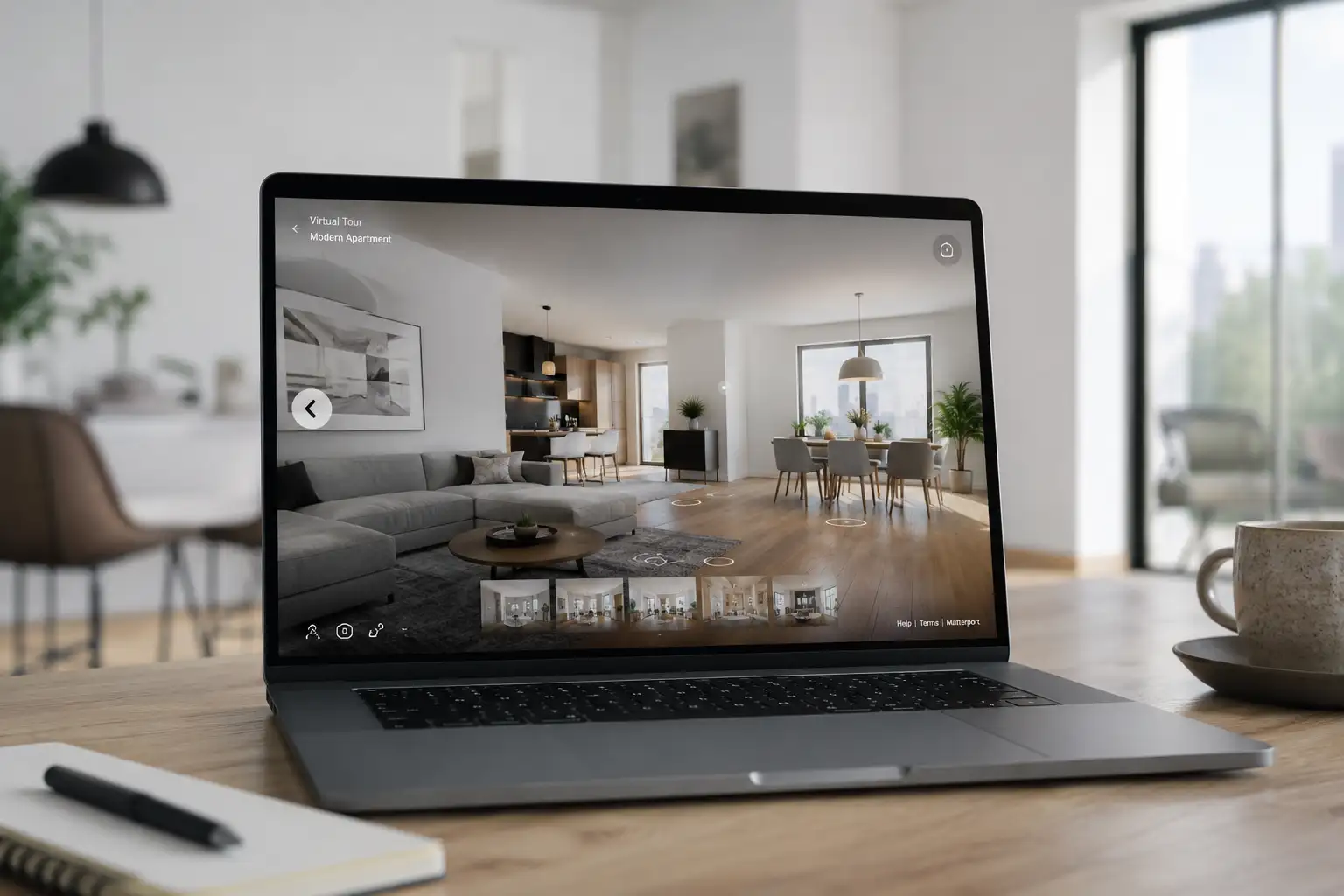
Virtual tours and 3D walkthroughs are defined as interactive digital representations of spaces that allow customers to independently view properties via a browser, without physical presence. Unlike static photographs, this technology provides complete freedom of movement through the space, insight into real dimensions and room layout, and a sense of atmosphere that photography cannot convey. In the Croatian real estate market, from Zagreb to the Split coast, the demand for such presentations is growing as buyers increasingly search and compare properties digitally before their first contact with an agent.
Contents
- Key Insights
- What are virtual tours and 3D property walkthroughs?
- How is a virtual tour technically recorded?
- What are the benefits of virtual tours for property buyers?
- How do virtual tours help sellers and agents?
- From listing to physical viewing: what does the entire process look like?
- Frequently Asked Questions (FAQ)
Key Insights
Virtual tours and 3D walkthroughs are an effective tool for property presentation because they simultaneously attract more interested buyers, reduce the number of unnecessary physical viewings, and accelerate the purchasing decision.
Key insights:
- Greater ad attractiveness. Listings with interactive virtual tours generally attract significantly more views than listings that rely solely on photographs.
- Better sense of space. Buyers gain precise insight into dimensions and layout, which reduces disappointment during physical visits.
- Buyer filtering. Physical viewings become more productive because only seriously interested buyers attend.
- Availability without apps. Virtual tours work in a browser on all devices, without technical obstacles or additional installations.
- Benefit for remote and international buyers. Buyers from other cities and countries review the property in detail beforehand and only travel when they are seriously interested.
What are virtual tours and 3D property walkthroughs?
A virtual tour is an interactive representation of a space composed of a series of connected photographs or three-dimensional models. The buyer moves through the space by clicking a mouse or touching the screen, turns in all directions, and stops where they wish. The key difference compared to a classic photograph is control: a photograph shows what the photographer decided to capture, while a virtual tour gives the buyer the freedom to explore every corner of the space themselves.
To avoid confusion, it is useful to distinguish three terms that are often mixed up:
- A 360° photograph shows a space from a single fixed point. The buyer can turn in all directions but cannot move through the space.
- An interactive 3D walkthrough connects dozens of captured points into a continuous whole, giving the buyer the feeling of actually moving through the entire apartment or house.
- A CGI 3D model is created using computer graphics and is used for projects under construction, where the physical space does not yet exist.
A photographic 360° tour and an interactive 3D walkthrough are created by recording an existing space with a special camera, resulting in a realistic, photorealistic presentation. Choosing between these two methods depends on the project phase and the purpose of the presentation, which directly affects the effectiveness of property marketing.
In addition to the tour itself, quality presentations also include a floor plan with marked rooms, precise measurements, and interactive tags that explain materials, equipment, or special features of the space to the buyer. Such a display is not only visual but also informative. The buyer can find out everything they would otherwise ask an agent over the phone in one review.
How is a virtual tour technically recorded?
Recording a virtual tour begins with preparing the space. The space must be clean, tidy, and well-lit, similar to professional photography, as every detail becomes visible in the interactive display. The quality of a virtual tour directly depends on the attention paid to lighting and space preparation before recording.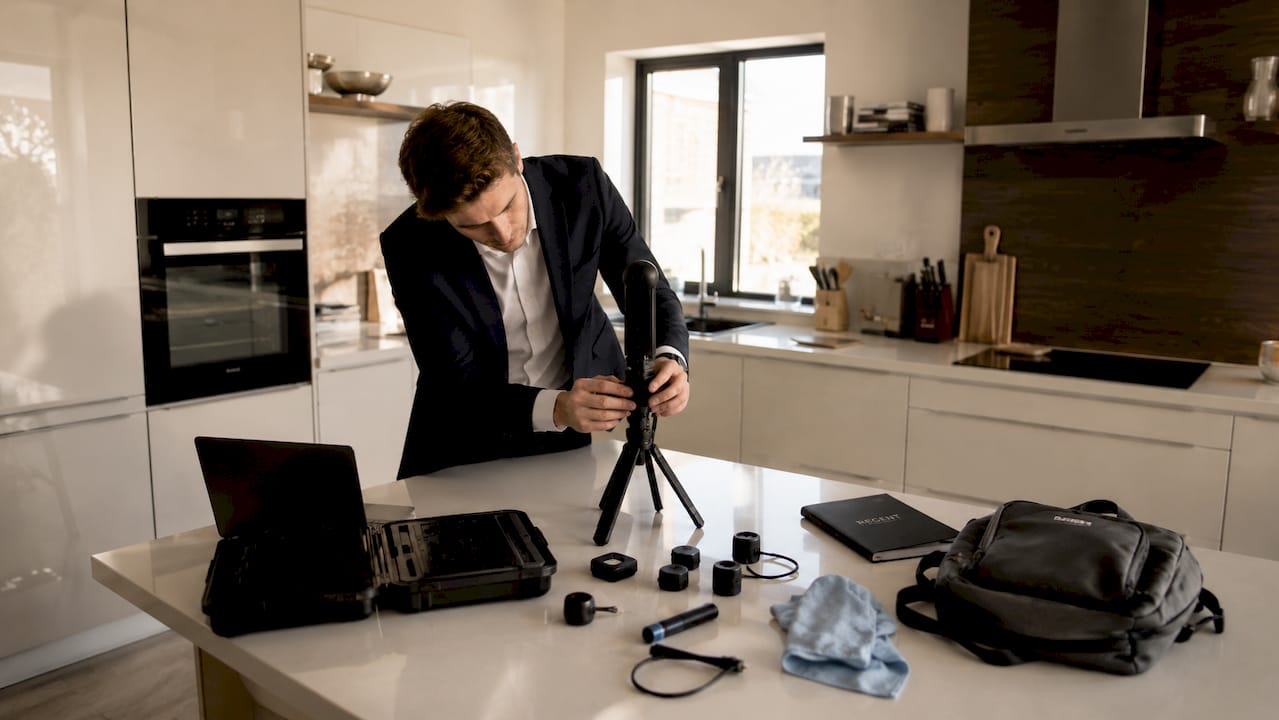
The recorder places a 360° camera on a tripod in the center of each room and captures spherical photographs from multiple points. Software then automatically stitches these photographs into a continuous tour, and a technician adds transitions between scenes, a floor plan, and interactive tags. The entire process of recording an apartment with an area of 60 to 80 m² takes several hours, and processing and publishing are usually completed within one to two business days.
It is important to note the difference between simple 360° photographs and full-fledged interactive 3D walkthroughs. A simple 360° photograph shows a space from one point, and the buyer can turn but not move. An interactive 3D walkthrough, built from dozens of connected scenes, gives the buyer the feeling of actually moving through an apartment or house. The integration of hotspots, floor plans, and documents further improves functionality and saves time for both buyers and sellers.
A typical recording workflow looks like this:
- Space preparation: remove personal items, check lighting in each room, open blinds and curtains
- Recording: 360° camera on a tripod, at least one recording point per room, multiple points for larger rooms
- Processing: automatic scene stitching, color correction, adding floor plans and interactive tags
- Publication: display via browser without app installation, compatible with computers, tablets, and mobile phones
Professional tip: Before recording, remove all personal photographs and documents visible in the space. Buyers can more easily imagine themselves in a neutral space, and the seller protects their privacy.
What are the benefits of virtual tours for property buyers?
Buyers searching for properties face the same problem: it's difficult to assess a space solely from photographs. A photograph can make a small room seem large or hide a poor layout. A virtual tour solves this problem because the buyer walks through the space themselves and gains a realistic impression of its dimensions and layout. Through virtual tours, buyers can gain a precise sense of the space, including dimensions and layout, which increases confidence in their purchase.
Specific benefits for buyers include:
- 24/7 viewing from any device. The buyer can view the apartment at midnight from their mobile phone, without arranging it with an agent. Virtual tours are available on computers, tablets, and mobile phones via a browser, without the need to install special applications.
- Better sense of space than with photographs. The buyer sees how light falls into the living room from different angles, how spacious the kitchen actually is, and how the rooms connect to each other.
- Comparison of multiple properties in a short time. Instead of organizing five physical visits in one week, the buyer can virtually walk through ten properties in one afternoon and narrow down the list to two or three that warrant a physical visit.
- Greater informedness before contacting an agent. A buyer who has already virtually toured the apartment comes to a discussion with concrete questions, not general uncertainties. This speeds up the entire process.
Virtual tours create a sense of real presence and buyer confidence before a physical viewing. This is not just convenience, but also protection from disappointment. A buyer who has virtually toured an apartment still wishes to visit, arrives with realistic expectations, and is significantly closer to a purchase decision.
How do virtual tours help sellers and agents?
Real estate sellers in Croatia have traditionally relied on photographs and physical visits. The problem with this approach is that a physical visit does not filter the interested from the curious. The agent organizes a viewing, the buyer comes, sees that the space is not what they were looking for, and leaves. A virtual tour solves this problem at the very beginning of the process.
Listings with interactive 3D walkthroughs generally attract more views than listings with classic photographs. More views mean more interested buyers, but also better visibility of the listing on portals that rank more informative listings higher in search results.
Specific benefits for sellers and agents:
- Higher quality inquiries. A buyer who contacts an agent after a virtual viewing already knows what the space looks like. Questions are more specific, and the conversation is more productive.
- Fewer unnecessary physical viewings. Virtual tours reduce the number of unnecessary viewings, thus saving time for the seller and agent. An apartment for sale does not have to be available for viewing every weekend.
- Working with buyers from other cities and countries. A buyer from Munich or Vienna can thoroughly inspect an apartment in Split without traveling. Only after a virtual viewing and a conversation with the agent do they organize a physical visit, meaning they arrive seriously interested.
- Longer ad engagement. Interactive content keeps the buyer on the ad longer than static photographs, and a buyer who explores the ad longer is more likely to contact the agent.
The digitalization of the real estate market is changing the way sellers attract buyers across Europe, and Croatia is no exception. Agents who adopt this technology early gain an advantage over competitors who still rely exclusively on photographs.
From listing to physical viewing: what does the entire process look like?
The process of buying a property with a virtual tour differs from the classic process in several key points. The difference is not only in technology but in the quality of each step.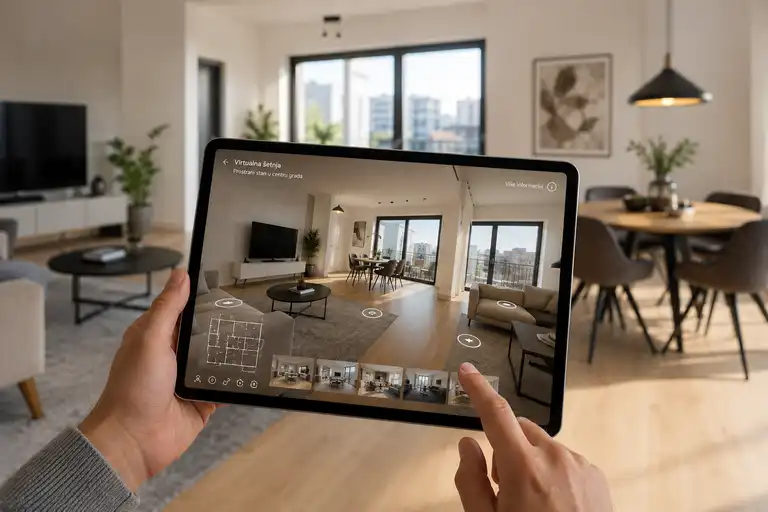
Comparison of the classic process and the process with a virtual tour, step by step:
- Ad viewing. Classic: photographs, description, and floor plan. With a virtual tour: photographs with an interactive 3D walkthrough.
- Space assessment. Classic: difficult to perform without a visit. With a virtual tour: detailed, with insight into measurements and layout.
- Contact with an agent. Classic: often with vague, general questions. With a virtual tour: with specific questions and clear interest.
- Physical visit. Classic: a frequent source of disappointment or surprise. With a virtual tour: confirmation of what is already known, with a focus on details.
- Purchase decision. Classic: slower, with more necessary visits. With a virtual tour: faster, with fewer visits.
Let's imagine a buyer searching for apartments in Split and finding a listing with a virtual tour. They spend about ten minutes exploring the space, studying the floor plan with measurements, and based on it, assess whether the dimensions of the living room suit them and conclude that the layout is suitable. Then they contact the agent with questions about parking and the move-in date. The agent schedules a physical visit with a buyer who is already largely decided.
Compare this to the classic process: the buyer comes to a viewing, realizes that the living room is smaller than they thought, that there isn't enough natural light in the bedroom, and that the layout doesn't suit them. The visit lasts about twenty minutes and ends without results. A virtual tour eliminates this scenario because the buyer sees all of this in advance.
Frequently Asked Questions
What is a property virtual tour?
A virtual tour is an interactive digital representation of a space that allows the buyer to independently view the property via a web browser, without physical presence. The buyer moves through the space by clicking a mouse or touching the screen and can turn in all directions.
Are 360° photographs and 3D walkthroughs different?
Yes. A 360° photograph shows a space from a single fixed point from which the buyer can only turn, while an interactive 3D walkthrough connects multiple recorded points, giving the buyer the feeling of actually moving through the entire apartment or house.
Can virtual tours replace physical viewings?
Virtual tours do not replace physical viewings but make them more productive. A buyer who has already virtually toured a property comes to a physical visit with realistic expectations and concrete questions, which speeds up the decision-making process.
Do I need a special app to view a virtual tour?
No. Virtual tours work in a web browser on computers, tablets, and mobile phones, without the need to install special applications.
How long does it take to create a property virtual tour?
Recording an apartment of 60 to 80 m² alone takes several hours, depending on the number of rooms and recording points. Processing and publishing the completed tour are usually finished within one to two business days.
Recommended
- Digital nomads in Croatia: A guide to rent, residency, and taxes
- Maksimir, Gornji Bukovac, apartment 200m² for sale | Regent nekretnine
- Maksimir, Gornji Bukovac, apartment 200m² for sale/for rent | Regent nekretnine
- Guide to buying property in Croatia for foreign nationals