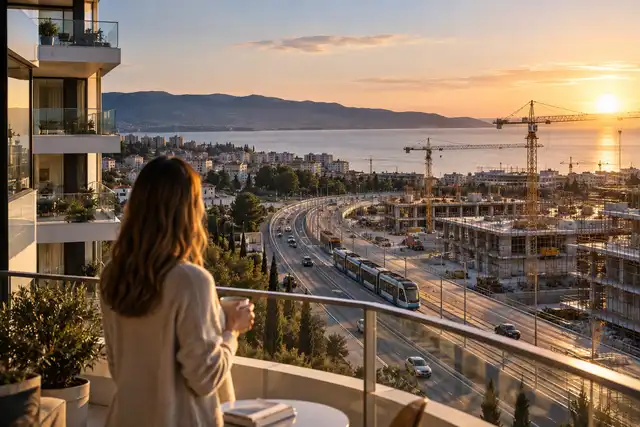
In the first quarter of 2025, the real estate market in Croatia continues to grow, and the latest data from the Central Bureau of Statistics confirms that property prices are still on an upward trajectory. Although the general trend of rising prices is present, specific data on new and existing residential buildings clearly show market movements.
General trends in the real estate market
Residential property prices in Croatia rose by 4.5% compared to the previous quarter, and a growth of 13.1% was recorded on an annual basis. This data shows that the real estate market is still growing, but it is important to note that different types of properties and different regions are developing at different rates.
For example, the prices of new residential buildings are recording a higher growth than existing properties, which reflects the high demand for new real estate. Considering current trends, prices are expected to continue to rise in the future.
Growth in new construction prices
New construction prices rose by 6.4% compared to the fourth quarter of 2024, while the annual growth amounted to 14.3%. New construction still represents a stable investment, and the price growth shows that the market recognizes the value of new construction. If you plan to buy a new property, be prepared to allocate a larger amount.
Prices of existing residential properties
The prices of existing residential properties rose by 4% compared to the fourth quarter of 2024, while the annual growth was 12.7%. Although the growth in existing properties is smaller than in new ones, it still remains at a high level, which indicates that interest in older properties still exists. If you are planning to buy an older property, it is important to keep in mind that the price will depend on the condition of the property, location, and age.
Prices of residential properties in different regions of Croatia
Residential property prices are not the same in all parts of Croatia. Differences between regions show different dynamics in the market:
City of Zagreb:
Prices rose by 4.9% compared to the last quarter, and the annual growth was 12.9%. As the capital city, Zagreb is still the most expensive location, and prices are high, especially in urban areas.
Adriatic Coast:
Prices on the coast rose by 3.3% compared to the previous quarter, and the annual growth was 11.3%. Tourist destinations on the Adriatic coast still enjoy high demand, and the coast is characterized by constant investments and increased demand.
Other regions:
In smaller towns and rural areas, prices rose by 6.7% compared to the last quarter, and the annual growth amounted to as much as 18.5%. This shows an increasing interest in real estate outside the larger urban centers.
What does this data mean for buyers and investors?
If you are thinking about buying a property or planning to invest in real estate, it is important to follow these trends and take them into account when making decisions. High price growth in all market segments means that buyers will have to be prepared for further price increases, especially in cities and on the coast.
For investors, this data indicates that the real estate market in Croatia still represents an attractive opportunity, but it also causes a headache due to high prices. If, however, you are planning to invest in smaller and rural areas, you will fare better in terms of price, but you must take into account that the return on investment will not be the same as in areas of greater tourist interest. Therefore, we advise you to see this as an opportunity to invest in markets that are in the growth phase and still more favorable compared to Zagreb and the coast.
Methodology for calculating the index
Residential property price indices are based on data on residential property transactions, which include houses and apartments. The data comes from the Tax Administration of the Ministry of Finance and is collected on the basis of market transactions that were carried out in the previous year.
For all details on the methodology and data sources, you can consult the Commission Implementing Regulation (EU), which defines guidelines for the calculation of residential property price indices.
What awaits us in the real estate market in Croatia?
The data for the first quarter of 2025 clearly shows that the real estate market in Croatia is still growing, but although property prices are still on the rise, growth rates have decreased, and the number of transactions has slightly decreased. Experts predict that in 2025 there will be a slight increase in the prices of new properties, while the prices of used apartments and houses will stagnate.
One of the main causes of the decrease in sales volume is the lack of new construction, which has caused high prices for old construction. Although there is currently economic stability, buyers are less and less willing and able to keep up with the rising prices of used properties. Sellers, on the other hand, are not under great pressure to lower prices, because the supply is not large enough to cause competition.
Given that a significant increase in new construction is not expected in 2025, the prices of new construction and old construction will not fall, because there will not be enough competition to lower prices or improve the offer. Although positive processes related to the announced changes in tax laws and housing policy are expected, the problem of lack of supply in the new construction segment will probably not be solved in the short term.