From Rapid Growth to Sustainable Stability
The Croatian real estate market has gone through a period of dynamic development. Following the entry into the Eurozone in 2023, the transparency of transactions and the share of foreign buyers increased.
Residential square meter prices in 2023 and 2024 continued to rise, by an average of 9% in 2023 and 7% in 2024 – while a milder, but still positive trend is expected in 2025. The average national price reached around 2,900 euros per m², while on the coast the average is almost 3,700 euros per m².
According to Regent Real Estate analysis, the number of verified searches on Regent.hr increased by 26% in 2024, with the greatest interest from buyers from Germany, Austria, Slovenia, Poland and the Czech Republic.
Buying Real Estate in Croatia: What Buyers Are Looking For Today
Buyers today seek security, verified documentation and real value.
While the coastal belt is still the most sought after, the interior of Istria and the suburbs of Zagreb are increasingly attracting investors who want a long-term return and a more peaceful environment.
Verified properties are available on Regent.hr: from modern apartments in Zagreb to renovated stone houses in Istria, with the possibility of consulting with Regent's expert team.
Key Trends for Buyers:
• 100% of transactions in 2024 included fully verified documentation
• Mortgage rates have risen from 2.3% (2022) to 3.5% (2025), but the introduction of the euro has stabilized credit conditions
• EU citizens can freely buy real estate, while others buy based on the principle of reciprocity
Regent's AI system for matching buyers and properties connects location, budget and lifestyle, enabling faster and safer decisions, especially for foreign buyers.
Luxury Villas on the Adriatic – A Symbol of Modern Luxury
Villas in Istria, Dalmatia and Kvarner are still among the most sought-after properties.
From 2023 to 2025, the prices of luxury villas increased by about 15%, with an average annual return of 5 to 7% in the most attractive tourist locations.
More than 70% of luxury villa buyers are foreign investors who combine personal use with rental.
Rental Market: Growth of Medium-Term and Annual Rentals
After the tourist boom, apartment rentals in Croatia have become a more stable and professional segment of the market.
In 2025, the average gross returns are:
• Zagreb: 4.2%
• Split / Zadar / Rijeka: 7%
• Continental cities: about 5%
Long-term rentals are showing the greatest growth. Namely, more and more investors are opting for stable annual rentals instead of seasonal ones, especially after the proposal to restrict tourist rentals at the end of 2024.
Regional Trends in 2025
Zagreb still accounts for a third of all transactions in Croatia.
Suburbs like Sesvete and Dubrava are seeing price growth of 15% since 2023, while the coast is still holding prices. Split, Zadar and Opatija around €4,000/m², and Dubrovnik exceeds €5,000/m².
The most favorable prices are in Međimurje and Slavonia, with an average below €1,600/m², but with an increase of as much as 17% annually.
Forecast for 2025–2026
Regent predicts moderate price growth:
• 2025: +5–6%
• 2026: +3–4%
The luxury and coastal segment will stabilize, while the interior and suburban parts will record a higher percentage growth.
Tourism, a stable currency and limited supply remain the main drivers of prices.
Challenges and Opportunities
Positive factors:
• Tourism accounts for about 20% of GDP, which strongly affects demand
• The introduction of the euro reduced currency risks
• New infrastructure (Pelješac Bridge, A7) increases the connectivity of the coast
Challenges:
• Rising construction costs (+20% since 2023)
• The problem of apartment availability for domestic buyers
• The possibility of introducing a new property tax
Regent Real Estate offers buyers fully verified ads, analytical data and expert advice to make investments safe and transparent.
Croatia as a Safe Investment Destination
The Croatian real estate market in the period 2023–2025 has shown that it has reached a phase of mature stability.
Prices are high, but realistic, supply is limited, but transparent, and demand – global.
For investors, owners and buyers, 2025 and 2026 bring a period of rational growth and safe decisions.
If you are planning to buy a home or invest, we are at your disposal with our rich portfolio and expert advice.

About the author

Regent Zagreb
Currently popular
Tips /
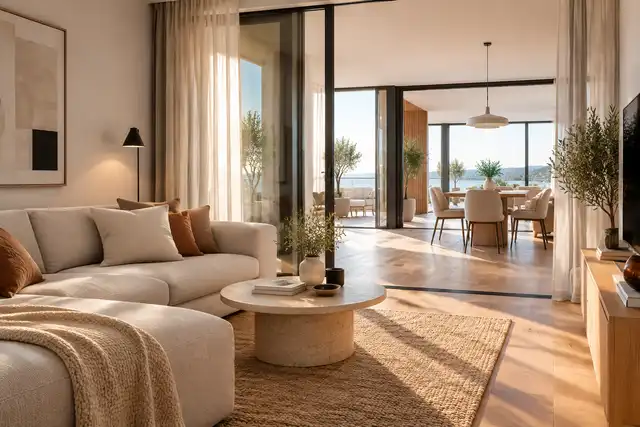
First property: buy now or save for a bigger apartment
Many first-time homebuyers face the same dilemma: buy what they can afford now — most often a smaller apartment or one in a less desirable location — or wait, save for another few years, and immediately buy something larger and better that would suit them longer. Both options have their logic and their proponents, and the decision is important because ...

Tips /
Apartment on an upper floor without an elevator: what to look out for when buying
An apartment without an elevator is common on the market, especially in older buildings, and is regularly more affordable than a comparable apartment with an elevator or on a lower floor. For some buyers, it's an opportunity — savings for an apartment that perfectly suits their lifestyle. For others, it's a drawback that eventually turns into a serious ...
Lifestyles /
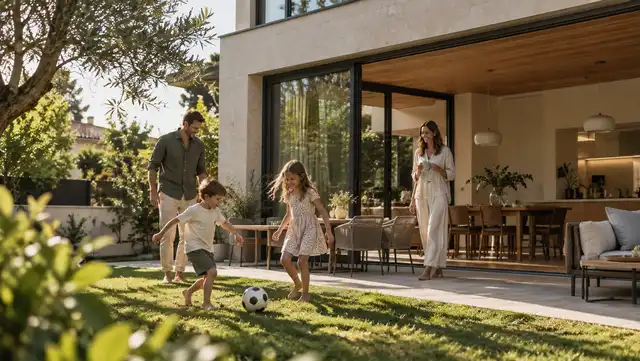
Buying a house for a large family: space, location, budget
For a large family, a home is more than just a place to live — it's the stage for the daily life of a multi-member household, a space where everything from morning chaos to shared meals and evening peace unfolds. Buying a house for such a family is, therefore, a more layered decision than buying an apartment for an individual or a couple: it needs to ...
Guides /
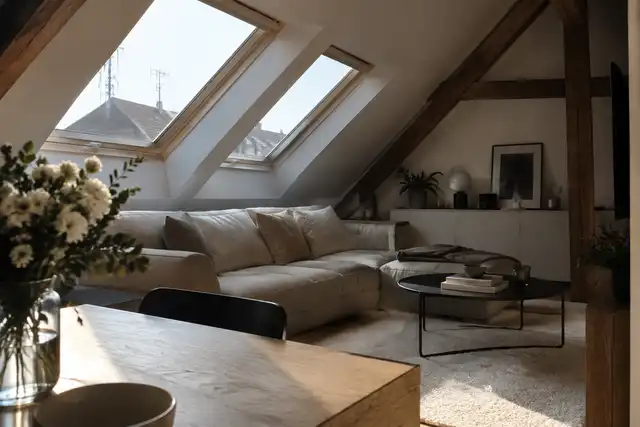
Loft and attic apartment: advantages and pitfalls
An attic apartment holds a special charm for many — sloped ceilings, wooden beams, an unusual layout, light entering through roof windows, and often views that lower floors don't have. Before we break down the advantages and pitfalls, it's worth distinguishing three terms often used interchangeably. An attic apartment (potkrovlje) is a living space ...