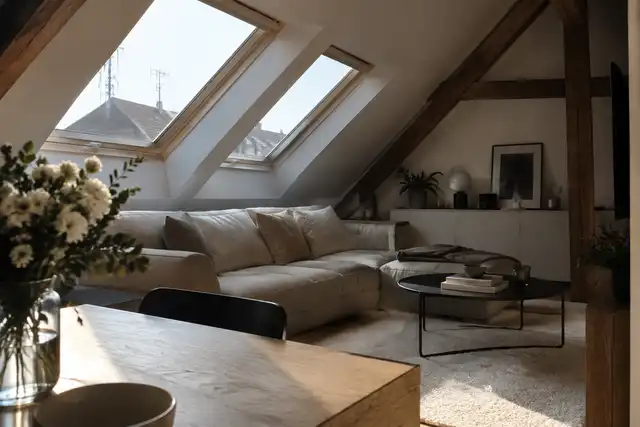
Buying real estate in Croatia for foreign citizens is an increasingly common practice — whether it's an investment, relocation, or buying a holiday home. Although the process is significantly simpler today than before, there is still a clear structure of rules and steps that are important to understand before entering into a purchase.
To make it easier for you to navigate, we bring you an overview of the entire process — from legal conditions to the concrete realization of the purchase.
Who can buy real estate in Croatia
The rules depend on the buyer's citizenship.
Citizens of the European Union have the easiest path — they can buy real estate under the same conditions as Croatian citizens, without additional permits.
For citizens from outside the EU, the principle of reciprocity applies.
This means that the purchase depends on whether their country allows the same right to Croatian citizens. In such cases, it is necessary to obtain consent from the Ministry of Justice, which can prolong the process, but does not make it unattainable.
Key rule: EU citizens buy freely, while buyers from outside the EU go through an additional administrative step.
Administrative prerequisites before purchase
Before you even start the realization, you need to resolve basic formalities.
The first step is to obtain an OIB (personal identification number), which is necessary for all legal and financial transactions in Croatia.
In addition, most buyers open a bank account to facilitate the payment of the purchase price and track financial flows.
These are simple but crucial steps without which the purchase is not possible.
Purchase security: legal verification of real estate
One of the most important, but often overlooked, steps is the legal verification of the real estate.
This includes:
- checking ownership in land registers
- checking encumbrances (mortgages, liens, rights of third parties)
- checking the legality of the building and documentation
Without this phase, the buyer assumes a risk that can have serious financial and legal consequences.
In practice: a good check today means a peaceful sale tomorrow.
Purchase process – from selection to ownership
Once the real estate is selected and verified, the concrete realization begins.
The process usually takes place in several steps:
- signing a preliminary agreement and paying a deposit (usually 10%)
- defining deadlines and purchase conditions
- signing the main purchase agreement before a notary public
- payment of the purchase price
- submitting an application for ownership registration
Registration in the land registers is the final step by which the buyer becomes the legal owner of the real estate.
Taxes and costs to plan for
In addition to the price of the real estate itself, the purchase also includes additional costs.
The most important is the real estate transfer tax, which is 3%. For new buildings, this tax is not paid because VAT is already included in the price.
Additionally, you should consider:
- notary fees
- legal services
- agency commission
Realistic budget planning prevents unpleasant surprises.
Special situations to pay attention to
There are certain types of real estate that may have additional restrictions:
- agricultural land (restrictions for foreign buyers)
- real estate in protected zones
- properties without proper documentation
In such cases, the process may require additional checks or even prevent the purchase.
Why Croatia remains an attractive destination
The real estate market in Croatia is continuously growing, and the interest of foreign buyers is not decreasing.
Cities like Zagreb, as well as coastal regions, offer a wide range of opportunities — from luxury villas to rental apartments.
Stable legislation, EU membership, and a strong tourism sector make Croatia a safe and long-term profitable choice.
How to avoid common mistakes
The biggest problems in buying real estate rarely arise due to complicated laws — but rather due to skipping basic steps.
To avoid risks:
- inspect the property before signing any document
- do not pay a deposit without a clear legal framework
- hire an expert who knows the local market
- plan all costs in advance
The most common mistake is not making the wrong decision — but making a decision without enough information.
Conclusion: a good purchase starts with understanding the process
Buying real estate in Croatia for foreign citizens in 2026 can be very simple — but only with good preparation.
Clearly defined steps, timely verification, and quality support make the difference between a risky and a safe investment.
If you approach the process strategically, you are not just buying real estate — but long-term value.