The Croatian new construction market is entering a new phase of development.
After years in which the focus was on speed of sale and the growth of square meter prices, 2026 brings a change in priorities—for both buyers and investors.
Today's buyers are no longer just looking for a "new apartment."
They are looking for a higher quality of life, lower long-term costs, flexible space, and projects that can retain their value for years after purchase.
This is precisely why new construction in Croatia is undergoing a serious transformation.
To understand what awaits us in the coming period, we have identified five key trends that will mark the future of housing and define the new generation of Croatian new construction.
Trend 1: Energy efficiency becomes the main standard
The time when an energy certificate was just a formality is slowly behind us.
Rising energy costs and stricter European standards have led buyers today to analyze the quality of construction much more carefully.
Increasingly important are:
- nZEB standards
- quality thermal insulation
- underfloor heating
- heat pumps
- aluminum and triple-glazed joinery
- low utility costs
Buyers no longer look only at the cost per square meter—they are interested in how much that apartment will cost to live in over the next ten or twenty years.
This is precisely why energy-efficient projects are becoming a competitive advantage, not a luxury add-on.
Long-term sustainability is becoming as important as the location itself.
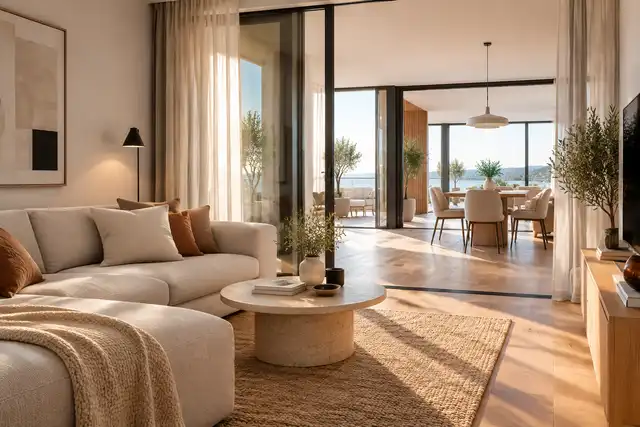
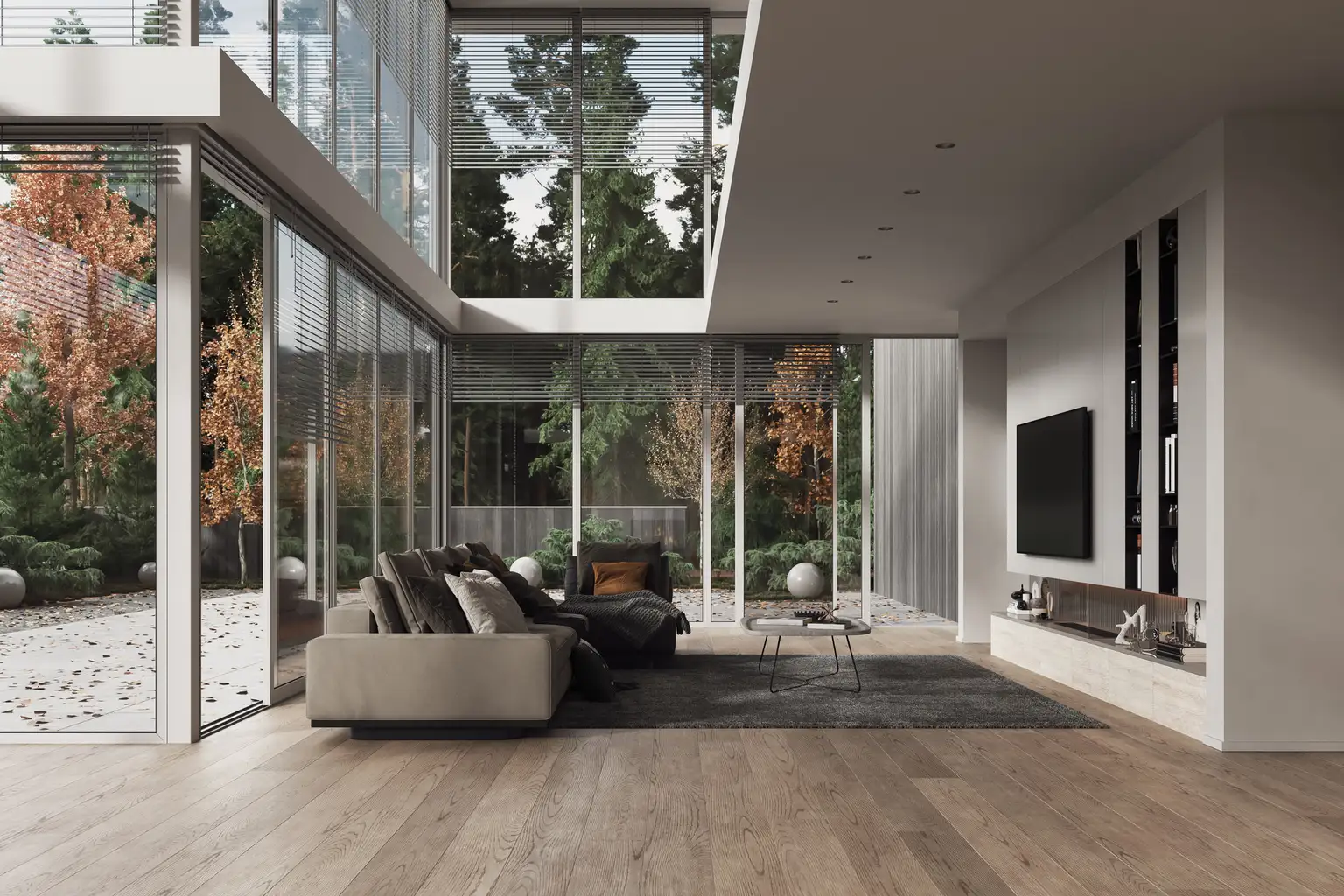
Trend 2: Warm minimalism changes the look of interiors
For years, modern apartments were characterized by cool gray tones, glossy surfaces, and an almost sterile design.
However, the market is gradually shifting towards warmer, more natural, and comfortable spaces.
An increasing number of new projects are using:
- earth tones
- terracotta shades
- natural wood
- stone and matte textures
- warmer ambient lighting
This approach to space creates a sense of calm and home—something buyers are increasingly seeking today.
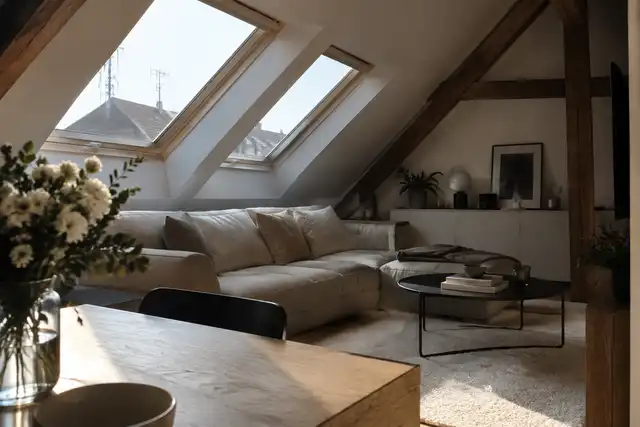
At the same time, the popularity of biophilic design is growing, meaning the inclusion of natural elements in the interior.
More natural light, greenery, open views, and natural materials are becoming an important part of modern new construction.
Aesthetics is no longer separate from quality of life—it directly affects how we feel in a space.
Trend 3: Flexible spaces become the new standard
Lifestyles have changed significantly in recent years.
Home is no longer just a place to rest—it has become an office, a workout space, a place for socializing, and a private relaxation zone.
Because of this, developers are increasingly designing:
- flexible floor plans
- multifunctional rooms
- work corners within apartments
- movable partitions
- more storage space
Apartments that allow for easy adaptation without major construction work are particularly sought after.
A 50-square-meter apartment today must offer much more functionality than ten years ago—and this is precisely where the difference between an average and a well-designed space is seen.
Square footage is no longer the sole measure of quality—space organization is becoming equally important.
Trend 4: Microlocation becomes more important than the size of the apartment itself
Buyers today analyze much more than just the address or distance from the city center.
Of great value are:
- proximity to green areas
- transport connectivity
- amenities for daily life
- quieter streets
- schools and kindergartens
- infrastructure quality
In cities like Zagreb, interest in neighborhoods offering a balance between urban life and a higher quality living environment is particularly growing.
At the same time, premium coastal locations remain highly sought after due to limited supply and continuous interest from foreign buyers.
Microlocation is no longer just a matter of prestige—but of the quality of daily life and investment security.
Trend 5: Smart technology becomes part of everyday life
Smart homes are no longer reserved only for luxury villas and exclusive projects. Technology is increasingly integrated into standard new construction.
Buyers today are increasingly looking for:
- smart home systems
- smart lighting
- app-controlled heating
- video surveillance and smart locks
- charging stations for electric vehicles
- energy consumption sensors
The most important thing is that the technology simplifies everyday life—without complicated controls and unnecessary complexity.
The best technology today is the one you almost don't notice, but it makes life easier every day.
What do these trends mean for the market?
The new construction market in Croatia is becoming more mature and selective.
Buyers are more informed than ever and assess the real value of real estate much more carefully.
This means that projects offering will have the greatest advantage:
- energy efficiency
- quality microlocation
- functional floor plans
- long-term sustainability
- quality materials
- modern technology
On the other hand, generic projects without a clear identity will find it increasingly difficult to compete in the market.
Conclusion: The future of housing is no longer just a matter of square meters
The new generation of new construction in Croatia is based on a different way of thinking.
The focus is no longer just on the size of the apartment or an attractive render—but on the quality of life that the space provides long-term.
Energy efficiency, flexible spaces, natural materials, and smart technology are becoming the standards of the new era of housing.
In 2026, the best apartments will not necessarily be the largest or the most expensive—but those in which it is most quality to live.