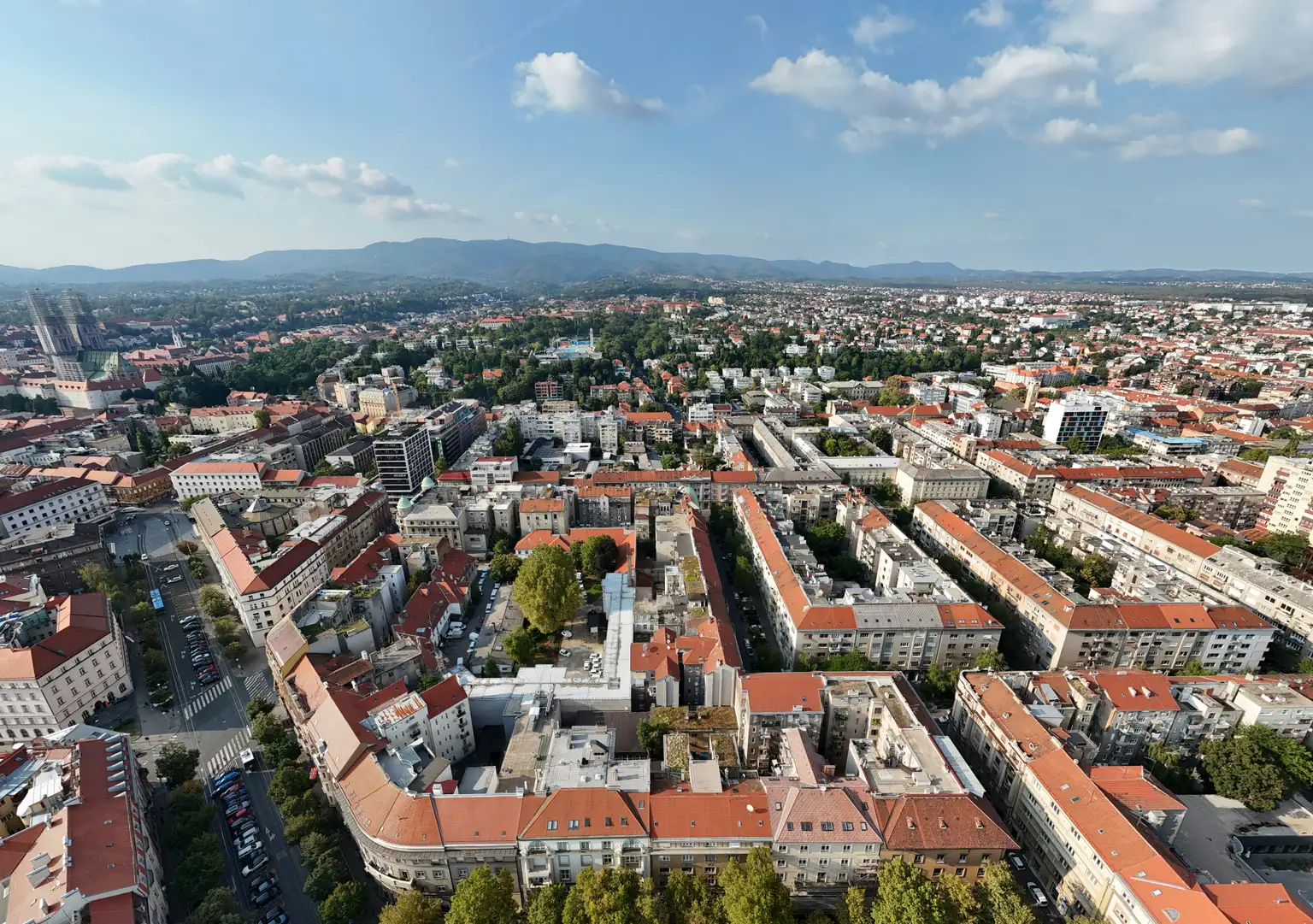
Zagreb's GUP, or the new General Urban Plan of the City of Zagreb, is a document that will guide the development of the metropolis until the mid-21st century. It is a key spatial planning tool that will determine where, how, and under what conditions construction will take place, and its provisions will have a direct impact on the real estate market.
Why is a new GUP being adopted?
The current GUP of the City of Zagreb was adopted almost 25 years ago and no longer meets the city's current needs. In the meantime, Zagreb has changed significantly - population density has increased, infrastructure has developed, and pressure on public and green spaces has become ever greater. The new GUP is being adopted to align the city's development with modern sustainability standards, climate neutrality goals, and the preservation of natural resources, while simultaneously encouraging economic growth.
To which areas will it apply the most?
Although the GUP applies to the entire city, it is particularly important for the southern and northeastern parts of Zagreb, including numerous settlements outside the current scope of the GUP of the City of Zagreb and the GUP of Sesvete, visible on the geoportal of the City of Zagreb. These are areas that have previously had less strict construction and spatial planning rules, so the new plan will provide clearer guidelines for their repurposing, infrastructure construction, and environmental protection. The greatest impact on the real estate market is expected in these areas, as the new rules will determine the potential for the expansion of residential and business zones.
What is the goal?
The new Zagreb GUP has several key goals. It aims to strike a balance between the modernization of the city and the preservation of its valuable natural and cultural resources. The plan envisages the protection of drinking water sources, agricultural and forest land, and the preservation of green areas that are important for the urban ecosystem. At the same time, the goal is to develop transport and utility infrastructure, enable controlled growth of residential settlements, and prevent excessive construction that undermines the city's identity.
Impact on the real estate market and investors
For investors, Zagreb's GUP brings stricter conditions and more detailed procedures, which can prolong the issuance of permits and increase construction costs. This could, especially in attractive zones, increase the price per square meter of new construction. From the perspective of the construction and real estate sector, the new Zagreb GUP introduces a number of additional restrictions and requirements. Stricter construction conditions and more detailed procedures could prolong the permit issuance process and increase costs, which could consequently reflect on the rise in the price of new construction, especially in parts of the city with the greatest demand. Experts warn that the price per square meter in a large part of Zagreb could increase, but the goal of these measures is not to slow down the real estate market, but to direct development towards sustainable and long-term quality projects.
Advantages for citizens
Citizens can expect a better-planned and organized urban space, preserved public areas, and better transport connections. The new GUP should enable a more even development of different parts of the city, and thus a balance between residential and business zones. In the long run, this can improve the quality of life, but also increase the value of real estate in well-maintained areas.
Active participation in the process
The City of Zagreb invites citizens, experts, and investors to submit their proposals and initiatives by September 30, 2025. Participating in the GUP drafting process is an opportunity to shape a document that will have a strong impact on the real estate market, but also on the daily lives of all residents.