Summary
A lien is a right by which a creditor secures their claim so that, if the debtor fails to pay, they can be compensated from the value of specific property — and a mortgage is exactly that: a lien on real estate. For a buyer, these rules are crucial for two reasons. First, to understand what it means when real estate is pledged. Second, and more practically, to know how to recognize and safely proceed when buying real estate that is already encumbered by a mortgage — because an encumbrance recorded in the land registry generally "follows" the property, not the previous owner. In this guide, we explain what a lien is, how it relates to a mortgage, and how to safely buy encumbered property.
Key facts
- A lien secures the creditor's claim from the value of a specific asset if the debtor fails to pay.
- A mortgage is a lien on real estate—one of the forms of security, and this guide specifically deals with it.
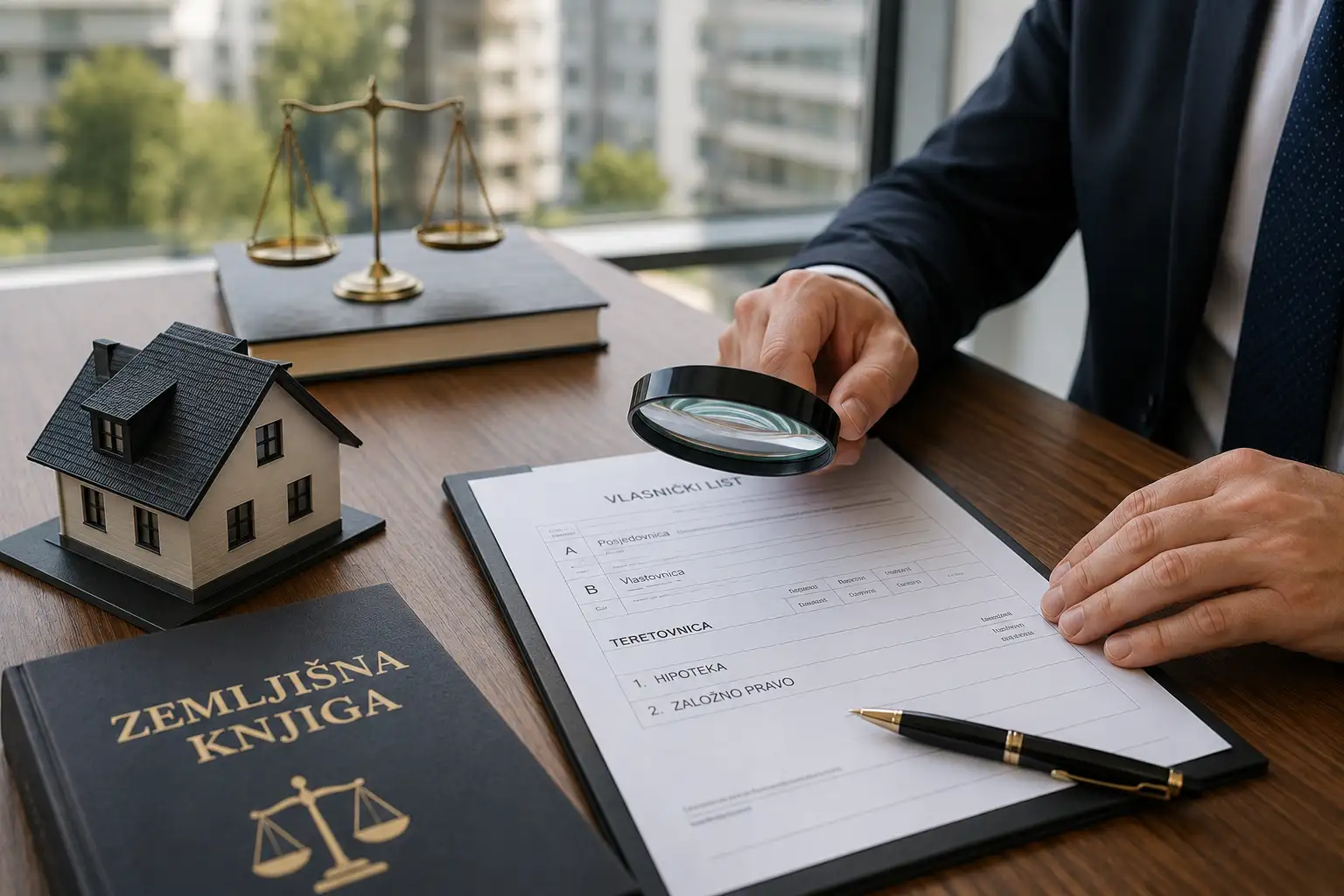
- A mortgage is registered in the encumbrance sheet (Sheet C) of the land registry and is visible from the extract.
- As a rule, the registered encumbrance follows the real estate, not the previous owner.
- Before buying, it is essential to check whether the property is encumbered and under what conditions.
- An encumbered property can be safely bought with the correct procedure and deletion of the encumbrance.
The terms "lien" and "mortgage" are often mentioned when buying real estate, but for many buyers, they remain unclear — and it's important to understand them because they directly affect the security of the purchase. These are legal mechanisms that ensure the payment of debt, and buyers encounter them in two ways: when taking out a loan secured by a mortgage themselves, and equally often, when buying a property that already has someone else's encumbrance.
Buyers most underestimate this second case. A property may be burdened with a mortgage from a previous owner, and this encumbrance typically remains tied to the property even after a change of ownership. A buyer who doesn't check this can unwittingly purchase a property with a debt that is still secured by it. Therefore, in this guide, we start with the basics — what a lien is and how a mortgage fits into it — and then move on to the most practical aspects: how to identify an encumbered property and buy it safely. For a detailed overview of the mortgage itself (creation, deletion after repayment of one's own loan, buyer's rights), we also refer to our separate guide.
What is a Lien, and What is a Mortgage?
A lien is the right of a creditor to satisfy their claim from the value of certain property if the claim is not fulfilled. Simply put, the debtor or a third person provides some property as "security" for a debt: if the debt is not paid, the creditor has the right to satisfy their claim from that property, usually by selling it. A lien thereby provides security to the creditor and enables the debtor to obtain a loan because the creditor has real collateral. In Croatian law, it is regulated by the Law on Ownership and Other Real Rights, and can exist on movables, rights, and real estate.
When the object of the pledge is real estate, the lien is called a mortgage — and this guide focuses precisely on it (we leave pledges on movables and rights aside). A mortgage is the most common and well-known form of pledge because it is closely tied to lending: when a bank approves a housing loan, it regularly requests a mortgage on the real estate as security that the loan will be repaid. If the debtor stops repaying, the bank, as a mortgage creditor, can satisfy its claim from the value of the real estate. It is important to know that the creditor does not thereby become the owner of the property — they only have the right to satisfaction from its value, usually by sale, and a contract by which the property would automatically transfer to the creditor's ownership is not valid.
Professional advice: When you see a mortgage on an excerpt, read it as "this property is security for someone's debt" — this is the starting point for all further questions: whose debt, how much, and how it will be resolved before or as part of your purchase.
Registration in the Land Registry and Why the Encumbrance Follows the Property
A mortgage is established and operates through registration in the land registry. Registration is not a mere formality but a condition for effectiveness towards third parties — only by registration does a mortgage become visible and binding for everyone, including future buyers. It is entered in the encumbrance sheet, Sheet C of the land registry entry, where encumbrances are recorded. Thanks to this, anyone who inspects the land registry excerpt can see if the property is encumbered and by what encumbrance, which is the basis for the security of real estate transactions. A properly registered encumbrance is publicly visible, so the buyer cannot claim that they "could not have known" about it. We write about how to read an excerpt and the land registry in the guide what are the title deed, land registry, and cadastre.
A key feature of a mortgage, which buyers often do not understand, is that it typically follows the property, not the person. A change of ownership itself does not erase the mortgage: if the property is sold and the mortgage has not been deleted, it remains registered and continues to secure the debt for which it was established, so the creditor can still satisfy their claim from the property regardless of the change of ownership. For the same reason, a mortgage also transfers by inheritance — the heir does not acquire the property free of the debt secured by it. The consequence for the buyer is direct: purchasing a property with an undeleted mortgage can mean that it is still encumbered with someone else's debt, with the risk that the creditor will satisfy their claim from it, so the issue of encumbrance must be resolved before or as part of the purchase.
Professional advice: Take it as a rule that the encumbrance follows the property, not the seller — as long as the mortgage has not been deleted or safely resolved as part of the purchase, you are buying both the property and the risk associated with someone else's debt, so never leave this issue "for later."
How to Identify an Encumbered Property
Identifying an encumbered property begins and ends with the land registry. The current land registry excerpt (in practice, also called a title deed) in the encumbrance sheet shows whether a registered mortgage or other lien exists, as well as other encumbrances. It is also worth paying attention to the seal — an indication that a procedure is underway that could change the state of registration, as it may signal the registration or deletion of an encumbrance that has not yet been carried out. Checking the status immediately before key steps of the purchase is just as important as checking at the beginning.
In addition to the excerpt itself, for an encumbered property, it is important to find out the specific details of the encumbrance: who the creditor is, how much the secured debt is, and whether the debt is still active or has already been settled and is just awaiting deletion. It should also be known that multiple mortgages can be registered on one property (e.g., a housing loan and a consumer loan), and the order in which creditors would be satisfied is determined by the priority rank of registration, about which we write more in the guide priority rank of registration in the land registry. Not every mortgage is an equal problem — one that secures an already repaid loan will be resolved by deletion, while one that secures an active debt requires a careful procedure. Therefore, when an encumbrance is noticed, one should not immediately give up, but clarify exactly what it is about.
Professional advice: When you notice a registered mortgage, do not automatically give up, but also do not proceed lightly — clarify who the creditor is, how much the debt is, and whether it is active. The difference between a repaid loan awaiting deletion and an active debt is crucial for how to proceed safely.
Buying Property with a Mortgage: How to Make a Safe Purchase
A property encumbered by a mortgage can be purchased safely, but only with a proper procedure that ensures the buyer is not left with someone else's encumbrance. The usual solution involves deleting the mortgage as part of the transaction itself: a portion of the purchase price, equal to the remaining debt, is directed directly to the creditor (typically a bank) to close the loan, and the difference up to the full price is paid to the seller. When the bank receives this payment and closes the debt, it issues the document required for the deletion of the mortgage — a deletion statement, or consent for deletion. Thus, the debt is settled from the price, and the property is freed from the encumbrance as part of the purchase. It is worth knowing that early loan closure often comes with an early repayment fee, the amount of which is stated in the loan agreement and which is included in the calculation.
It is crucial that the payment, debt settlement, and mortgage deletion are coordinated and secured, not left to trust. Therefore, protection mechanisms are used in such transactions — for example, a notary's escrow, through which funds are paid out only with simultaneous assurance of the encumbrance's deletion. The goal is that the buyer is never in a position where they have paid, but the property still carries someone else's debt. Due to the complexity and amount involved, it is advisable to conduct such transactions with the professional assistance of a public notary or lawyer. We also write about the purchase process itself in the guide how the real estate purchase process works.
Professional advice: When buying an encumbered property, insist that the payment of the price, settlement of the debt, and deletion of the mortgage are linked in a single secured sequence — never pay the full price to the seller with the promise that the mortgage will be deleted "later."
Deletion of Encumbrance After Settlement
When the secured debt is settled, the mortgage does not delete itself — the deletion must be carried out in the land registry. After settlement, the creditor issues a deletion statement, a document with a certified signature confirming that the claim has been satisfied and that they agree to the deletion of the mortgage. Based on this, the owner submits a proposal for deletion to the land registry department of the municipal court, along with a court fee, and only when the deletion has been carried out is the property truly freed from the encumbrance in the land registry, and the excerpt shows this.
For the buyer, it is important not to stop at settling the debt, but to see the process through to the actual deletion of the entry. A settled but undeleted encumbrance is still visible in the land registry and can create ambiguities and problems in future disposition of the property, from sale to a new loan. Therefore, just as with property registration, the deletion of an encumbrance is carried out without unnecessary delay.
Professional advice: Do not consider the job done when the debt is paid, but when the encumbrance is actually deleted from the land registry — a settled but undeleted encumbrance still hangs over the property and can complicate any future sale or loan.
Risks and Most Common Mistakes
The greatest risk with this topic is buying an encumbered property without being aware of the encumbrance or without following the correct procedure. The most common mistake is failing to check the land registry before purchase — relying on the seller's claim that the property is "clean" instead of an up-to-date excerpt. The second is paying the full price without secured deletion of the encumbrance, leaving the buyer unprotected if the deletion is not carried out. The third is stopping at debt settlement without carrying out the actual deletion of the entry.
All these mistakes share the same root: underestimating the fact that the encumbrance follows the property and that the issue must be resolved through the land registry, not through trust or verbal agreements. The good news is that all these risks are avoidable with the correct procedure — thorough checking, linking payment with the deletion of the encumbrance, and bringing the process to a clean land registry status. With professional help and the right sequence of steps, even an encumbered property can be a completely safe purchase.
Professional advice: Three steps remove almost all risk in this topic — check the encumbrance in the current excerpt before purchase, link the payment with secured deletion, and see the deletion through to the end. If you skip any, you leave room for a costly problem.
How Regent Can Help You
Checking for encumbrances and safely purchasing an encumbered property is an area where professional assistance directly protects the buyer. As a real estate agent, checking the land registry status and alerting to encumbrances are part of our job and legal obligations. We verify the property's status, including existing mortgages and other encumbrances, and guide you through a safe purchase process where payment and deletion of encumbrances are properly coordinated. For drafting documents and legal implementation, we collaborate with public notaries and lawyers.
To conduct your purchase without the risk of someone else's debt on your property, see how buying with Regent works or contact us.
Frequently Asked Questions (FAQ)
What is the difference between a lien and a mortgage?
A lien is a general term — the right of a creditor to satisfy their claim from the value of certain property if the debt is not paid. A mortgage is a lien whose subject is real estate. In other words, a mortgage is a type of lien, one that relates to real estate and is registered in the land registry.
Does a mortgage remain on the property after I buy it?
Generally, yes, if it has not been deleted. A mortgage follows the property, not the previous owner, so a change of ownership itself does not erase the encumbrance. Therefore, the issue of the mortgage must be resolved before or as part of the purchase, otherwise the buyer may acquire a property that still secures someone else's debt.
Can I safely buy a property that has a mortgage?
Yes, with the correct procedure. Typically, a portion of the purchase price is directed to settle the debt with the creditor, who issues a deletion statement for the mortgage, thus freeing the property from the encumbrance as part of the transaction. It is crucial to link the payment, debt settlement, and deletion into a secured sequence and manage the process with professional help.
How do I check if a property is encumbered by a mortgage?
By checking the current land registry excerpt, where encumbrances are visible in the encumbrance sheet (Sheet C), including mortgages. It is also worth paying attention to the seal, which indicates a process in progress. One should never rely on a verbal claim that the property is "clean," but on the excerpt itself, checked immediately before the key steps of the purchase.
What happens to a mortgage when the debt is repaid?
The mortgage is not automatically deleted. After the debt is settled, the creditor issues a deletion statement, based on which a proposal for deletion is submitted to the land registry department of the municipal court, along with a court fee. Only when the deletion has been carried out is the property truly freed from the encumbrance, so it is important to see the process through to the end, and not stop at debt settlement.
Is a registered mortgage always a reason to abandon a purchase?
Not necessarily. Not every mortgage is an equal problem — one that secures an already repaid loan will be resolved by deletion, while an active debt requires a careful procedure. When an encumbrance is noticed, instead of automatically giving up, one should clarify who the creditor is, how much the debt is, and whether it is active, and ensure the correct deletion procedure as part of the purchase.
Recommended
- Mortgage: creation, deletion, and buyer's rights
- What are the title deed, land registry, and cadastre, and how to read them
- Property registration in Croatia: what it is, how it works, and what you need to know
- Property inspection before purchase: legal due diligence, technical assessment, and handover