Summary
When you buy an apartment, you're not just buying four walls — you're also buying the building it's located in, the neighbors you'll share space with, and the environment you'll live in. It's these very elements, which are easy to overlook in the excitement surrounding the apartment itself, that often crucially determine how satisfied you'll be with it. You check the building by examining its condition, maintenance, and finances (reserve fund); neighbors by assessing the atmosphere and potential conflicts; and the surroundings by considering noise, amenities, security, and future plans. In this guide, we'll walk you through checking everything outside the apartment itself that significantly impacts life within it.
Key facts
- By purchasing an apartment, you "inherit" the building, neighbors, and surroundings — all of that comes with the apartment.
- The condition and maintenance of the building affect comfort, costs, and future value.
- The building's finances (reserve fund) reveal whether the building is well managed and if higher costs are threatening.
- Neighbors and the community atmosphere strongly influence daily life and are difficult to change.
- Noise, safety, and the amenities of the surroundings shape the quality of life just as much as the apartment itself.
- A lot can be researched in advance if one knows where and how to look.
It's easy to fall in love with an apartment — a beautiful layout, light, decor — and in doing so, forget that the apartment doesn't exist in isolation. It's part of a building, surrounded by neighbors, located in a specific environment, and all of that comes "in a package" with the purchase. You might buy a perfect apartment in a neglected building, with problematic neighbors, or in an environment that doesn't suit you — and very quickly discover that what's outside the apartment spoils the enjoyment of what's inside.
That's why checking the building, neighbors, and surroundings is just as important as checking the apartment itself, but buyers often skip it because they focus on what's immediately visible. The good news is that much can be researched in advance, if you know where and how to look. In this guide, we walk you through the three layers of what you buy with an apartment: the building as a whole, the neighbors and community atmosphere, and the surroundings and location. The goal is for you to know, before buying, not just what the apartment is like, but what exactly you are moving into.
Why you're buying more than just an apartment
Buying an apartment is actually buying a place within a larger whole. The apartment itself is what you look at most, but it's integrated into a building, surrounded by neighbors, and situated in an environment — and each of these layers affects how you'll live in it. Unlike the apartment itself, which you can furnish and change to your liking, you generally cannot change these external layers: you largely "inherit" the building, neighbors, and surroundings as they are.
It is precisely this unchangeability that makes their inspection so important. You can adapt a poor apartment layout, but a neglected building, a difficult atmosphere among neighbors, or a noisy environment are hard to change. Therefore, what's outside the apartment should be checked just as carefully before buying as what's inside — because these very elements, which are easy to overlook, often decide whether you will be happy or disappointed in your new home.
Professional tip: Before falling in love with an apartment, lift your gaze from it to the building, neighbors, and street — you can change and furnish the apartment, but these external layers generally not, so they deserve equal attention as the space you are buying.
The Building: Condition and Finances (Reserve Fund)
The building as a whole directly affects the comfort of living, future costs, and the value of the apartment, so its condition is the first thing to check outside the apartment itself. It's worth paying attention to the condition of the roof (a source of frequent and expensive problems), facade, common installations, staircase, elevator, and the general impression of maintenance of common areas.
A building that is neat and well-maintained is a sign that it is being looked after; a neglected building signals future costs that will fall on you as a co-owner. Pay special attention to signs of major future interventions — a dilapidated roof or facade, an old or problematic elevator, neglected installations — because such interventions are expensive and, when they come, are shared among all co-owners.
Behind the physical condition lies the financial side of the building, which reveals a lot about how it's managed. The key is the reserve fund — the co-owners' common reserve for maintenance. The state of the reserve fund shows whether the building has funds for maintenance and future interventions or operates "from day to day," so it's worth checking its amount, whether the building has debts, and if major interventions are planned that would mean extraordinary costs. A building with a well-maintained, well-funded reserve and no debts is a safer purchase because it's prepared for major interventions, while an empty reserve or announced major renovation can mean significant costs soon after purchase.
It's also worth checking for any unpaid obligations to the reserve fund related to the apartment and resolving them before purchase. We write about the reserve fund itself in a separate guide on the reserve fund.
Professional tip: Don't just look at the apartment — walk through the building, staircase, to the roof if possible, and request insight into the state of the reserve fund, debts, and planned major interventions. A healthy reserve fund and a well-maintained building are a sign that you won't soon face expensive common costs.
Neighbors and Community Atmosphere
Neighbors are perhaps the most "inherited" part of buying an apartment — you choose the apartment, but you get the people around you, and they strongly shape daily life. Good, quiet neighbors and a pleasant atmosphere in the building are a value that is hard to measure but definitely felt; difficult relationships, constant conflicts, or an unpleasant environment can sour life even in the most beautiful apartment. Unlike the apartment, you cannot change your neighbors, so it's worth getting an impression of them before buying.
While the community atmosphere cannot be fully checked, much can be inferred. The general impression during the visit, the appearance and tidiness of common areas (which reflect the community's attitude), the presence of visible conflicts or tensions, and even talking to residents if possible — all provide clues. It's also worth paying attention to the building's profile (family, student, quiet, lively) and whether it suits your lifestyle. Neighbors and atmosphere are not a detail, but one of the most important, yet most often neglected factors of home satisfaction.
Professional tip: If at all possible, talk to some residents of the building before buying and pay attention to the atmosphere and tidiness of common areas — you cannot change neighbors as you can the apartment, and their influence on daily life is hard to overestimate.
Surroundings: Noise, Amenities, and Safety
The environment in which the apartment is located shapes daily life just as much as the apartment itself, starting with the issue of noise — one of the most common sources of home dissatisfaction, easily overlooked during a short daytime visit. Sources can vary: a busy street, loud neighbors, catering establishments, a school or playground, a construction site. An apartment that seems quiet on a Sunday morning can be completely different on a weekday during rush hour or on a weekend evening, so the true noise level is not evident from a single visit. Therefore, noise is best assessed by visiting at different times, paying attention to the apartment's orientation (windows facing the street or a quiet courtyard) and the quality of the carpentry, which can dampen external noise.
Besides peace, the surroundings also include daily amenities and a sense of security. Proximity to shops, schools and kindergartens, health facilities, public transport, and green areas is important to varying degrees depending on your life — families need schools and a safe environment, for some, proximity to work is crucial, for others, peace and greenery. The safety of the neighborhood is assessed through the general impression, tidiness, and atmosphere at different times, especially in the evening, and the reputation of the part of town. Both noise and safety are best assessed by spending time in the neighborhood on multiple occasions, not just one daytime visit, because both, once discovered after purchase, are difficult to change. Therefore, walk through the neighborhood on foot at different times and imagine your actual daily life there — your commute to work, shopping, walks.
Professional tip: Visit the apartment and neighborhood at least twice and at different times — once during rush hour or in the evening — open the windows to hear the actual noise and pay attention to how you feel in the surroundings. A quiet, safe impression from one daytime tour can hide what only becomes apparent once you live there.
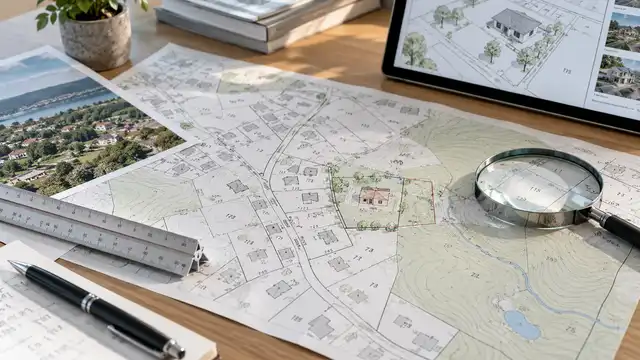
Future Plans for the SurroundingsThe surroundings are not unchangeable — what is good today can change, in both directions, so it pays to check what is planned for the neighborhood. A new road, transport line, school, or park can raise quality and value, while large construction, an industrial facility, or a road that brings noise can lower it. Since many such changes are planned in advance and are visible from spatial plans, which can be checked with the relevant city or municipality, a buyer who checks them can avoid unpleasant surprises and identify opportunities.
This check complements everything said so far: it assesses not only what the environment is like today but also where it is headed. An apartment in a neighborhood with announced improvements can be an excellent purchase, while an apartment for which something unfavorable is planned can lose value and comfort. Checking the spatial planning future of the surroundings is part of a thoughtful purchase, especially for those for whom the apartment is also a long-term investment, not just a current home.
Professional tip: Don't just check what the surroundings are like today, but also what is planned for them — an announced road, construction, or amenity can significantly change the neighborhood in the years after purchase, and this change is often already visible in spatial plans if you know where to look.
How to Research All This Before BuyingAll of the above may sound like a lot, but it boils down to a few practical habits that differentiate a buyer from a mere apartment viewer. First, visit the property multiple times and at different times of day — during the day and in the evening, on weekdays and weekends — because noise, atmosphere, and safety only reveal themselves then. Second, don't stop at the apartment: walk through the building, walk through the neighborhood, notice the amenities, traffic, and general impression. Third, inquire — with the building's residents, about the reserve fund and plans, about the neighborhood.
In addition, part of the check deserves a professional view: the condition of the building and its common parts, the building's finances, and the spatial planning future of the surroundings are questions where the help of an expert or an agency familiar with the local market provides a more reliable picture. This check complements the legal and technical inspection of the property itself, which we write about separately. The time invested almost always pays off, as it prevents the most expensive kind of disappointment — the one discovered only after moving in, when what's outside the apartment can no longer be changed.
Professional tip: Treat the purchase as a research of the whole picture, not just the apartment — multiple visits at different times, a walk through the building and neighborhood, and inquiries about the reserve fund and plans. It is in these steps, not in the apartment itself, that information lies which decides whether you will be happy in your new home.
How Regent Can Help YouChecking everything that comes with an apartment — the building, neighbors, surroundings, and its future — requires knowledge of the local market and experience. From working with clients, we know how much these external layers determine satisfaction with a home, so we help you consider not only the apartment itself but also the condition and finances of the building, the character of the neighborhood, and the spatial planning context of the surroundings, so you know exactly what you are moving into. The goal is for you to buy with a complete picture and without unpleasant surprises after moving in.
For inspection and advice before buying, see what buying with Regent looks like or contact us.
Frequently Asked Questions (FAQ)Why is it important to check the building and surroundings, and not just the apartment?
Because by purchasing an apartment, you "inherit" the building, neighbors, and surroundings, and unlike the apartment itself, you generally cannot change them. A neglected building, a difficult atmosphere among neighbors, or a noisy environment can sour life even in the most beautiful apartment. Therefore, what's outside the apartment deserves equal attention as the space itself.
What should I check about the building's condition before buying?
The condition of the roof, facade, common installations, staircase, and elevator, as well as the general impression of maintenance. Pay special attention to signs that foreshadow major future interventions — a dilapidated roof, an old elevator, neglected installations — because such interventions are expensive and are shared among all co-owners, so they can mean costs soon after purchase.
How to check the building's finances?
By checking the reserve fund — the common reserve for maintenance. It's worth finding out its amount, whether the building has debts, and if major interventions are planned. A healthy, well-funded reserve without debts is a sign of a well-managed building, while an empty fund or an announced major renovation can mean extraordinary costs. It's also worth checking for any unpaid obligations to the reserve fund related to the apartment.
Can I check what the neighbors are like before buying?
Not entirely, but much can be inferred. Pay attention to the atmosphere during the visit, the tidiness of common areas, visible conflicts or tensions, and, if possible, talk to some residents. It's also worth assessing the building's profile (family, student, quiet, lively) and whether it suits your lifestyle, as you cannot change neighbors.
How to assess noise and neighborhood safety?
By visiting at different times of day — during the day and in the evening, on weekdays and weekends — because noise, atmosphere, and a sense of security only reveal themselves then. Open the windows to hear the actual noise level, walk through the neighborhood even in the evening, and pay attention to how you feel. One brief daytime tour can easily hide what only becomes apparent once you live there.
Should I check the plans for the surroundings?
Yes. The surroundings can change — a new road, transport, school, or park can increase value, while large construction or an industrial facility can decrease it. Many changes are planned in advance and are visible from spatial plans, so checking them helps avoid unpleasant surprises and identify opportunities, especially if the apartment is also a long-term investment for you.
RecommendedProperty Inspection Before Purchase: Legal Due Diligence, Technical Assessment, and HandoverWhat to Pay Attention to When Viewing a PropertyBuilding Reserve Fund: How it's Determined and What it's Really Spent OnHow the Real Estate Purchase and Sale Process Works in Croatia — Step by Step