Great Misconception: Why 'Clean Papers' Mean Nothing Without a Usage Permit
When assessing a usage permit, it's important to understand the key differences.You've found the perfect property. The seller shows you a building permit and assures you everything is in order. But it is precisely at this moment that many buyers make the most expensive mistake of their lives — they believe that a building permit is proof that the building is legal and ready for occupancy.
This misconception costs thousands, sometimes tens of thousands of euros.
In practice, a building permit means only one thing: someone has received permission to start building.It says nothing about whether the construction was ever completed according to the project, whether safety standards were met, or whether the building underwent mandatory supervision at all.It's like buying a car with a certificate that it was ordered from the factory — without any guarantee that it was assembled.
A usage permit is what makes a property legally usable. It is, as construction experts often emphasize, the birth certificate of a completed building — a document confirming that the object complies with the approved project and is safe for habitation. Without it, the legality of the property remains questionable regardless of all other papers.
The trap of new construction and unfinished houses is particularly insidious. Sellers often offer properties with a building permit as sufficient guarantee, and buyers accept this without knowing that the final technical inspection was never carried out.
Buying a property without a valid usage permit is not an administrative trifle — it is a high-risk gamble with extremely expensive consequences. But to understand why, it is first necessary to clarify the key difference between these two permits.
Building vs. Usage Permit: Key Differences You Must Know
Many buyers perceive these two permits as the same thing — just different steps in the same process. In practice, they are documents that confirm completely different things, and this difference can cost the buyer both money and nerves.
Building Permit: Green Light to Start Construction
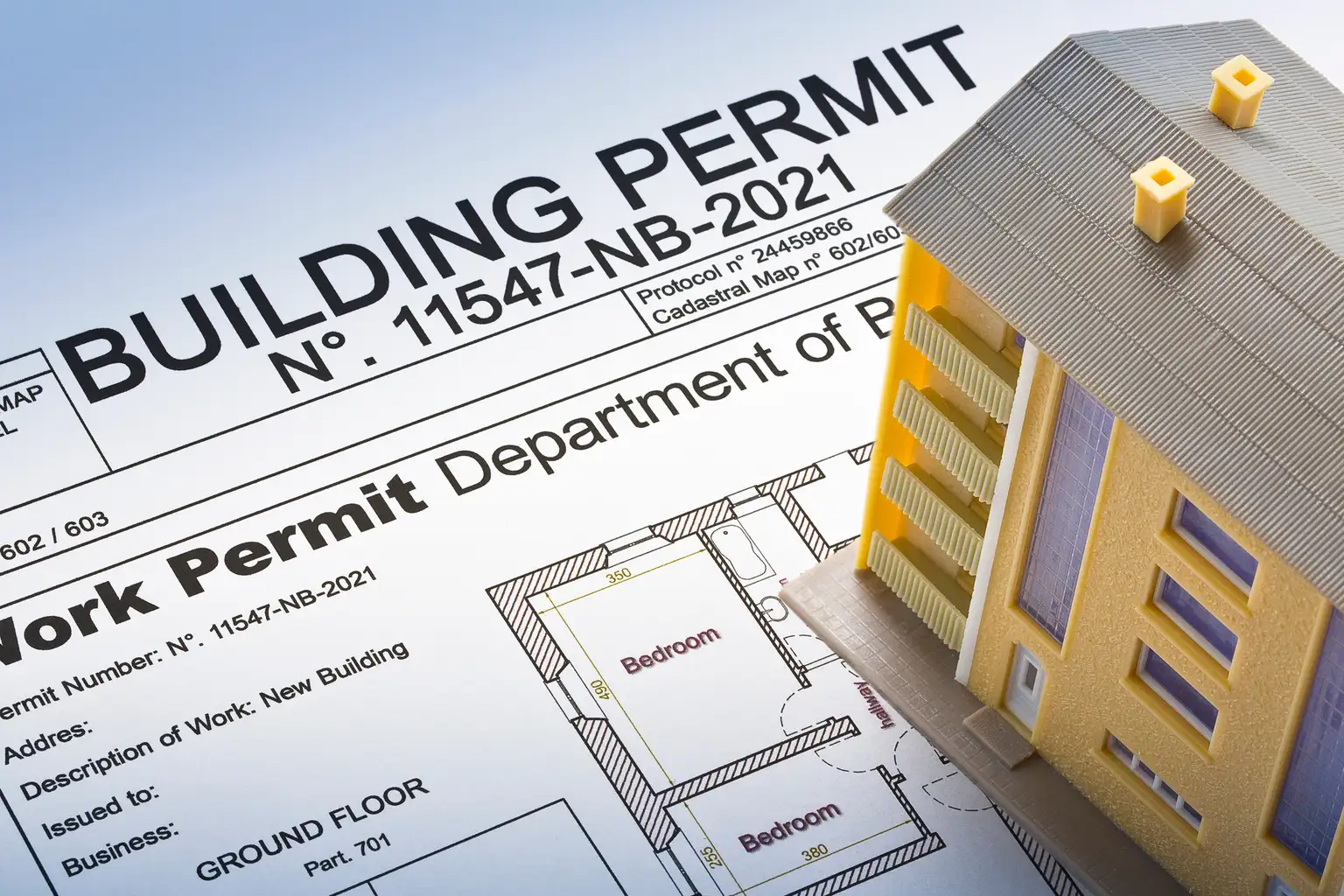
A building permit is the approval that an investor receives before the first nail is hammered. It confirms that the project documentation is in compliance with spatial plans, technical regulations, and legal requirements. In short — the project is correct on paper, and construction may begin.
But the key point is: a building permit says nothing about whether the building was actually built according to that project. It is just a starting point.
Usage Permit: Confirmation That the Building is Actually Completed and Safe
While a building permit opens the construction site, a usage permit closes it.
A usage permit is an official confirmation that the constructed building complies with the approved project documentation and meets all prescribed conditions for safe use.
A usage permit is not a formality — it is proof that you can enter, live in, and be safe in the building.
Technical Inspection: The Bridge Between Two Permits
Between obtaining a building permit and a usage permit lies the technical inspection.
This is a procedure in which an authorized commission physically inspects the completed building and checks:
- Whether the execution complies with the project
- Whether fire, earthquake, and structural safety conditions are met
- Whether the electrical, water, and sewage installations are properly executed
Without a positive technical inspection — no usage permit.
Asymmetry That Confuses Buyers
There is an important asymmetry that is rarely discussed: you cannot have a valid usage permit without a prior building permit, but you can absolutely have a building permit without a usage permit. And it is precisely in this space — between the permit to build and the permit to use — that the greatest risk for buyers lies.
This legal "gray zone" is particularly relevant when it comes to financing a property, which we will elaborate on in the next section.
Home Loan and Usage Permit: Why Banks Don't Negotiate?
Once you understand the difference between a building permit and a usage permit, it's logical to ask: why do banks care so much about this final confirmation?
The answer is simple — for a bank, a property without a usage permit is not a home. It is risky asset whose legal status can be called into question at any time.
Property as Collateral: Bank's Logic
When approving a home loan, the bank doesn't finance your dreams — it finances the asset that serves as collateral for it.
If the borrower stops repaying the loan, the bank must be able to sell that asset.
A property without a usage permit is not a legal residential unit in the full sense, which means that its sale in case of foreclosure would be extremely difficult, if not impossible.The bank simply will not put money into an asset it cannot recover.
Decision on Constructed State as an Alternative
There is one exception worth knowing about.For older buildings that never went through the regular procedure, sometimes the Decision on Constructed State is accepted as an acceptable substitute — a document that legalizes the factual state of the building.However, each bank has its own criteria, and this is not an automatic solution. Some institutions accept this document, others do not. It is always necessary to check with the specific bank in advance.
What Has Changed Since 2024?
The construction boom that has engulfed Croatia, especially in the Adriatic cities and Zagreb, has prompted banks to increase their caution. The increased number of newly built objects offered on the market without complete documentation has forced financial institutions to check documentation even more strictly for every loan application.
Cash Purchase Does Not Mean No Risk
You might think that buying with cash frees you from this concern. In the short term — perhaps. But the risks don't disappear, they are just postponed. And that's where the story for the next chapter lies.
Risks of Buying a House Without a Usage Permit: More Than Just the Loan
The question of whether you can buy a house without a usage permit technically has an affirmative answer — but the real answer is: you can, but you will almost certainly regret it.The inability to get a home loan is just the tip of the iceberg. The risks run much deeper and can have consequences that last for years after moving in.
Connections to Utility Infrastructure
One of the first practical problems buyers face is connecting to the network.Utility companies for water, electricity, and gas generally require a usage permit as a prerequisite for issuing a permanent connection. Without it, you may be stuck with temporary solutions — or not have them at all.Imagine the situation: you buy a house, move in, and then discover that you cannot get a regular contract with HEP (Croatian Electric Company) or the local water company.
The Problem of "Illegal Squares"
An even more insidious risk is the so-called problem of illegal squares. If the building was constructed with deviations from the approved project documentation — for example, if the investor added a floor or expanded the floor plan — those squares do not legally exist. You pay for space that has no legal status, you cannot register it in the land registry, and, equally importantly, you cannot legally sell it.
Resale Becomes a Nightmare
A house without a usage permit is almost unsellable on a market that operates according to rules. Future buyers will find themselves in the same situation as you — unable to get financing through a loan. This drastically narrows the circle of potential buyers, and thus the market value of the property.
Inspection Orders and Demolition
In extreme cases, especially when there are significant deviations from the project, the construction inspection can impose high fines or even an order for the demolition of part of the building. This is not a theoretical possibility — such cases have been documented in Croatian practice.
When you are aware of all these risks, the following question logically arises: how to actually check the status of permits before you sign a deposit?
Buyer's Guide: How to Check Permit Status Before Deposit
Knowing all the risks we have described so far — from the inability to get a home loan without a usage permit to forced demolition — the practical question arises: how to check the status of the property yourself before signing anything?
Use the ISPU Portal
The Information System of Spatial Planning (ISPU) is a publicly available online tool that allows anyone to view spatial plans, issued permits, and the status of individual properties.Enter the cadastral parcel or address and check if valid documentation is recorded for the building. The process takes only a few minutes and can save you years of legal problems.
Check the Land Registry
In the Land Registry, look for a so-called annotation — a special note that indicates whether a usage permit has been attached to the title deed.If there is no annotation or the property is registered as "illegally built," this is a clear red signal.Access is possible via e-Upisnik or in person at the competent municipal court.
Ask the Agent and Seller Directly
Don't wait for information to come on its own.
Specifically ask:
- Is there a valid usage permit and can you see it?
- When was it issued and for which building?
- Has the building been legalized or is it in the process of legalization?
Experienced agents will have answers immediately. Hesitation or evasion of answers speaks volumes in itself.
Engage an Expert
A lawyer specializing in real estate is not an expense — it is an investment.They will review all documentation, identify hidden legal encumbrances, and protect you from contracts that look favorable but hide serious pitfalls.
Once you have checked all these steps, you can make an informed decision — and that's what our conclusion is about.
Conclusion: Safety Has No Price
A building permit marks the beginning of the story — a usage permit marks its end.Without this final document, the house is technically not ready for habitation, no matter how beautiful it looks from the outside. A usage permit is not a bureaucratic formality; it is confirmation that the building is safe to live in.
The Construction Act clearly sets the rules of the game, and buyers who ignore them expose themselves to risks that far outweigh any potential "favorable" property price. Offers that seem too good to be true — usually are.
Key Features:
- Building Permit ≠ Usage Permit
- Without a Usage Permit, there is no legal occupancy or home loan
- Checking documentation before a deposit is not an option — it's an obligation
Before signing any contract, consult with an experienced lawyer or authorized expert.One hour of professional advice can save you years of legal and financial problems.
Finally, it is important to emphasize what makes the difference in practice between a safe purchase and an expensive mistake — timely checks and expert support.
If you are considering buying a property and want to be completely sure of its legal status, leave nothing to chance.Every property has its story, but only a thorough analysis of the documentation reveals whether that story is truly "clean."
At our Regent agency, we help buyers make informed and safe decisions every day — from the first check of documentation to the finalization of the sale.
Contact us with confidence and ensure that your next investment is safe, transparent, and without unpleasant surprises.