Summary
Registration of a building in the cadastre is a process by which a constructed object (building) is entered into the cadastral records and drawn on the cadastral map, thereby showing the actual situation on the land. Unlike a cadastral parcel, which registers land, the registration of a building records the object on that land. The procedure is usually carried out after lawful construction, based on a geodetic report prepared by an authorized geodetic engineer, and is linked to permits and the entry into the land registry. An unregistered or non-compliant building is a common problem when buying. In this guide, we explain what registration means, when the obligation arises, and how to check it.
Key facts
- Registration of a building is the entry of a constructed object into the cadastral records and onto the cadastral map.
- It differs from a cadastral parcel: a parcel registers the land, while registration records the object on it.
- It is usually carried out after legal construction, based on a geodetic survey report by an authorized geodetic engineer.
- It is linked to the building and occupancy permits, and with the entry into the land registry.
- An unregistered or non-compliant building is a common problem during sale and purchase.
- Before purchasing, it is necessary to check whether the building is registered and whether the registration matches the actual state.
When a house or other building is constructed on a plot of land, that object does not "officially" exist in the records by itself — it must be entered into them. One of the steps often overlooked is the registration of the building in the cadastre: a procedure by which the constructed object is entered into the cadastral records and drawn on the cadastral plan. Only then does the cadastre, which maintains data on land and what is on it, show the actual state — not just the parcel, but also the building standing on it.
For owners and buyers, this is a very practical issue, although it sounds technical. An unregistered building or the discrepancy between the cadastre and the actual state is a frequent source of complications — during sale, lending, registration, or future interventions. A buyer who encounters a house not registered in the cadastre, or registered differently from how it actually looks, may face a problem. In this guide, we explain what it means to register a building in the cadastre, why it is important, when the obligation to register arises, what documentation it requires, and how it is related to permits and the land registry — all with an emphasis on what the buyer and owner need to check.
What it means to register a building in the cadastre
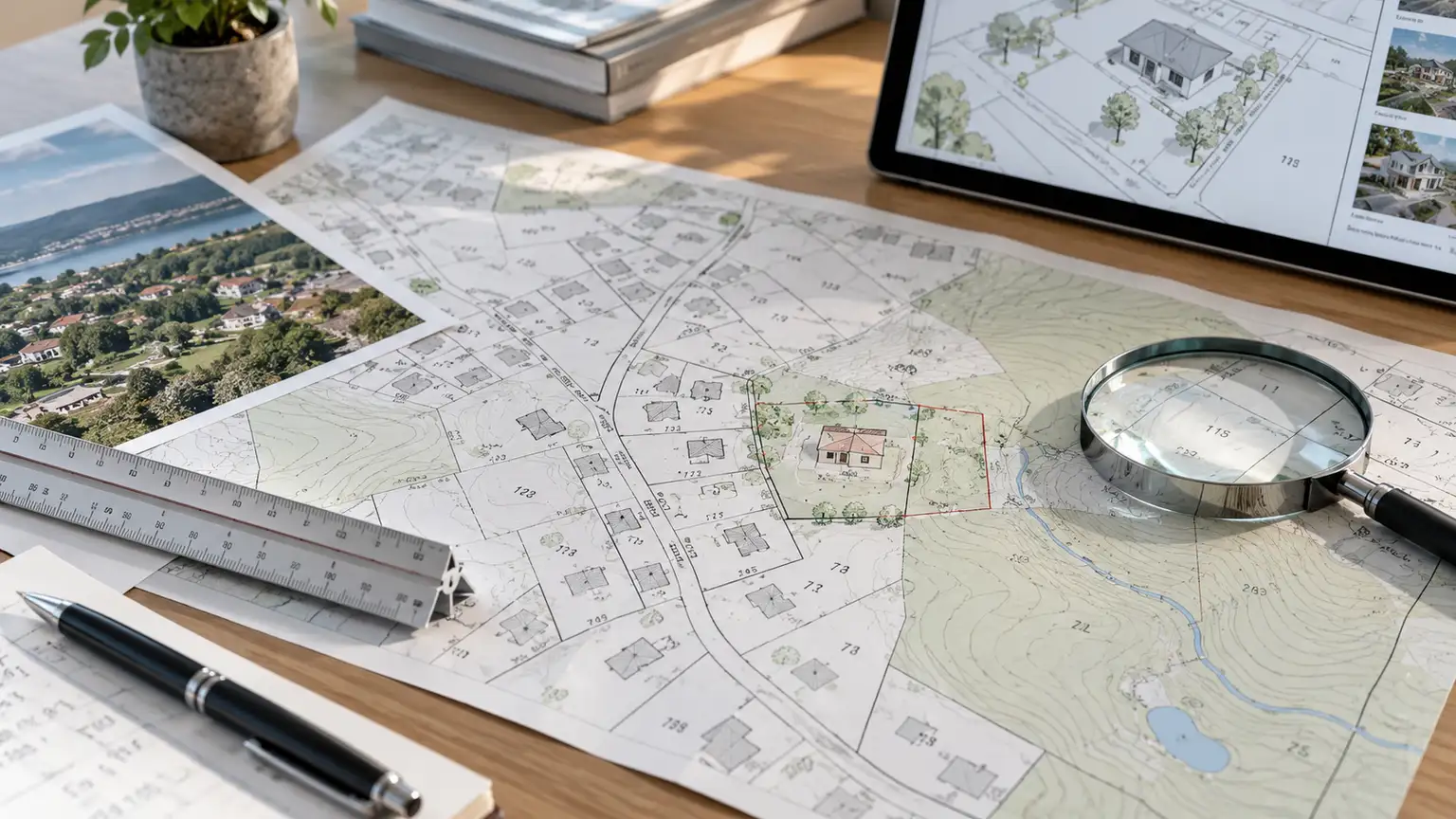
Registering a building in the cadastre is a procedure by which a constructed building is entered into the cadastral records and drawn on the cadastral plan, so that the cadastre shows not only the land (cadastral parcel), but also the object standing on it. Since the cadastre maintains data on land and what is on it, a constructed building must be entered into it for the records to correspond to the actual state on the ground.
Before registration, the cadastral plan may show a parcel without a building that actually exists on it. The procedure is regulated by the Law on State Survey and Cadastre of Real Estate (Official Gazette, no. 112/18, 39/22 and 152/24).
It is important not to confuse building registration with a cadastral parcel, as these are two related but different things. A cadastral parcel is the unit by which the cadastre records land — a piece of land with a number, area, and boundaries. Building registration refers to the object built on that land, a building that is entered into the records and drawn on the parcel. Simply put: the parcel is the land, the registered building is the structure on it, and a complete cadastral picture of the property includes both. For the buyer, this means that the check covers both questions — "what is the land" and "what is built on it and is it registered". We write about the parcel itself and reading records in the guide what are the title deed, land registry, and cadastre.
Professional tip: Understand building registration as "entering the building onto the map" — until the object is registered, the cadastre shows only the land as if it were empty. Compliance of records with the actual state is the foundation for safe disposal of property.
Why registration is important
Building registration is not a mere formality, but the foundation for aligning records with the actual state, upon which a number of practical matters depend. When a building is properly registered and the cadastre corresponds to reality, the property can be safely disposed of — sold, encumbered, registered, or used as collateral for a loan. When a building is not registered or the records do not correspond to the actual state, a discrepancy arises that complicates all these procedures.
Specifically, an unregistered or unaligned building can hinder or prevent registration in the land registry, complicate obtaining a loan (as banks require an orderly state), slow down or disrupt a sale, and create problems during future interventions on the property. Orderly records, on the other hand, are a sign of a "clean" property that can be easily and safely disposed of. Therefore, building registration is part of the orderly status of a property, not an administrative detail that can be neglected.
Professional tip: Treat orderly building registration as part of the property's "health," just like clear ownership — an unregistered or unaligned building can halt a loan, registration, or sale at the worst possible moment.
When the obligation to register arises
The need for building registration in the cadastre generally arises after the building has been legally constructed — when there is a constructed object that needs to be entered into the records so that they correspond to the actual state. Registration is thus connected to the construction process and its completion: a new building, an extension, reconstruction, or any other change that alters the actual state on the ground is a reason for aligning the cadastral records. The holder of rights to the property is obliged to report the change to the cadastre within the legally prescribed period, so registration is not something that can be postponed without consequences.
Here it is important to distinguish two things that are easily confused. A building permit is the basis for construction — permission to start building an object — but it is not sufficient for registration in itself, as a completed building is entered into the cadastre. Therefore, proof that the construction is finished and lawful is submitted for registration: usually an occupancy permit, which confirms that the building can be used, and for legalized buildings, a decision on the as-built condition. For buildings for which an occupancy permit is not issued and for older structures (e.g., buildings constructed until February 15, 1968, or based on a building permit issued until mid-1991), legality is proven in a prescribed, different manner. For objects without proper documentation, registration is not straightforward and is linked to the question of legality, about which we write more in the guide on object legalization.
Professional tip: If you are building, extending, or reconstructing, count on registration as part of completing the work, not as something "for later" — aligning the cadastre with the actual state is easiest immediately, while the documentation is fresh, not years later when it's needed for sale.
Geodetic survey and the role of the geodetic engineer
Building registration in the cadastre is not carried out by a mere "application," but based on expert geodetic documentation — a geodetic survey report for registering data on buildings and other structures — prepared by an authorized geodetic engineer. This report precisely determines the position, floor plan dimensions, and placement of the building on the parcel through measurement and serves as the basis on which the building is entered into the cadastral records and drawn on the plan. The registration itself is then carried out by the regional cadastral office (for Zagreb, the City of Zagreb office) by a decision in an administrative procedure. Without such expert documentation, registration generally cannot be carried out.
The role of the authorized geodetic engineer here is crucial and professional: by measuring and preparing the report, they ensure that the records accurately correspond to the actual state on the ground. For the owner, this means that registration is not something they do themselves, but with an expert, and the cost and engagement of the geodetic engineer are part of the process. The type of required documentation and the course of the procedure may vary depending on the situation — new construction, extension, or change to an existing building — so it is worth checking specific requirements in advance.
Professional tip: For building registration, count on engaging an authorized geodetic engineer and preparing the appropriate report — this is not a formality you handle yourself, but a professional job whose accuracy determines whether the records will correspond to the actual state.
Connection with permits and the land registry
Building registration is closely connected with permits in the construction process. Lawful construction implies appropriate acts — a building permit (or another suitable basis, depending on the type of building) and, upon completion, an occupancy permit confirming that the building can be used. There are two paths: for a building with an occupancy permit, the cadastre registers the building ex officio, after the construction authority provides the executive occupancy permit and geodetic basis, while a building for which an occupancy permit is not issued is registered upon the party's request. We write about the acts themselves in the guide building and occupancy permit.
Registration is also connected with entry into the land registry, as the two systems need to reflect a synchronized state: the cadastre maintains physical data (including the registered building and its location), and the land registry maintains legal data (ownership, rights, burdens). Building data from the cadastre serve as the basis for the corresponding entry in the land registry, so registration and real estate registration in Croatia go hand in hand. In this context, the court notes in the possession sheet whether an occupancy permit was submitted for registration — but it is important to know that this note is not proof of the legality of the building, but only proof that the document was submitted. As with parcels, a discrepancy between the two systems is possible (a building registered in one but not reflected in the other, or data deviates), which needs to be resolved.
Professional tip: When checking a property, look at permits, the cadastre, and the land registry together — a properly constructed building has both the appropriate acts and aligned registration. Discrepancy between what has been built, documented, and registered is a sign that something needs to be clarified before purchase.
Unregistered buildings and problems during purchase
For a buyer, the most practical part of this topic is encountering an unregistered or unaligned building. In practice, it is not uncommon to find a property where the building is not registered in the cadastre, or is registered differently from how it actually looks — for example, an extended part or the entire building that is not visible in the records. Such a situation is a warning for the buyer, as the discrepancy may indicate an unresolved construction status, possible illegality of part of the object, or simply missed registration.
The consequences can be serious: difficult registration, loan problems, complications during sale, and, in the worst case, the question of the building's legality. Therefore, before purchase, it is necessary to check whether the building is registered and whether the records correspond to the actual state on the ground — by comparing the cadastre, land registry, and the actual building. If a discrepancy is noticed, its cause must be clarified and a solution sought before purchase, because otherwise the problem, and its cost, passes to the buyer. This is part of a broader legal and technical property inspection before purchase.
Professional tip: Before purchasing, compare the actual building with what is written in the cadastre and land registry — if an extended part or the entire object "does not exist" in the records, this is a sign of caution and a question that needs to be resolved before, not after, you become the owner.
How Regent can help you
Checking whether a building is properly registered and aligned with records is part of a secure purchase where expert assistance protects the buyer. As a real estate intermediary, we verify the cadastral and land registry status of the property, identify any potential discrepancies between the actual building and the records, and guide you on what needs to be clarified before purchase, including the construction status and the need for geodetic alignment. The goal is for you to purchase a property whose status corresponds to the actual state.
For verification and advice, see what purchasing with Regent looks like or contact us.
Frequently Asked Questions (FAQ)
What does it mean to register a building in the cadastre?
Building registration is a procedure by which a constructed building is entered into the cadastral records and drawn on the cadastral plan, so that the cadastre shows not only the land (parcel), but also the object standing on it. The goal is for the official record to faithfully reflect the actual state on the ground — which building, of what dimensions and position, stands on which parcel.
What is the difference between a cadastral parcel and building registration?
A cadastral parcel is the unit by which the cadastre records land, and building registration refers to the building constructed on that land. Simply put, the parcel is the land, and the registered building is the object on it. Both data are kept in the cadastre and together form a complete picture of the property.
When must a building be registered in the cadastre?
The need for registration generally arises after lawful construction, when there is a constructed object that needs to be entered into the records — for a new building, an extension, reconstruction, or other change in the actual state. The rights holder is obliged to report the change to the cadastre within the legally prescribed period, and registration is linked to lawful construction and the corresponding documentation.
Who carries out building registration?
The geodetic documentation — a geodetic survey report for registering data on buildings and other structures — is prepared by an authorized geodetic engineer, and the registration itself is carried out by the regional cadastral office (for Zagreb, the City of Zagreb office) by a decision in an administrative procedure. The owner, therefore, does not do this themselves, but with an authorized expert, and their engagement is part of the process and cost.
What if a building is not registered in the cadastre?
An unregistered or unaligned building can hinder or prevent registration, complicate loans and sales, and, in the worst case, point to the question of the object's legality. Therefore, before purchase, it is essential to check whether the building is registered and whether the records correspond to the actual state. If a discrepancy is noticed, its cause must be clarified and a solution sought before purchase.
How does registration in the cadastre affect the land registry?
The cadastre and land registry must reflect a synchronized state: the cadastre maintains physical data about the building, and the land registry maintains legal data. Building data from the cadastre serve as the basis for the corresponding entry in the land registry, whereby the court notes in the possession sheet whether an occupancy permit was submitted for registration. This note is not proof of legality, but of the documentation's submission.
Recommended
- What are the title deed, land registry, and cadastre and how to read them
- Building and occupancy permit
- Real estate registration in Croatia: what it is, how it works, and what you need to know
- Property inspection before purchase: legal check, technical assessment, and handover