Summary
An apartment on the ground floor carries a clear set of advantages and an equally clear set of risks, so the worst decision is one made without knowing both. The advantages include the absence of stairs and reliance on an elevator, easy accessibility, often direct access to a garden or courtyard, and a lower price per square meter. The risks include humidity and poorer ventilation, security and privacy concerns, more noise and dust from the street, and usually less light. A ground floor apartment can be an excellent choice for some and a bad one for others — the key is knowing what specifically to check before buying. In this guide, we break down the advantages, disadvantages, and a specific checklist.
Key facts
- The ground floor carries real advantages (accessibility, garden, lower price) and real risks (moisture, security, noise).
- Moisture is the main technical risk and must be checked before buying, as remediation can be expensive.
- Besides wall moisture, the ground floor also carries a separate risk of water penetration during heavy rains.
- The lower price of the ground floor is a reflection of precisely these risks, and not always a favorable opportunity.
- Security and privacy can be addressed, but they require investment and consideration.
- The same characteristic of the ground floor is an advantage to one and a disadvantage to another — it is crucial for whom it is being bought.
A ground floor apartment often evokes divided reactions. For some, it's a logical and practical choice — no stairs, no waiting for an elevator, with the possibility of a private garden and, usually, at a lower price. For others, it's almost a taboo, associated with notions of dampness, break-ins, and street noise. The truth, as usual, lies in the middle and depends on the specific apartment: a ground floor in a quality, dry building with a courtyard is a completely different story from a damp ground floor next to a busy street.
Precisely because of this dispersion of quality, buying a ground floor apartment requires more attention and more specific checks than buying an apartment on a higher floor. The same characteristics that are a great advantage for some can be a disadvantage for others, and some risks can be mitigated or completely eliminated by proper verification before purchase. In this guide, we systematically go through the advantages of a ground floor, its real drawbacks, and — most importantly — a concrete list of what needs to be checked before you decide, to avoid a bad apartment and recognize a good one.
Why the Ground Floor Divides Opinions
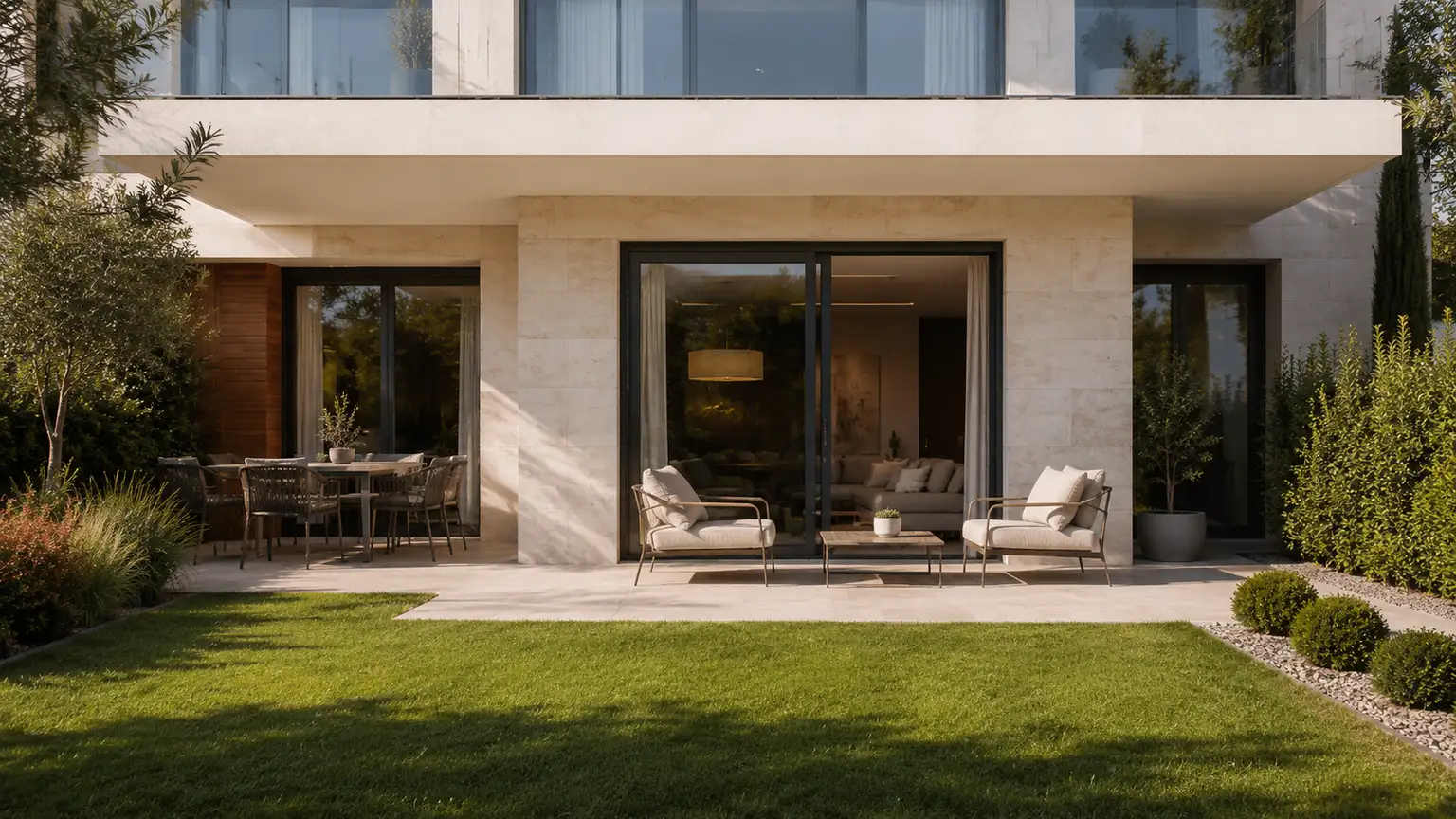
A ground floor apartment is an apartment at ground level, with windows close to the ground and often direct access from outside — to a garden, courtyard, or street. These very features make it the only type of apartment whose fundamental characteristics can be experienced as both a great advantage and a great disadvantage, depending on the buyer and the specific property. Direct access from outside means comfort and a garden to some, and vulnerability to break-ins and passersby's glances to others. Proximity to the ground means ease of movement, but also greater exposure to dampness. This dual nature explains why opinions about the ground floor are so divided — people are actually talking about different apartments.
Therefore, general assessments like "the ground floor is bad" or "the ground floor is a great opportunity" are not worth much. The quality of ground floors is extremely varied: two apartments on the same street can be diametrically opposite in terms of dampness, light, security, and noise. The real question is never whether the ground floor is good, but whether this specific ground floor is good for you and your needs — and the answer to that is provided by specific checks, not general opinions.
Professional tip: Instead of asking "is the ground floor good," ask "is this ground floor good for me" — the differences between two ground floors on the same street can be greater than the difference between a higher floor and a ground floor.
Advantages: Accessibility, Garden, and Price
The most concrete advantage of a ground floor is accessibility. No stairs, no reliance on an elevator, no carrying things up flights of stairs — a convenience everyone appreciates when moving furniture or doing a large shopping trip, and which for some groups transitions from convenience to necessity. For elderly people, those with reduced mobility, or those using wheelchairs, the ground floor offers independence that higher floors without an elevator simply cannot. This advantage gains additional weight in the long term: an apartment is bought for years, and mobility changes over time, so a ground floor that is merely a convenience today can later become crucial for independent living in one's own home. For families with small children, the advantage is daily, from going out with strollers without struggling with stairs.
Another great advantage of many ground floors is direct access to an outdoor space — a private garden, courtyard, or ground-level terrace, something that higher floors only offer in the form of balconies. For many, this is precisely the decisive factor: space for children and pets, a place for outdoor gatherings, morning coffee outside, an extension of the living room during warmer months. It is worth, however, checking the legal status of that space, because a garden that is truly yours is a great advantage, while a shared one or one with unclear status can easily become a source of disputes. The right of exclusive ownership, co-ownership, and mere right of use are three different things, and they are read from the land registry and, in the case of buildings with condominium status, from the condominium study and the co-ownership agreement — which applies equally to a garden, storage room, and courtyard that are "attached" to the apartment.
Finally, there is the price: ground floor apartments are generally cheaper per square meter than apartments on higher floors in the same building, so for the same money, you can get a larger or better-located apartment. This lower price, however, is neither accidental nor a pure opportunity — it is a market reflection of precisely those risks that we analyze below.
Professional tip: Before you include the garden in the value of the apartment, check in the ownership documentation if it is truly yours. In practice, this is where the most common unpleasant surprises often hide with ground floor properties.
Dampness, Ventilation, and Light
Dampness is the most serious technical risk of a ground floor and deserves the most attention. Ground floor apartments are closer to the ground, so they are more exposed to capillary dampness rising from the foundations and moisture from the surrounding terrain. Poor or non-existent waterproofing, inadequate drainage around the building, and poor ventilation can lead to damp walls, mold, and a feeling of coldness and mustiness. The problem is not just aesthetic — prolonged dampness harms health and property value, and remediation can be complex and expensive. In addition to wall dampness, there is a separate risk: water penetration during heavy rains, especially if the apartment is slightly below the surrounding ground level, if the external grading is poorly done, or if the drainage is clogged. This is a different problem from capillary dampness and is checked separately.
The risk is not the same for all ground floors, and therein lies the key. A well-built, properly insulated building with good drainage can have a completely dry, pleasant ground floor, while an older building without waterproofing can have a chronic problem. Therefore, the condition must be checked specifically: traces of dampness and mold (especially in corners, behind furniture, and at the bottom of walls), a musty smell, the state of waterproofing, and the history of problems in the building. Light is also closely related to dampness. Ground floors generally receive less natural light because surrounding buildings, fences, and trees often shade them, and less light combined with poor ventilation further enhances the impression of mustiness. Even here, the rule is not absolute: a ground floor facing south and an open garden can be quite bright, while one facing north or a narrow courtyard remains permanently dark — so assess the light on-site, at different times of the day.
Professional tip: View the apartment after a long rainy period and check the bottom of the walls and corners behind furniture. A freshly painted wall near the floor is a common sign that a dampness problem is being concealed, which will return.
Security, Privacy, and Noise
Direct external access, an advantage for accessibility, is also the source of two related issues: security and privacy. Ground floor apartments are more easily accessible from the street or courtyard, so they are considered more exposed to the risk of break-ins, and windows at eye level for passersby can compromise privacy. Both issues, however, are solvable, but require consideration and potential cost. Security is enhanced by quality carpentry, security shutters or bars, an alarm, and a well-secured entrance and courtyard; privacy is protected by curtains, greenery, fences, or a smart room layout. A ground floor in an enclosed, private courtyard or in a building with controlled access is significantly safer and more private than a ground floor with windows directly onto a busy street.
Proximity to the ground also means proximity to noise and dust. A ground floor next to a street is more exposed to traffic noise and street hustle than higher floors, and the same proximity also means more dust and exhaust fumes from street level. For those sensitive to noise or who spend a lot of time at home, this can be a significant daily drawback. This risk is also assessed specifically: a ground floor on a quiet, side street or facing an inner courtyard can be as quiet as a higher floor, while a ground floor next to a busy road suffers noise all day. Crucial factors are window orientation (towards the street or courtyard), street traffic, and the quality of the joinery, which can significantly dampen external noise.
Professional tip: Visit the apartment during rush hour and open the windows — only then will you hear the actual noise level. An apartment quiet on a Sunday morning can be completely different on a weekday during peak traffic.
For Whom a Ground Floor Apartment is a Good Choice
Since the same characteristics of a ground floor mean different things to different people, the question "is a ground floor worth it" is best translated into "for whom is it worth it". The ground floor is an excellent choice for people for whom accessibility means a lot — elderly people, people with reduced mobility, and families with small children and strollers. It is also great for those who want their own garden or outdoor space, as well as for buyers with a limited budget for whom a lower price allows for a larger or better-located apartment.
On the other hand, a ground floor is a weaker choice if light, open views, peace, and a sense of security are your top priorities, especially if you are not willing to invest in addressing these issues. It is crucial that the decision stems from your priorities and lifestyle, and not from the general reputation of the ground floor. When you know what is important to you, you will easily recognize whether a specific ground floor is an opportunity for you or a compromise you do not want.
Professional tip: Before viewing, list your priorities — accessibility, garden, and price versus light, peace, and security. Your list will immediately tell you if a ground floor rewards what matters most to you.
What to Look Out For Before Buying
Due to the varied quality of ground floors, pre-purchase checks here are more important than for apartments on higher floors and should be approached systematically. First and foremost is dampness: traces of dampness and mold at the bottom of walls and in corners, a musty smell, the condition of waterproofing and drainage, and the history of problems in the building, along with an assessment of the risk of water penetration during heavy rains. Next are light and orientation (cardinal direction, height of obstacles in front of windows, impression at different times of the day), then noise and environment (street traffic, window orientation, impression during rush hour), and security and privacy (window exposure and possibility of protection). If the apartment has a garden, storage room, or courtyard, check their exact legal status in the land registry and condominium documentation.
Only with that complete picture does it make sense to evaluate the price. A lower ground floor price is an opportunity if the risks in the specific apartment are resolved or do not bother you personally, but a trap if the risks are real and unresolved, as savings during purchase can easily turn into high remediation costs. It is worth including a professional inspection in the entire assessment, especially for dampness and structural condition, as an amateur can easily overlook precisely what is most expensive to remediate. We have described what a thorough property inspection before purchase looks like separately. For all of the above, it is useful to visit the apartment multiple times and under different conditions, as the true character of a ground floor is not apparent from a single short visit.
Professional tip: Write a checklist (dampness, water penetration, light, noise, security, garden status) and go through it on site. With ground floors, good and bad purchases differ precisely in the details that are easy to overlook if you rely only on first impressions.
How Regent Can Help You
Buying a ground floor apartment, more than other apartments, depends on specific checks, and this is where we can be of real help to you. At Regent, we help you realistically assess the advantages and risks of a specific apartment, verify the legal status of the property and any garden or courtyard, and guide you on what needs to be professionally inspected before purchase. The technical findings themselves — such as testing for dampness and structural condition — are carried out by authorized experts, and we ensure you know what, when, and why to check. The goal is simple: to recognize a good ground floor and avoid a bad one. For advice and an offer tailored to your priorities, see what buying with Regent looks like or contact us.
Frequently Asked Questions (FAQ)
Is it worth buying a ground floor apartment?
It depends on the specific apartment and your priorities. A ground floor is worthwhile for those who highly value accessibility, a private garden, or a lower price, but it's a weaker choice for those whose top priorities are light, peace, and a sense of security. There is no universal answer because the quality of ground floors is very varied — it is crucial for whom and which apartment is being bought.
What is the biggest risk with a ground floor apartment?
Dampness. Ground floor apartments are closer to the ground and more exposed to capillary dampness and moisture from the surrounding terrain, especially with poor waterproofing and drainage. Dampness harms health and property value, and remediation can be expensive, so the condition of dampness must be checked before purchase.
Why are ground floor apartments cheaper?
The lower price is a market reflection of the risks associated with ground floors — dampness, less light, and issues of security and noise. Therefore, a lower price can be an opportunity if these risks in the specific apartment are resolved or do not bother you, or a warning if the risks are real and unresolved. The price should be viewed in relation to the condition of the apartment, not in isolation.
Is a ground floor unsafe due to break-ins?
A ground floor is more easily accessible from outside, so it is considered more exposed to the risk of break-ins, but security is solvable. Quality carpentry, security shutters or bars, an alarm, and a well-secured entrance and courtyard significantly enhance it. A ground floor in an enclosed courtyard or a building with controlled access is much safer than one with windows directly onto the street.
How to check if a ground floor apartment has a dampness problem?
Look for traces of dampness and mold at the bottom of walls and in corners, check for a musty smell, and inquire about the condition of waterproofing and drainage and the history of problems in the building. A freshly painted wall near the floor may conceal a problem. It is recommended to view the apartment after a rainy period and, ideally, to have a professional inspection.
What else to look out for when buying a ground floor, besides dampness?
Potential water penetration during heavy rains, light and orientation (cardinal direction, obstacles in front of windows), noise and surroundings (street traffic, window orientation), and security and privacy. If the apartment has a garden, storage room, or courtyard, check their exact legal status in the land registry and condominium study. It is worthwhile to visit the apartment multiple times and at different times of day.
Recommended
- Property inspection before purchase: legal verification, technical assessment, and handover
- What to pay attention to when viewing a property
- How the property buying and selling process works in Croatia — step by step
- What are the title deed, land registry, and cadastre and how to read them