Summary
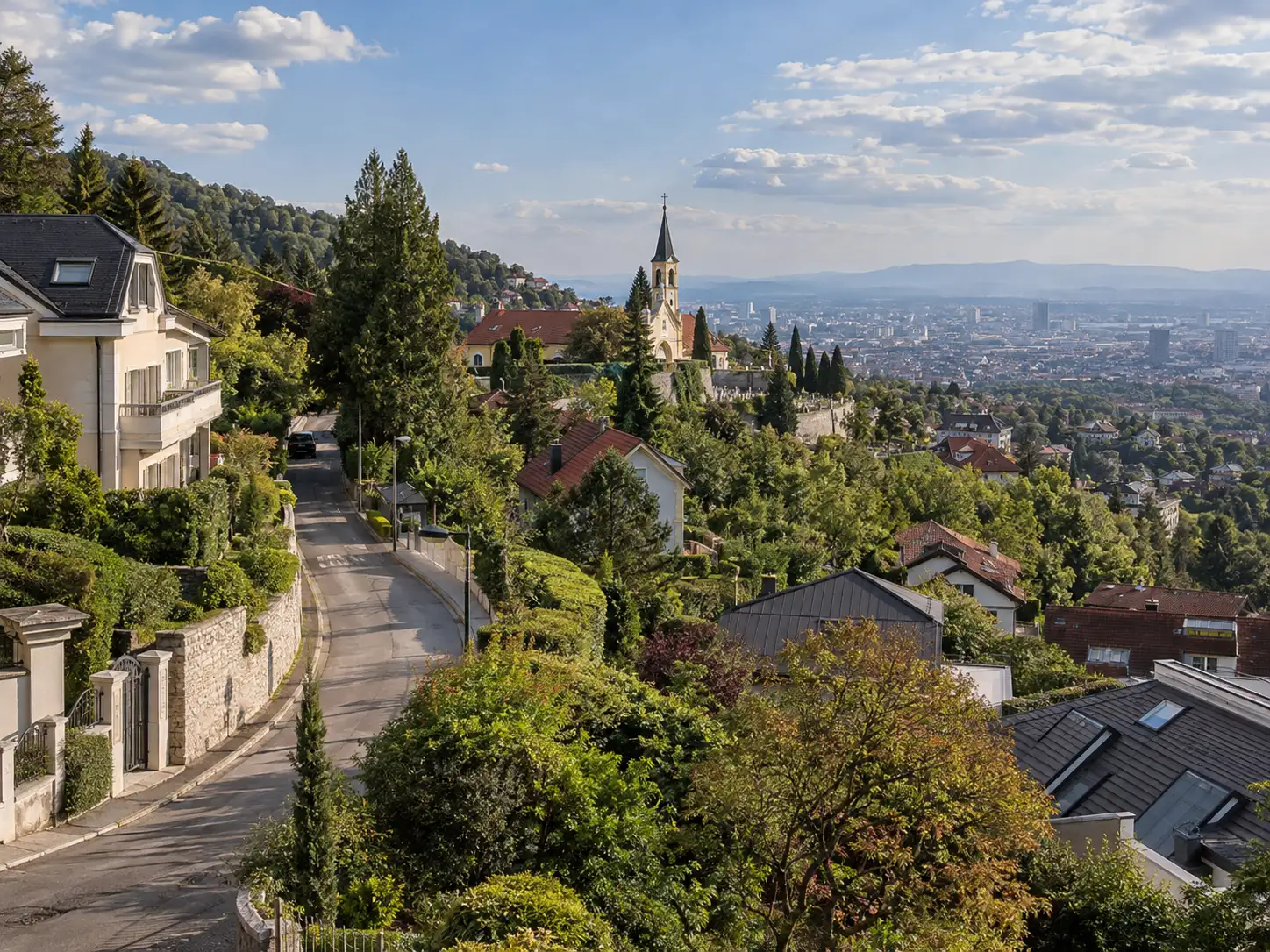
Šestine is a Zagreb neighborhood on the slopes of Medvednica, north of the Upper Town — a part of the city where a higher proportion of houses with gardens and lower housing density provide a calmer daily rhythm than in the center, while maintaining proximity to offices, schools, and hospitals. For someone moving to Zagreb and seeking a balance between peace and accessibility, Šestine is a realistic option worth considering. In this guide, we break down what life is like in this neighborhood, who it suits, and what to look out for when buying property.
Key facts
- Šestine is a Zagreb city district located on the slopes of Medvednica — a part of the city, not a separate settlement.
- Lower density and houses with gardens offer a calmer pace while retaining proximity to city amenities.
- Proximity to Medvednica brings nature into daily life, without having to drive outside the city.
- The housing offer is focused on houses and smaller buildings, rather than large complexes.
- For distance from the center, prices, and annual tax, check for a specific address and with the City, not based on general assumptions.
Šestine lie at the transition between the city and the foothills of Medvednica, with streets where a house with a garden is the rule, not the exception. Anyone looking for an address in Zagreb, but not a building with an elevator and neighbors through the wall, will find an option here that is almost non-existent in the strict center. Yet they are not isolated — it is a part of the city, not a separate settlement, so the difference is in density and rhythm, not in distance from urban infrastructure. Below, we'll go through what the neighborhood offers and what it doesn't, who it suits, and what to watch out for before buying.
Why More and More People Choose Šestine
The appeal of Šestine lies in a combination that the city center hardly offers — a city address with a quieter, more spacious way of life. In streets where houses with gardens prevail, without elevators and neighbors through the wall, the daily rhythm is significantly different than in the dense center. For some people, this is precisely crucial: they want to stay in Zagreb, but not in an apartment in a high-rise building.
The most common question when moving is how far it is from work, school, or the hospital. The answer depends on traffic and the specific street, as Šestine is not a single point but a series of streets at different distances from the center — so instead of relying on "number of minutes," it's more reliable to try an actual drive. What remains constant is that it is a part of the city: shops, clinics, and elementary schools exist within the neighborhood, and for more specialized services, one goes to the wider city, just like from most Zagreb neighborhoods outside the center.
Professional tip: Before deciding, try driving to work during morning and afternoon rush hours, not during quiet times of the day — in Šestine, the difference between these two drives can be greater than the difference between two streets in the neighborhood, so it will give you a realistic picture of everyday life.
Nature as Part of Everyday Life
The foothills of Medvednica are not an addition to life in Šestine, but an integral part of it. Walking, cycling, or a view through the window of greenery instead of a neighboring building are cited by residents of this neighborhood as a real, everyday difference compared to the center. For families with children or pets, the proximity of open space, without the need to drive outside the city, is often a more practical argument than any other.
This proximity to nature also has a practical side that is rarely mentioned. Less time to the nearest green space also means less time lost in traffic that such a journey would otherwise create. For someone who currently drives out of the city on weekends just to take a walk, living on the edge of Medvednica simply removes that drive from their weekly schedule.
Professional tip: If you already travel outside the city on weekends for nature and recreation, include that in your comparison — for such a lifestyle, Šestine offers not only a nicer view but also real time savings because greenery is at your fingertips.
Housing in Šestine: predominantly houses and smaller buildings
The housing offer in Šestine differs from that in the city center by type, not just by price. Houses with gardens and smaller residential buildings predominate, while large residential complexes are rare. This is why the neighborhood is naturally mentioned in conjunction with families looking for more space and outdoor areas, and less with buyers who want a compact apartment right next to an office in the strict center.
For domestic buyers already living in Zagreb, this means the possibility of retaining a city address while gaining space and a garden without moving to a completely different environment. For those just moving to Zagreb, Šestine is an option that is neither an isolated suburb nor a densely populated center. We also write about whether a house or an apartment is more suitable for you in general in the guide apartment or house: a comparison.
A concrete example of such an offer in Šestine itself is the Šestinski vrh project from Regent's portfolio, managed by agent Tara Balent (regional area of work: continental Croatia and Zagreb). The exact price, unit sizes, and current availability should be checked directly with the agent, as these data change.
Professional tip: Before narrowing your choice to a property type, decide whether you primarily want space and a garden or proximity and compactness — Šestine consistently rewards the first desire, so if that is stronger for you, this neighborhood makes the shortlist, and if the second is stronger, it's better to look at central neighborhoods.
Who Šestine is the Right Choice For
Šestine is a realistic option for those who want a part of the city that is neither an isolated suburb nor a densely populated center — for domestic buyers looking for more space or a garden without leaving the city, and for those moving to Zagreb. Foreign buyers often narrow their choice to two or three neighborhoods whose names they've heard before arriving; Šestine rarely appears on that initial list, so it's worth seeing them in person.
What this neighborhood will not offer you is the walking proximity to everything within a few minutes, which the strict center has. Whoever prioritizes that will rather choose Gornji grad or one of the central neighborhoods; Šestine is the choice for someone who values peace and space over such walking convenience. How to generally assess which neighborhood suits your lifestyle, we write in the guide best cities and places to live in Croatia.
Professional tip: Don't decide on a neighborhood solely based on a name you heard before arriving — explore Šestine in person, at different times of the day; neighborhoods not on the "first list" often best suit those looking for peace and space with a city address.
Cost of Ownership: What to Know and What to Check
In addition to the property price, buying also entails tax and ongoing costs. When purchasing a used property, a 3% real estate transfer tax on the market value is paid, while for new construction from an investor, VAT is included in the price instead of transfer tax. There is also an annual property tax, the rate of which is determined by the city — check the amount for Zagreb directly with the City, and not by analogy with other areas. This tax is also not paid on property where the owner permanently resides, so a family house that is your domicile is generally not subject to it.
Prices per square meter and driving time to the center depend on the specific address and time, so it makes no sense to estimate them as a lump sum for the entire neighborhood. Before buying, it is also worth conducting a comprehensive legal and technical property inspection and requesting current data for the specific property you are interested in.
Professional tip: Do not estimate tax rates and prices "by analogy" with other cities or neighborhoods — annual property tax varies by city, so for Zagreb, check with the City, and request price and availability for a specific property directly.
How Regent Can Help You
If you are considering moving to Šestine or another part of Zagreb, we help you assess the neighborhood realistically — what it offers, what it doesn't, and which property suits your lifestyle and budget — and check its legal and land registry status before purchase. We also assist foreign buyers in navigating the administrative and legal specificities of buying in Croatia. For advice and an offer tailored to your situation, see what buying with Regent looks like or contact us.
Frequently Asked Questions (FAQ)
Are Šestine part of the city of Zagreb or a separate settlement?
Šestine is part of the city of Zagreb, not a separate local self-government unit. The difference compared to the center is in housing density and property type — houses with gardens and smaller buildings prevail — not in administrative affiliation or availability of urban infrastructure.
How far is Šestine from the center of Zagreb?
It depends on the specific street and time of day, as Šestine is not a single point but a series of streets at different distances from the center. The most reliable way to check is a test drive at the time you would typically do it daily — morning and afternoon — before making a decision, as the difference between these drives can be greater than the difference between two streets in the neighborhood.
Does Šestine have enough houses with gardens for families?
Yes. The housing offer in this neighborhood is naturally oriented towards houses with gardens and smaller residential buildings, unlike the more densely built city center. That is why Šestine is often mentioned in connection with families looking for more space and outdoor areas without leaving the city.
What are the taxes when buying a property in Šestine?
When purchasing a used property, real estate transfer tax is paid at a rate of 3% of the market value; for new construction from an investor within the VAT system, VAT is included in the price instead of transfer tax. In addition, there is an annual property tax, the rate of which is determined by the city, so the amount for Zagreb should be checked directly with the City.
Is Šestine a good choice for someone who works in the center?
It can be, with the realistic expectation that the daily commute depends on traffic and the specific address within the neighborhood. For someone for whom walking proximity to the office is a priority, central neighborhoods remain a more practical choice; Šestine is the choice for someone who values peace and space above that type of walking convenience.
Does Šestine have basic amenities for daily life?
Yes. Shops, a clinic, and elementary schools exist within the neighborhood itself, so daily needs do not require going to the center. For more specialized services, such as a hospital, university, or a larger shopping center, one goes to the wider city — similar to most Zagreb neighborhoods outside the strict center.
Recommended
- Best cities and places to live in Croatia
- Apartment or House: A Comparison
- Buying a House for a Large Family: Space, Location, Budget
- Property Inspection Before Purchase: Legal Due Diligence, Technical Appraisal, and Handover