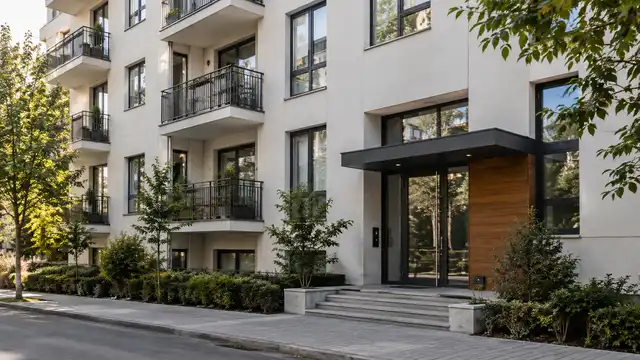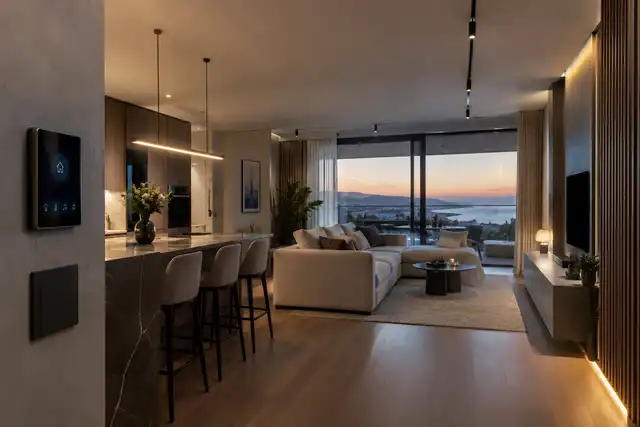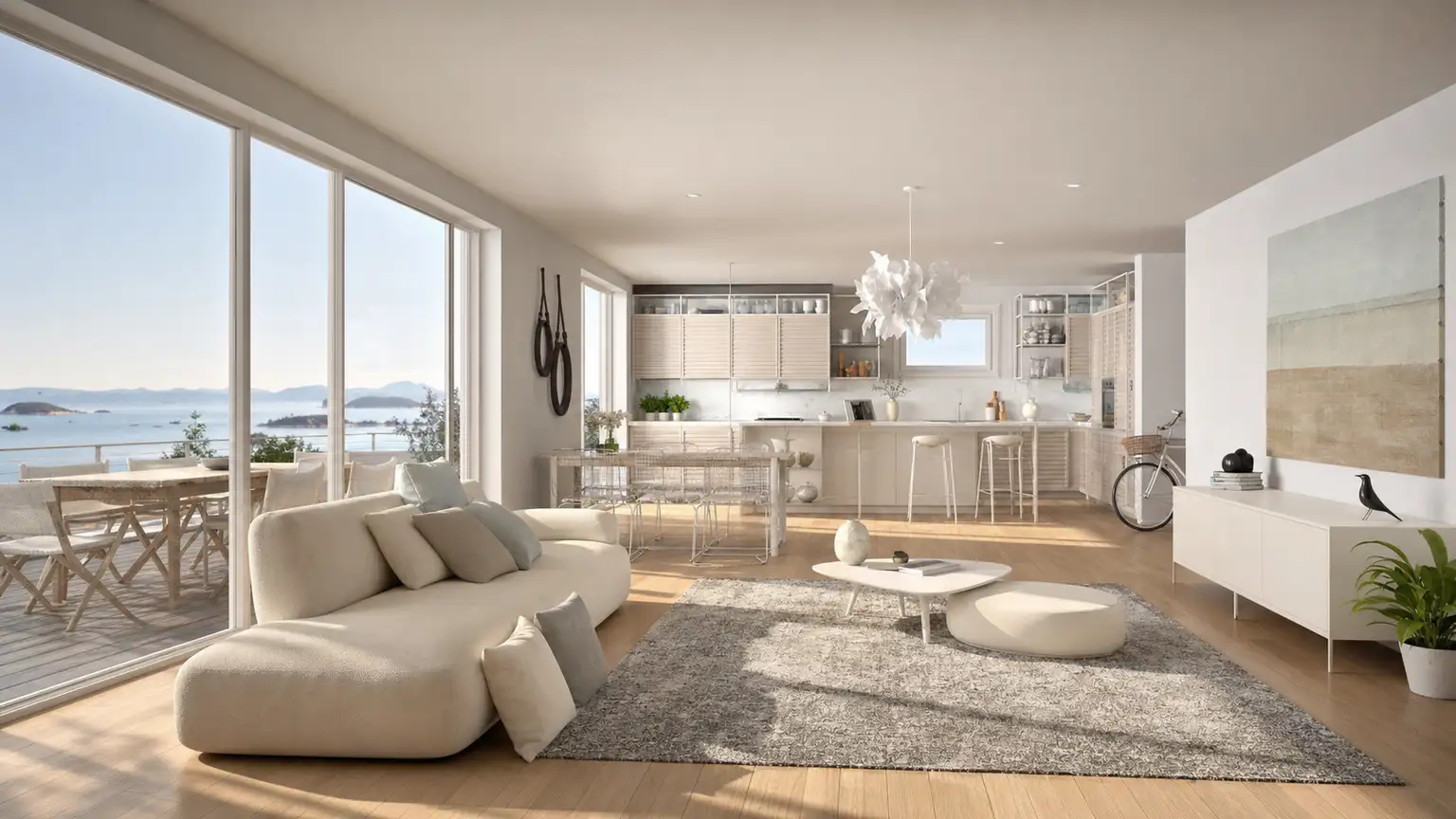
TL;DR:Orientation, floor, and floor plan often influence the quality of living and market value of a property more than the square footage itself. Dual-aspect apartments on higher floors with a functional floor plan consistently achieve a higher price than comparable apartments with less favorable characteristics. Before every property viewing, it's worth knowing what to look for and how to recognize it.
Two apartments in the same building, of the same square footage, on the same street — and a price difference of several tens of thousands of euros. Property buyers in Croatia often don't understand where this difference comes from until they start living in the apartment. Orientation to the cardinal directions, the floor on which the apartment is located, and the layout of rooms within the floor plan are three factors that together determine how comfortable your apartment will be to live in, how much you will spend on heating and cooling, and what its value will be on the real estate market when you sell it. This guide explains how each of these factors works, how to recognize them when viewing a property, and why experienced apartment buyers in Zagreb, Split, Rijeka, and other Croatian cities always put them on their priority list.
Contents
- Apartment Orientation: What it Means and Why it's Important
- Floor: Advantages, Disadvantages, and Impact on Property Price
- Floor Plan: How to Read the Layout and What to Avoid
- How These Factors Together Determine Property Price
- What to Check When Viewing a Property
- How Regent Can Help You Buy an Apartment
- Frequently Asked Questions about Orientation, Floor, and Floor Plan
Key Insights
- Orientation affects costs: South-facing apartments have lower heating costs due to passive solar gain, which increases their market value.
- Floor is not just a preference: High floors achieve a premium price, while ground floor and first floor have specific advantages and disadvantages depending on the building's context.
- Floor plan is more important than square footage: A 55 m² apartment with a functional layout can be more comfortable to live in than a 70 m² apartment with hallways and a poor room arrangement.
- Dual-aspect orientation is ideal: An apartment oriented on two opposite sides of the world maximizes natural light and ventilation.
- Energy certificate reflects orientation: Orientation is one of the key factors that determines the energy class of a property and long-term living costs.
Apartment Orientation: What it Means and Why it's Important
Apartment orientation indicates which cardinal direction the main windows and rooms face — south, north, east, or west. In practice, it directly determines how much natural light you get, how much you will spend on heating in winter and cooling in summer, and how you will feel in the apartment throughout the day.
South orientation is the most sought-after and valued. South-facing apartments receive sun for a large part of the day, meaning a warmer and brighter space in winter. This phenomenon is known as passive solar gain — the sun passively contributes to heating the space, which directly translates to lower heating costs and a better energy class for the property. South orientation is recommended for the living room and kitchen, while overheating in summer can be mitigated by awnings or external blinds.
East orientation brings morning sun and cooler afternoon hours. Many buyers prefer east orientation for bedrooms because morning light naturally awakens occupants, while afternoon hours are darker and fresher. East-facing apartments are generally more affordable than south-facing ones, but more pleasant to live in than north-facing ones.
West orientation means afternoon and evening sun. For apartments with sea views along the Dalmatian coast, west orientation often comes with a visual advantage at the expense of thermal comfort — without good ventilation or air conditioning, western rooms can be extremely hot in summer months.
North orientation brings the least natural light throughout the year. North-facing apartments are colder, darker, and more expensive to heat, which directly reflects on a lower market price and a worse energy class for the property.
Dual-aspect orientation — an apartment oriented on two opposite sides of the world (e.g., south-north or east-west) — is considered an ideal situation. Such an apartment maximizes natural lighting, has better natural ventilation, and offers flexibility in room arrangement according to purpose.
Professional tip: When viewing a property, always ask the agent which cardinal direction the living room and master bedroom face. If possible, arrange visits in the morning and afternoon to see how light enters at different times of the day. Be sure to request the energy certificate — orientation is one of the key factors that determines the energy class of the apartment and long-term living costs.
Orientation does not exist in a vacuum — it is also influenced by surrounding buildings, street trees, and the height of neighboring properties. An apartment formally facing south but blocked by a tall building a few meters away, in practice, gains little advantage from its south orientation. This is especially important to check when buying an apartment in a dense urban environment, such as the central parts of Zagreb or Split.
Floor: Advantages, Disadvantages, and Impact on Property Price
The floor on which the apartment is located is one of the most recognizable factors that property buyers consider, but rarely analyze systematically. Each floor has specific characteristics that are neither good nor bad in themselves — they depend on the type of building, location, and the buyer's lifestyle.
Ground floor offers accessibility without an elevator, which is an advantage for families with small children, the elderly, or pet owners. Disadvantages include street noise, greater exposure to humidity, less privacy, and a potentially higher security risk. Ground floor apartments with garden access represent a special category — in urban centers like Zagreb and Split, they can be highly sought after if the garden comes with exclusive usage rights and is arranged as a private green area.
Middle floors (second to fourth in most residential buildings) offer a good compromise: less noise than the ground floor, less effort without an elevator, decent natural lighting, and an acceptable price. For the vast majority of apartment buyers, middle floors represent the most rational choice.
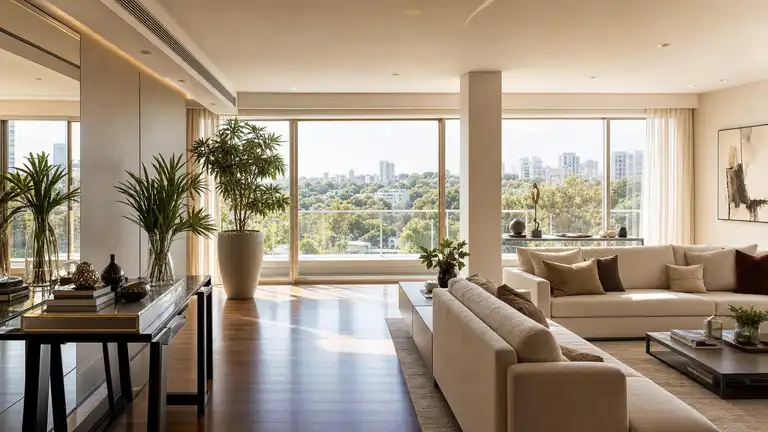
High floors offer better views, more light, and greater privacy. A special category among them are penthouses — apartments on the top floor with terraces and panoramic views — which consistently achieve a premium price in the real estate market in Zagreb and Split compared to comparable apartments on lower floors.
Top floor without a penthouse carries a specific risk: a flat roof that is not properly waterproofed can be a source of leaks and heat loss. This is one of the factors that buyers often overlook when viewing a property, and it can result in expensive repairs and disputes within the community of co-owners.
Floor and orientation — overview:
- Ground floor: Advantages — accessibility without elevator, garden possibility. Disadvantages — noise, humidity, reduced privacy. Price impact — lower.
- 1st and 2nd floor: Advantages — compromise, elevator independence. Disadvantages — moderate noise, medium light. Price impact — medium.
- Middle floors: Advantages — peace, light, more favorable price. Disadvantages — elevator dependence. Price impact — medium to higher.
- High floors: Advantages — view, peace, more light, less noise. Disadvantages — complete elevator dependence. Price impact — higher.
- Penthouse: Advantages — view, terrace, privacy. Disadvantages — price, potential overheating in summer. Price impact — highest.
The elevator is a factor that changes everything mentioned above. A building without an elevator equates a high floor with a major disadvantage for elderly buyers, families with children in strollers, or residents with mobility difficulties. In the long term, buildings without elevators where installation is not planned have slower property value growth, which is important to consider when buying for investment purposes.
Professional tip: Always check the age of the elevator and the frequency of malfunctions. Newer elevators are more energy-efficient and reliable, and the cost of replacing an old elevator falls to all co-owners through the building's reserve fund. Pay special attention to the condition of the ceiling — on the top floor, look for signs of moisture or leaks that may indicate problems with roof waterproofing.
Floor Plan: How to Read the Layout and What to Avoid
A floor plan is the arrangement of all rooms within an apartment — where everything is located, how rooms are interconnected, and how many square meters are usable space versus hallways and communication areas. When buying an apartment, square footage is just a starting point — a functional room layout is often more important than the overall size.
A functional floor plan means that rooms are logically arranged: the living area (living room, kitchen, dining room) is separated from the sleeping area (bedrooms, bathroom). The entrance does not lead directly into the living room without any intermediate zone, bedrooms have access to the bathroom without passing through the living room, and there are no dead-end hallways that waste square footage without a useful function.
An open-plan layout — combining the kitchen, dining room, and living room into one space — is dominant in modern new constructions in Croatia. Advantages include more light, a feeling of spaciousness, and social dynamics that facilitate communication. However, an open-plan layout also has disadvantages: when there are no clear boundaries between rooms, noise, smells, and clutter spread easily — cooking means the entire living room smells of food, and family noise has nowhere to be absorbed. Which model is better depends on the buyer's lifestyle and habits.
A closed-plan layout with a separate kitchen is preferred by families with children and buyers who value quiet, separate spaces. In older constructions in Zagreb and on the Dalmatian coast, a closed-plan layout is the rule, not the exception — and for many buyers, it represents an advantage, not a disadvantage.
What to avoid when reading a floor plan:
- Long hallways that occupy 10% or more of the total area without a useful function
- Bedrooms with a window that looks directly into a neighboring building or a closed courtyard
- Kitchen without a window or natural light
- The only bathroom located so that it is accessible exclusively through a bedroom
A 55 m² apartment with a good floor plan is often more comfortable for daily life than a 70 m² apartment with a poor room arrangement. The floor plan is one of the few factors that is difficult and expensive to change — structural changes require permits, a project by a licensed architect, and often the consent of co-owners. If you are considering floor plan changes, we recommend checking what requires a permit and what doesn't when adapting an apartment.
How These Factors Together Determine Property Price
Orientation, floor, and floor plan do not act in isolation — their combination is what creates significant price differences within the same building or even on the same floor. Experienced property buyers know that a lower price is often explained precisely by these factors.
A concrete example illustrating the logic: two apartments in the same new building in Split, each 65 m² and the same number of rooms. Apartment A — fourth floor, south orientation, open floor plan with a functional layout, sea view. Apartment B — first floor, north orientation, an 8 m² hallway, view towards the inner courtyard. The price difference between these apartments on the real estate market in Split can be significant — and not because one property is better, but because the combination of factors directly affects the quality of living and long-term value.
In addition to directly impacting the price, these factors also influence the speed of sale and liquidity of the property. Apartments with a favorable combination of orientation, floor, and floor plan sell faster and with a smaller deviation from the asking price than apartments with less favorable characteristics. For buyers considering a property as an investment, this is important information when assessing the property's value.
It is also worth emphasizing the opposite perspective: apartments with less favorable characteristics (north orientation, ground floor, unfavorable floor plan) can be an excellent purchase if they are price-adjusted and if the buyer consciously chooses that compromise. A rational decision is not always buying the "best" apartment — but rather buying an apartment that matches actual needs and budget.
Professional tip: When comparing two properties with different prices, always check the differences in orientation, floor, and floor plan before concluding that one is "cheaper" than the other. A lower price often reflects precisely these factors — and that's not necessarily bad news, if you are aware of them beforehand.
What to Check When Viewing a Property
Theoretical knowledge of these factors should be transformed into a concrete checklist for your next apartment viewing. During each property viewing, consider the following points for each of the three factors.
Orientation:
- Ask the agent which cardinal direction the living room and master bedroom face
- Check if dual-aspect orientation is possible — an apartment oriented on two sides of the world offers natural ventilation and better light
- Determine if surrounding buildings or trees block sunlight, regardless of the apartment's formal orientation
- Request the energy certificate — orientation is a key factor in the energy class and living costs, and the seller is legally obliged to provide it
Floor:
- Check the age and condition of the elevator, as well as replacement plans if the elevator is outdated
- Inspect the ceiling — on the top floor, look for traces of moisture, stains, or peeling that may indicate roof problems
- Assess the level of noise from the street, neighboring apartments, and common areas of the building
- For the ground floor: specifically check for humidity in corners, under windows, and along exterior walls
Floor plan:
- Request a scaled floor plan before viewing and analyze the room layout
- Measure or estimate how many square meters are allocated to hallways and communication areas
- Assess whether furniture can be logically arranged in each room without compromise
- Check the separation of day and night zones and bathroom access from bedrooms
For a more detailed guide on what to check during every apartment viewing, from legal verification to technical assessment, see our guide on property inspection before purchase.
How Regent Real Estate Agency Can Help You Buy an Apartment
Buying a property where the orientation, floor, and floor plan are optimally aligned with your lifestyle and budget is not a coincidence — it is the result of systematic searching and experienced recognition of the right compromises. Regent's team works daily with apartment buyers in Zagreb, Split, Rijeka, and along the entire coast, helping them identify differences that are not visible in online ad photos. Every step of this guide, from orientation analysis and floor assessment to reading floor plans and document verification, can be supported by experts who have processed hundreds of transactions.
Browse our apartments available for purchase or contact us for individual consultation — free and without obligation.
Frequently Asked Questions about Orientation, Floor, and Floor Plan
Which apartment orientation is ideal?
For most buyers, dual-aspect orientation — an apartment that faces two opposite sides of the world — is considered the best combination as it maximizes natural lighting and ventilation. If that's not possible, a south orientation for the living room with an east orientation for the bedrooms is a common preference: south provides passive solar gain and light, while east offers morning sun without afternoon overheating.
How much does the floor affect the apartment price in Croatia?
The price difference between floors within the same building depends on the type of building, the presence and condition of the elevator, and the local real estate market. In buildings with an elevator, high floors and penthouses consistently achieve a higher price than lower floors. In buildings without an elevator, the situation is reversed — middle floors (2nd and 3rd) are often the most sought-after because they are easily accessible without effort.
What is "dead space" in an apartment floor plan?
Dead space refers to square footage that serves no useful function in daily life — blind hallways, unusable corner spaces, irregularly shaped rooms that prevent normal furniture arrangement. When buying an apartment, you pay the price based on the total square footage, including dead space — therefore, it's important to know how much of the total area you can actually use.
Can an apartment floor plan be changed?
Yes, with limitations. Demolishing non-load-bearing walls usually does not require a building permit, but may require a project by a licensed architect, and in some cases, the consent of other co-owners of the building. Load-bearing walls must not be altered without a project and permit. Floor plan renovation costs can significantly impact the total purchase budget, so it's important to factor that in beforehand. Learn more in the guide on apartment renovation.
Why are apartments on higher floors more expensive if the building has no elevator?
In buildings without an elevator, higher floors lose their premium value because they are inaccessible to a large segment of buyers — elderly people, families with small children, and individuals with mobility difficulties. In such buildings, the most sought-after and valued are usually the 2nd and 3rd floors, as they offer a compromise between accessibility and distance from street noise.
Does apartment orientation affect the property's energy class?
Yes — orientation is one of the key factors determining a property's energy class in Croatia, along with the quality of the thermal envelope, window type, and heating system. South-facing apartments utilize passive solar gain and thus have lower heating costs, contributing to a better energy class. An energy certificate is a legal obligation for sellers in every property sale in Croatia, so you can always request to see it.
Recommended
- Property Inspection Before Purchase: Legal Check, Technical Assessment, and Handover
- Property Valuation: Market, Mortgage, Tax
- Apartment Renovation: What Requires a Permit, What Doesn't, and How to Legalize What's Already Done
- Property Registration in Croatia: What it Is, How it Works, and What You Need to Know
- What are a Title Deed, Land Registry, and Cadastre and How to Read Them