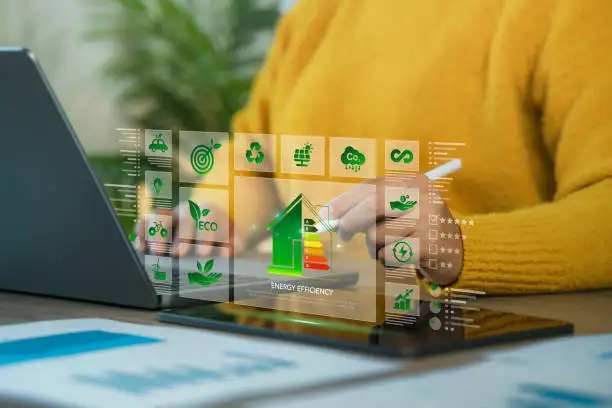
A property’s energy class is now one of the more relevant data points in a purchase, sale or cost analysis. Ratings from A+ to G do not only describe how efficient a building is, but also point to expected utility bills, market appeal and how energy performance may affect value.
In practice, buyers and sellers often look at the energy certificate too late, usually just before signing. Yet this document can help a buyer understand future costs more clearly, while also helping a seller position the property more convincingly on the market.
What is a property energy class?
In Croatia, the energy class is an indicator of the energy performance of a building or one of its separate units, and it is shown on a scale from A+ to G. The Ministry states that A+ is the most favourable energy class and G the least favourable.
The energy class is derived from the energy certificate, a document prepared by authorised energy certifiers, and the certificate is valid for 10 years from the date of issue. Before a sale, lease, rental or leasing arrangement, the owner must obtain the certificate, present it to a potential buyer or tenant and state the energy class in the advertisement.
In other words, the energy class is not just a marketing detail. It is a standardised piece of information with both legal and market relevance.
What does kWh/m²a mean?
In an energy certificate, the label kWh/m²a refers to how much energy a property uses per square metre per year. It helps compare two apartments or houses of similar size but with different energy performance.
The lower the figure, the more energy-efficient the building usually is. In practice, that often means lower heat loss, lower heating and cooling bills and better long-term resilience to rising energy prices.
A+ to G ratings
Under Croatian energy certification rules, residential and non-residential buildings are classified into eight energy classes, from A+ to G. In everyday use, these labels act as a quick signal of how modern, renovated and expensive a property may be to operate.
Energy class table
A+ — Highest efficiency — Very low consumption, newer or top-quality renovated building
A — Very efficient building — Low utility costs and good thermal protection
B — Good energy standard — Modern construction or quality renovation
C — Medium efficiency — Solid condition, but not top-tier performance
D — Lower efficiency — More visible heat loss and higher utilities
E — Low efficiency — Older building stock, more likely to need upgrades
F — Very low efficiency — High energy costs and weaker market appeal
G — Lowest rating — Significant energy loss and the highest operating costs
For buyers, the rating is useful as a short summary of future running costs. For sellers, it is one of the factors that shapes the first impression of quality in the listing itself. For more on nearly zero-energy buildings and the nZEB standard, see our blog: Sustainable Construction and the nZEB Standard: What Nearly Zero-Energy Buildings Are and Why They Matter for Your Investment.
How does it affect costs?
The difference between a higher and lower energy class is most visible in utility bills. A more energy-efficient property usually needs less energy to reach the same comfort level, which often means lower heating and cooling costs and less need for additional interventions such as replacing windows or improving insulation.
That does not mean the energy class is the only cost factor. Location, usage habits, heating type, system quality and occupant behaviour still matter, but the energy class provides a useful framework for comparing properties before purchase.
For houses and homes intended for long-term living, this difference matters even more because it is not seen in one bill alone. It accumulates over the years, which is why buyers increasingly compare not only location and floor area, but energy performance as well.
How does it affect property value?
Data from the Ministry’s publication on the impact of energy renovation on apartment values show that renovated apartments achieved higher sale prices than comparable apartments without energy renovation in the analysed markets. Across the analysed cities, the observed effect ranged from 2.40 percent in Split to 10.88 percent in Karlovac.
This does not mean every property will automatically be worth more just because it has a better rating, but it clearly suggests that energy renovation and improved performance are among the features the market recognizes. In valuation work, the energy class is therefore becoming more relevant, especially when buyers compare several similar properties.
Impact of energy renovation on apartment price
Karlovac — +10.88%
Zadar — +7.04%
Varaždin — +4.66%
Osijek — +4.13%
Rijeka — +3.72%
Zagreb — +3.36%
Velika Gorica — +2.62%
Split — +2.40%
How to read an energy certificate
An energy certificate is not a document to check only for the large letter on the front page. The Ministry states that it contains general property data, the energy class, validity period, information on the person who issued it, technical systems, the building’s energy needs, the use of renewable energy sources, proposed improvement measures and additional explanatory notes.
That is why it is useful to read the certificate more broadly and carefully. In those details, buyers can often see whether a property is genuinely efficient or whether the document has simply been treated as a formality.
1. Start with the rating, but do not stop there
Most people notice the letter grade first. That is a useful starting point, but it is not enough for a fully informed decision. Two apartments can have a similar rating while relying on very different heating systems, envelope quality and upgrade potential.
If the goal is long-term living, the rating should be read together with the rest of the certificate. If the property is an investment, the rating also matters because of future competitiveness in rental or resale.
2. Look at energy needs and technical systems
The certificate includes data on the property’s energy needs and technical systems. This matters because it helps explain how strongly the building depends on heating, cooling, ventilation and domestic hot water systems.
In practice, it is useful to ask not only “what is the rating?” but also “what supports that rating?”. A property may achieve a decent result thanks to certain systems while still leaving room for major improvements to insulation, windows or consumption control.
3. Check the validity period
The Ministry clearly states that an energy certificate is valid for 10 years from the date of issue. That means an older certificate may not fully reflect the current condition of the property, especially if renovations, heating system changes or insulation works were carried out afterwards.
During a purchase, it is useful to compare the certificate date with what is visible on site. If the document is several years old and the property has changed in the meantime, request clarification or an updated certificate.
4. See who issued the certificate
Energy certificates are prepared by authorised energy certifiers. The document itself contains information on the person who issued and prepared it, which is an important credibility element.
For buyers, this adds a level of trust beyond the seller’s verbal description. For sellers, orderly documentation supports transparency and professionalism.
5. Review the proposed measures
One of the more useful parts of the certificate is the proposed set of measures for improving the building’s energy performance. This section can offer a practical indication of what could be upgraded, whether through insulation, replacement of external joinery or modernisation of systems.
For a buyer, that makes it easier to plan future investment. For an owner preparing a sale, it can also serve as a checklist of improvements that may strengthen both the energy profile and the market perception of the property.
What does this mean for buyers and sellers?
If you are buying, the energy class should be considered together with price, location and overall condition. A lower purchase price may look attractive at first, but if higher utility bills and post-purchase upgrades follow, the total cost may be significantly higher than expected.
If you are selling, a stronger energy class can help distinguish the property more clearly in listings and negotiations. Buyers increasingly want to understand not only the acquisition cost, but also the cost of ownership after completion.
This is especially relevant for foreign buyers, who often compare Croatian properties with markets where energy efficiency has long been treated as a standard criterion. A broader guide to that process is available in our Guide to buying real estate in Croatia for foreign citizens.
New 2026 framework
As of 1 January 2026, Croatia’s Law on Energy Efficiency in Buildings is in force, reinforcing the regulatory framework in this area.
In practical terms, the energy performance of buildings is increasingly being treated not as a technical side note, but as part of property quality and market transparency.
For owners, this is a good moment to see the energy certificate not only as a compliance requirement but also as a presentation tool. For buyers, it is a reminder that energy data should be part of standard due diligence, alongside title, legality and the physical condition of the property.
Frequently asked questions (FAQ)
Is an energy certificate mandatory when selling an apartment?
Yes. Before a sale, the owner must obtain the energy certificate, present it to a potential buyer and state the energy class in the listing.
How long is an energy certificate valid?
An energy certificate is valid for 10 years from the date of issue.
Does the energy class affect property price?
Yes, although not in isolation. The Ministry’s market analysis found a positive impact of energy renovation on apartment sale prices in several Croatian cities.
Is a lower energy class a reason to walk away from a purchase?
Not necessarily. A lower rating is not an automatic reason to reject a property, but it is a sign that future costs, required upgrades and overall financial logic should be assessed more carefully.
Where can I get help with an energy certificate?
If you need help understanding a certificate, preparing a property for sale or organizing the certification process, contact us.
https://regent.hr/en/contact