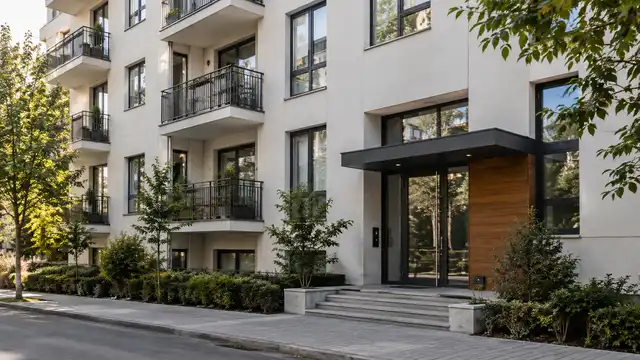
A nearly zero-energy building (nZEB) is a building that uses an extremely small amount of primary energy — the total energy required to produce and deliver fuel or electricity — while covering the remainder from renewable sources. From 2026, nZEB is a legal obligation for all new construction in Croatia, and by 2030 the EU sets an even stricter standard: ZEB (Zero-Emission Building) for all buildings.
For buyers and investors, this means one thing: properties that do not meet energy efficiency standards today will be more expensive to maintain, harder to finance, and less attractive to sell tomorrow.
Quick overview:
• nZEB is a legal requirement for new construction in Croatia from 2026
• The main advantages are lower energy costs, higher market value, and protection from energy price volatility
• The biggest risks come from construction compromises and poorly chosen systems
• Every purchase or construction decision should be made with professional support
Written by: Regent Team
Regent is a Croatian real estate agency specialising in the purchase, sale, and rental of properties in Zagreb and along the Adriatic coast. Through daily work with domestic and international investors, the team closely follows legal, market, and technical aspects of real estate transactions — including the increasingly common questions about energy standards when selecting a property.
What is nZEB and how does it differ from a passive house?
The terms are heard more and more often, but the differences matter. A passive house is a private standard with extremely strict energy consumption requirements — annual heating demand of up to 15 kWh/m². A nearly zero-energy building is a legally defined standard that is somewhat more flexible in its parameters but is mandatory for all new buildings from 2026. ZEB (Zero-Emission Building) is a stricter European target applied by 2030, requiring zero carbon emissions.
In the Croatian context, under currently applicable requirements, the nZEB standard specifically means:
• thermal transmittance of external walls below 0.25 W/m²K
• high airtightness of the building envelope (external walls, roof, and floor that separate the heated space from the outdoor environment)
• annual heating demand not exceeding 15–25 kWh/m², depending on the climate zone
As the Ministry of Spatial Planning emphasises, the nZEB standard is not optional — it is a legal obligation for all new buildings from 2026.
The difference between an nZEB and a traditionally built property is not only visible on the energy bill — it is felt in the temperature, quiet, and air quality every single day.
What technologies make an nZEB building?
Sustainable construction does not work without properly integrated technologies. The key elements are:
• Photovoltaic panels — cover the majority of electricity needs
• Heat pumps — particularly ground-to-water and air-to-water configurations, replacing conventional gas boilers with a coefficient of performance (COP) of 3 to 4, meaning that for every 1 kWh of electrical energy input, 3 to 4 kWh of thermal energy is produced
• High-performance thermal insulation 20–30 cm thick — the foundation that allows the entire system to function
• Triple-glazed window units with low-emissivity coatings
• MVHR ventilation (Mechanical Ventilation with Heat Recovery) — a system that extracts stale air and supplies fresh air while recovering up to 90% of thermal energy
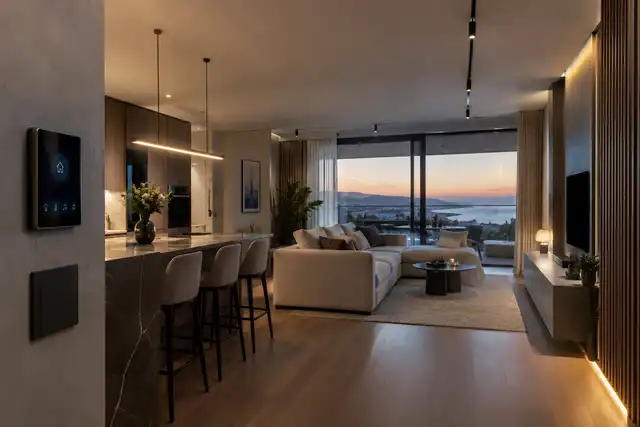
• Smart energy management systems — automation of heating, cooling, and ventilation, presence sensors, and adaptive systems that can reduce energy consumption by up to 20% compared with passive measures alone
Why does sustainable construction make financial sense?
When it comes to real estate investment, concrete data speaks clearly.
The green premium — higher value, easier to sell
The "green premium" refers to the price difference that buyers and tenants are willing to pay for an energy-efficient property. The EU's EPBD directive is already reshaping demand — buyers increasingly request the Energy Performance Certificate (EPC) as one of the first documents in negotiations, not as a formality at the end of the process. Based on the Regent team's experience working with buyers, questions about energy ratings now arise at the very first property viewing.
nZEB properties on the Croatian real estate market achieve a visibly higher market value compared with standard construction of the same location and floor area — the difference is typically 15 to 25% in initial price, a gap that gradually closes through lower operating costs and higher resale value over time.
Protection from energy price shocks
The European energy crisis of 2022 demonstrated what happens when heating and cooling costs rise sharply. Owners of nZEB buildings were significantly less exposed to that shock, while owners of standard buildings faced bills that were three times higher.
Energy independence is not a luxury — it is the most rational business decision for any property owner in the coming decade.
Cost comparison over time
A standard 150 m² house in continental Croatia consumes up to 15,000 kWh annually for heating and cooling, based on available average consumption data. A comparable nZEB house — less than 2,250 kWh. The difference, over 20 years, easily exceeds the initial gap in construction costs.
Green loans and green mortgages
A growing number of Croatian and European banks offer preferential interest rates for the purchase or construction of nZEB properties — known as green loans or green mortgages. This is a concrete financial argument that should be factored into any financing plan, as the difference in interest rate can be significant over a longer repayment term.
How to recognise a quality nZEB project?
A good nZEB project does not begin with the choice of facade materials — it begins with an analysis of the site and building orientation. A correctly south-facing building with well-proportioned overhangs and windows can reduce heating demand by up to 30% without any additional technology. This is particularly relevant for villa construction on the Adriatic coast, where the orientation of the property directly affects the energy profile and comfort of occupation.
The most common construction mistakes
The most typical mistake is saving on insulation thickness or window quality to reduce the initial build cost. The result is an energy certificate that does not reflect actual consumption and, in the long term, higher running costs and lower market value. According to data from the Ministry of Spatial Planning, the nZEB standard becomes mandatory from 2026 — meaning that every saving made today becomes a cost of compliance tomorrow.
Practical checklist: what to verify when buying or building an nZEB property
• Does the project hold an energy certificate of class A or A+?
• What is the thickness and type of thermal insulation on external walls and roof?
• What technical solutions are used for ventilation, heating, and cooling?
• Was the building designed with an analysis of orientation and passive solar use?
• Are photovoltaic panels and a heat pump integrated into the project or offered as options?
• Is there a smart energy management system?
A quality nZEB project is not a more expensive choice — it is the only choice that delivers real long-term value.
What does an energy certificate mean and how is it read?
An energy certificate is an official document describing the energy characteristics of a building and classifying it into an energy class from A+ to G. It is issued by authorised energy certifiers and has been mandatory for every property sale or rental in Croatia since 2023.
Energy classes in brief:
• A+ and A — nZEB standard, lowest energy consumption
• B — good energy performance, above average
• C and D — average construction, higher energy costs
• E, F, G — older construction, high running costs, potential obligation to renovate
The cost of obtaining a certificate is typically between 150 and 400 EUR depending on the size and type of property, and the turnaround time is usually 5 to 10 working days.
Renovation or new construction — which is more cost-effective?
This is a question many buyers ask, and the answer is not universal. Energy renovation of an older property to nZEB standard is technically feasible but requires a systematic approach: facade insulation, window replacement, replacement of the heating and ventilation system, and installation of renewable energy sources.
For older properties in a poor energy class, the cost of comprehensive renovation can be comparable to the price difference between an older and a newly built property — which does not always make renovation the financially better choice. The key factors are location, the initial condition of the property, available grants, and the intended use.
For a more detailed overview of the buying process and key steps in a Croatian real estate transaction, visit Regent's blog.
Grants and financial support in Croatia
The Environmental Protection and Energy Efficiency Fund offers subsidies for the energy renovation of residential buildings, and EU funds cover part of the costs for new construction meeting high energy standards. Specific amounts, eligibility conditions, and application deadlines change regularly, so it is important to check current calls for applications.
The 2026 deadline for the nZEB obligation in new construction and the 2030 deadline for the ZEB standard for all buildings mean that the window for taking advantage of favourable financing conditions is narrowing. Construction material and labour costs across the EU are rising continuously, making delay a more expensive option.
The Croatian market: Zagreb and the Adriatic coast
Zagreb and surrounding area
In Zagreb and its surroundings, demand for energy-efficient family houses is growing continuously. Buyers are increasingly well-informed and request the energy certificate at the first property viewing. nZEB houses in Zagreb are priced approximately 15 to 25% above conventional construction of the same floor area, but that gap gradually closes through lower operating costs and higher resale value.
According to the National Housing Policy Plan to 2030, Croatia plans the construction and renovation of more than 20,000 residential units with an emphasis on energy class A+ — gradually shifting the market benchmark upward.
The Adriatic coast — sustainable construction as the standard for premium property
On the Adriatic coast, the situation is developing differently but with equal momentum. Villa construction in Croatia in the premium segment increasingly demands nZEB standards as a baseline. Investors building luxury villas in Istria, Dalmatia, and on the islands are integrating passive technical systems, local materials, and renewable energy sources because the market demands it. International buyers — particularly from Western Europe — arrive with established expectations that the Croatian market is rapidly adapting to meet.
Foreign buyers and nZEB properties in Croatia
For international investors, sustainable construction in Croatia carries an additional dimension. EU citizens purchase property in Croatia under the same conditions as domestic buyers, while buyers from outside the EU are subject to certain restrictions depending on bilateral agreements.
Regarding grants — EU funds are available to foreign buyers who build or renovate in Croatia, provided the project meets the prescribed criteria. It is important to note that the tax treatment of the property may depend on the buyer's residency status, which is particularly relevant for investors considering rental or resale.
For specific questions about the purchase process in Croatia as a foreign national, contact the Regent team.
If you are also considering purchasing property through a company, see our guide on buying property through a Croatian d.o.o..
7 things you should know before deciding
1. nZEB is a legal requirement for new construction from 2026 — it is not an option but the minimum standard
2. An energy certificate of class A or A+ is the only reliable proof that a property meets the standard
3. The green premium is measurable — nZEB properties achieve 15–25% higher market value at the same location and floor area
4. Construction compromises (thinner insulation, lower-quality windows) cost more in the long term than the initial savings
5. Energy renovation of older properties is possible but requires a systematic approach and a detailed cost-benefit analysis
6. Green loans and subsidies are available, but conditions change — it is worth investigating them as early as possible
7. Consulting an experienced real estate agent and an energy specialist is not optional — it is a necessary step in any investment of this type
Frequently asked questions (FAQ)
What is the nZEB standard in practice?
nZEB (nearly zero-energy building) is a building that uses minimal primary energy while covering the remainder from renewable sources. In Croatia, it is legally mandatory for all new buildings from 2026.
Is nZEB the same as a passive house?
No. A passive house is a stricter private standard with annual consumption below 15 kWh/m², while nZEB is a legally defined standard with somewhat more flexible parameters that are mandatory for all new construction.
Is energy renovation of an older property cost-effective?
It depends on the initial condition of the property, its location, and available grants. In some cases, the cost of comprehensive renovation may be comparable to the price difference between an older and a newly built property.
Can foreign buyers access grants for nZEB construction in Croatia?
Yes, provided the project meets the prescribed criteria. Specifics depend on residency status and the type of project — professional consultation is recommended.
What is a green mortgage?
A green mortgage or green loan is a banking product with preferential interest rates designed for the purchase or construction of energy-efficient properties. A growing number of Croatian and European banks offer these terms.
How do I check a property's energy certificate?
Request the certificate from the seller or agent at the first viewing. It must be issued by an authorised energy certifier and include the energy class and actual energy consumption data.
What next?
If you are considering purchasing an energy-efficient property in Croatia — whether an apartment in Zagreb, a villa on the Adriatic coast, or an investment property for rental — the Regent team can guide you through the entire process from property selection to transaction completion.
For personalised advice and transaction support, contact the Regent team.
For an overview of the real estate sales process in Croatia, visit our step-by-step guide.
https://regent.hr/en/contact
Glossary
• nZEB (nearly Zero-Energy Building) — a building using minimal primary energy, covered mostly by renewable sources; mandatory for new construction in Croatia from 2026
• ZEB (Zero-Emission Building) — zero-carbon building; European target by 2030
• COP (Coefficient of Performance) — heat pump efficiency ratio; a value of 3–4 means 300–400% efficiency
• MVHR (Mechanical Ventilation with Heat Recovery) — mechanical ventilation system that recovers up to 90% of thermal energy from extracted air
• EPBD (Energy Performance of Buildings Directive) — EU directive on the energy performance of buildings
• EPC (Energy Performance Certificate) — official document classifying a building's energy class from A+ to G
• Energy class A+ — the highest energy rating in Croatia, corresponding to nZEB standard
• Passive house — a private standard stricter than nZEB; annual consumption below 15 kWh/m²
• Building envelope — external walls, roof, and floor separating the heated interior from the outdoor environment