Thousands of properties in Croatia are sold with documentation that does not correspond to the actual situation on the ground.
Legalization of buildings is not just a bureaucratic formality - it is the basis of a secure sale and purchase that protects both the buyer and the seller from serious legal and financial consequences.
According to the data available to property owners in Croatia, a significant number of residential and commercial buildings were built without a valid building permit or were subsequently extended without notification to the competent authorities.
The new amendments to the law aimed to resolve this situation, providing owners with a time-limited opportunity to bring the buildings into legal status.
The key document in the whole process is the as-built survey - a technical elaboration that shows what was actually built, and not what was originally designed or reported. Without this document, many properties simply cannot enter the legalization process.
The question that owners most often ask - which buildings can be legalized - does not have a simple answer.
The reasons for the illegal status vary from the absence of a permit to unauthorized extensions, and each case requires an individual approach.
Understanding the basics of legalization is the first step - but the real test comes when the illegality of the property becomes an obstacle in a specific sale or purchase.
Why legalization is important when selling real estate
The legalization of buildings directly determines whether the transaction will be able to be realized at all.
Without proper documentation, the seller faces a number of obstacles that can completely block the sale or drastically reduce the amount achieved.
Legal and financial consequences of an illegal situation
When the property is not registered in the cadastre and land registry as it actually looks, every sales contract carries a legal risk.
The buyer assumes not only the building, but also all unresolved obligations to the state administration bodies.
In practice, notaries are increasingly refusing to certify the contract if the documentation is not harmonized with the actual situation on the ground.
The registration of buildings in the appropriate registers is not just a formal item - it represents a fundamental prerequisite for the transfer of ownership without subsequent complications.
Without this, the owner cannot prove the legal validity of what he is selling.
Impact on market value
Real estate market data consistently show that the legalization of buildings increases the value of a house by up to 20% compared to similar properties that do not have proper documentation.
Buyers are aware of the costs and time required for legalization, and accordingly adjust the offer downwards.
A property without proper documentation is not only a legal problem - it is a financial risk that the market immediately recognizes and values lower.
In addition to value, there is also the dimension of financing the purchase.
Banks have clear criteria when approving housing loans, and the legality of the building is one of the key ones - which we will discuss in more detail below.
How legalization affects the possibility of obtaining a loan
The legalization of a house has direct and measurable consequences on the financing of the property.
Banks in Croatia standardly require a proper building and use permit as a prerequisite for approving a housing loan.
Without these documents, the buyer - regardless of his creditworthiness - will almost certainly not get a mortgage loan.
In practice, appraisers engaged by banks immediately notice the discrepancy between the cadastral and actual area of the building.
Such a property receives a lower estimated value or is completely excluded from credit financing.
The increase in the value of the property is a direct consequence of the proper documentation - legalized buildings are valued significantly higher by appraisers, which also means a higher amount that the bank can approve as a loan.
A property without valid documentation is not only a legal problem - it is also a financial handicap that narrows the circle of potential buyers to those who pay in cash.
It is also worth highlighting the wider context: certain owners are exploring the option of free legalization of buildings through programs that are occasionally available at the local level, but such opportunities have strict time and conditional limitations.
Relying solely on such programs without consulting a licensed architect or lawyer carries a significant risk.
Banks, in addition to formal conditions, also analyze the marketability of the property.
A building that cannot be freely sold due to irregular documentation represents a worse collateral.
Understanding this mechanism is crucial - and it is equally important to know the specific steps by which these problems are solved.
Steps in the process of building legalization
The legalization of a building is a structured procedure that takes place through several clearly defined phases.
Understanding these steps is crucial for every owner who plans to sell a property or is just thinking about buying, and wants to avoid legal complications.
Phase 1: Checking the status of the building
First of all, the owner must determine whether the building is registered in the cadastre and land registry and whether there are any discrepancies between the actual condition and the documentation. This initial analysis reveals the extent of the work that follows.
Phase 2: Collection of documentation
Key documents include:
Geodetic elaborat - confirms the actual dimensions and location of the building
Proof of ownership - excerpt from the land registry
Proof of construction time - photos, invoices, testimonies
Technical description of the building - made by a licensed architect or civil engineer
Phase 3: Filing an application
The request for legalization is submitted to the competent administrative body - usually the spatial planning office at the county or city level.
Complete documentation from the previous phase is attached to the request.
Phase 4: Issuance of a solution
After checking the documentation, the competent body issues a solution on the existing state, which becomes the basis for registration in the cadastre and land registry.
Considering that the legalization in 2026 brings changes in deadlines and conditions, it is worth noting that every missed deadline can significantly slow down or prevent the entire procedure.
In practice, it is precisely errors in individual phases that most often cost the owner the most time and money - which is a topic that should be specifically addressed.
Most common mistakes during the legalization process
Although the legalization steps are clearly defined, property owners in practice repeat the same mistakes that slow down or even block the entire procedure.
Knowing these traps in advance can save a lot of time and money.
Incomplete or incorrect documentation
One of the most common errors is the submission of incomplete technical documentation.
A solution on the executed state cannot be issued without precise geodetic surveys, floor plans and confirmation of the identification of the parcel.
Owners often underestimate the level of detail required, which results in the return of the request and the re-initiation of the procedure from the beginning.
Incorrect assessment of fees and deadlines
The legalization fee is calculated according to the area of the building, location and purpose, and many owners incorrectly estimate its amount. In practice, a surprise at the very end of the procedure can jeopardize the financial plan of the transaction - especially when the property is already in the process of sale. It is recommended to request a preliminary assessment of the amount of the fee before a formal request is initiated.
Ignoring communal infrastructure
Another typical mistake is the assumption that legalization is exclusively a construction matter.
However, connections to communal infrastructure - electricity, water and drainage - must be harmonized with the rules and documented.
Legalization is not a one-time administrative act, but a comprehensive process that requires the coordination of several parties and careful management of documentation.
With the knowledge of these mistakes, it is equally important to understand the situations in which legalization is not possible or carries special challenges - which we consider below.
Limitations and considerations in legalization
Understanding the steps and common mistakes certainly helps property owners, but it is equally important to be aware of certain limitations of the procedure itself.
Not every building can be legalized, and that is a fact that many learn too late.
The Law on the Legalization of Buildings clearly defines the categories of buildings that are excluded from the legalization procedure.
Buildings located within protected natural areas, in special purpose zones or on high-category agricultural land often do not meet the conditions for legalization, regardless of how long they have existed or in what technical condition they are.
In addition to location restrictions, there are also time thresholds.
Buildings built after a certain date that is prescribed by legal regulations cannot enter the procedure, which directly affects the number of properties that remain in a legally unregulated status.
Why the legalization of buildings is important becomes especially clear in such cases - properties that cannot be legalized carry a serious burden when selling.
Financial institutions regularly reject such buildings as collateral for mortgage loans, and potential buyers face an almost impossible transaction.
A building that cannot be legalized is not only a legal problem - it is also a financial obligation that can exceed the market value of the property itself.
In practice, the recommendation is always to engage a licensed architect or legal expert before initiating any procedure in order to assess the actual feasibility of legalization.
All these elements together form the basis for making an informed and safe decision about buying or selling a property - about which we will conclude by summarizing the key findings.
Key points
Legalization of buildings is not just an administrative formality - it is the basis of a secure and successful real estate transaction.
After we have considered all the key aspects of this process, from the legal basis and implementation steps to the most common mistakes and limitations, it is clear that this is not a question that can be postponed.
The question of when to legalize a building has a simple answer: the sooner, the better.
Any delay increases the risk of complications during the sale, problems with financing or even demolition of the building.
In practice, owners who start the legalization in a timely manner achieve a significantly better negotiating position and a higher selling price.
A legalized property is not just a legal obligation - it is a guarantee of value and security for all parties in the transaction.
What to bring with you
A few key lessons are worth highlighting:
Geodetic survey is an indispensable document in the procedure - without it, no request can be successfully processed
Timely document verification saves time and money
Every non-compliance, even small, can block the sale or reduce the value of the property
The limitations of the procedure should be viewed realistically and consult experts
Next step
If you are planning to sell, buy or refinance a property, immediately check its legal status.
Consult a licensed surveyor and legal expert, obtain all the necessary documentation and start the legalization without delay.
Investing in an orderly legal status today means a peaceful and successful transaction tomorrow.
Legalization of buildings:
Geodetic elaborat - confirms the actual dimensions and location of the building
Proof of ownership - excerpt from the land registry
Proof of construction time - photos, invoices, testimonies
Technical description of the building - made by a licensed architect or civil engineer
Geodetic survey is an indispensable document in the procedure - without it, no request can be successfully processed
About the author

Regent Zagreb
Currently popular
Guides /
Life in the Upper Town, Zagreb: what does everyday life look like in the historic core
Life in the Upper Town means living in the historic core of Zagreb: old buildings, narrow and steep streets, a funicular, and peace in the evening, when the tourist flows calm down. This comes with a compromise, as parking is scarce, daily errands require going down to the city center, and renovating buildings in a protected area may require special ...
Guides /
Real Estate Foreclosure: Risks, Procedure, and Buyer's Rights
Enforcement on real estate is a court procedure of forced sale of the debtor's real estate to satisfy the creditor's monetary claim, so the buyer does not buy from the owner, but in a procedure conducted by the court. The starting price is tied to the value determined by the court, but a lower price is not a guarantee of profitability: the buyer often ...
Guides /
Latent defects of the property: buyer's rights after moving in
Hidden defects of a property are defects that were not visible during a usual inspection and of which the buyer was not aware nor could have been aware at the time of purchase. When such a defect manifests, the buyer can demand the removal of the defect, delivery of another item, a reduction in price, or termination of the contract, along with ...
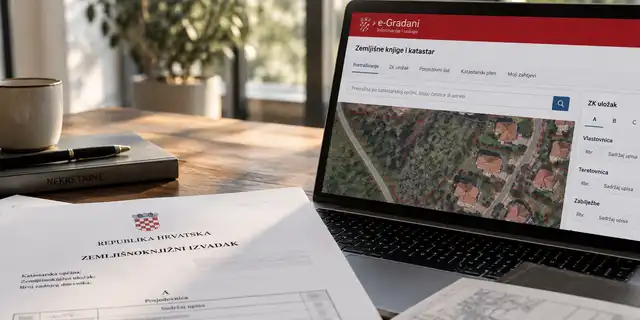
Guides /
Land Registry E-extract: how to request it online
The land registry extract is an official document showing the legal status of a property — who is the owner, whether there are mortgages, easements, annotations of disputes or other encumbrances, and to which cadastral parcel it corresponds. Until recently, one had to go to the land registry department of the court to get it, where waiting was common; ...