T1, T2, and T3 Tourist Zones in Croatia: What Every Investor Needs to Know
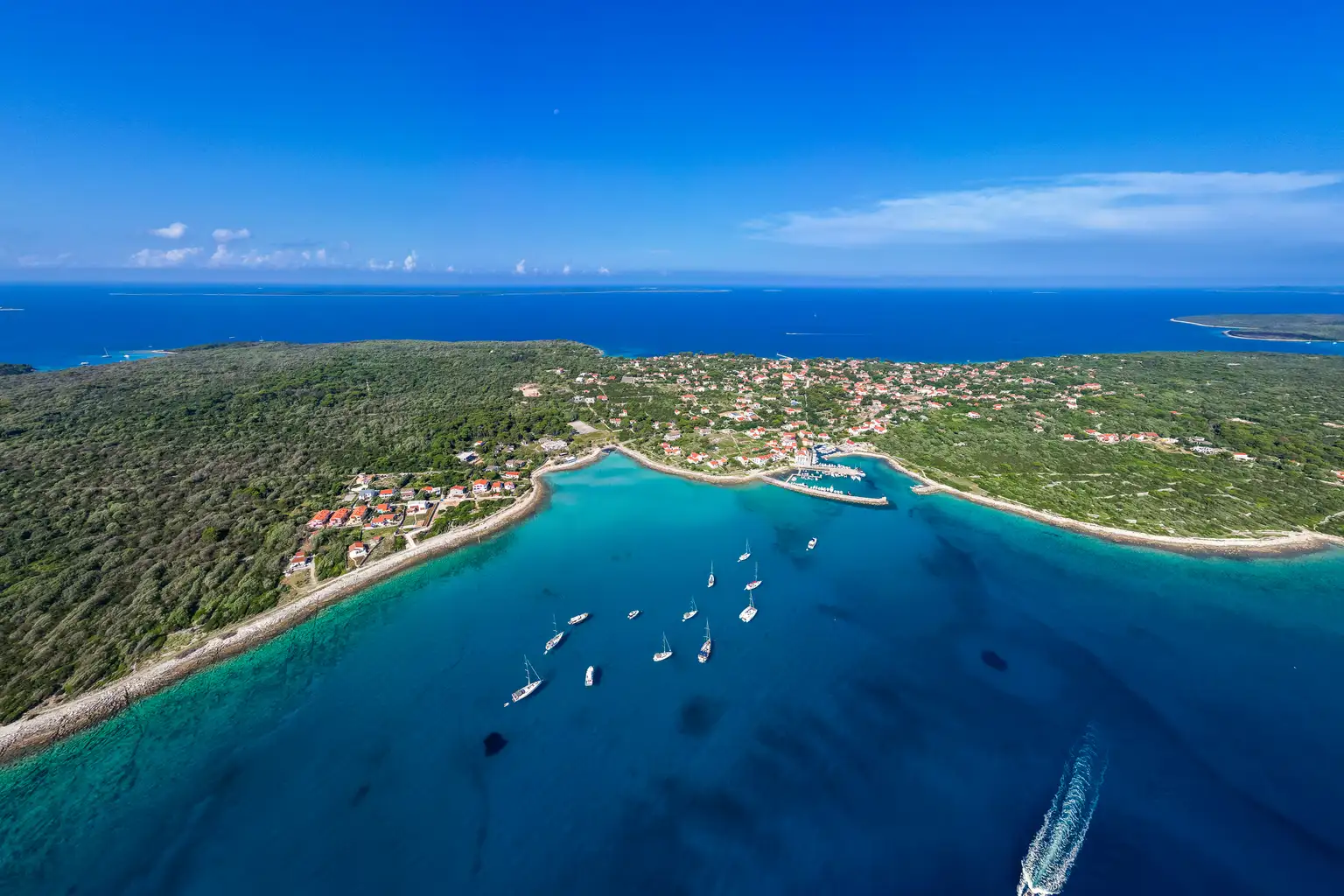
Land on the first row to the sea, a view of the Adriatic, a Mediterranean climate - it sounds perfect. But as soon as you look at the documentation, you encounter a designation that changes everything: tourist zone.
For unsuspecting investors, this designation often goes unnoticed - until it becomes an expensive legal problem. Understanding what the T1, T2, or T3 designation actually means is crucial for any serious investment on the Croatian coast.
T-zones in Croatia are not residential plots.
They fall under the category of economic use - which in practice means you cannot build a house for personal use on them as you would on ordinary construction land.
The law clearly distinguishes these categories, and Croatian tourism policy is becoming increasingly strict towards mixed-use facilities that are intended to operate as tourist accommodations.
The key thesis that applies to every T-zone: it is not enough to be a builder - you must be an operator.
Decoding the designations: T1, T2, and T3 - what does each zone mean?
When we talk about T1, T2, and T3 designations, we are not dealing with mere administrative codes - each defines a completely different business and architectural framework.
Understanding these differences is a prerequisite for any serious investment decision.
T1 Zone - Hotel Purpose
The T1 zone is primarily intended for hotel facilities within or near settlements.
Classic hotel complexes with reception, common facilities, and catering capacities are planned here.
Investors who envision a project with individual villas or scattered apartments functioning independently of the hotel operation will face strict limitations in the T1 zone.
T2 Zone - Tourist Resort Outside Settlements
The T2 zone is, according to most developers, the most interesting category.
It refers to the so-called tourist resort in a separate construction area outside settlements, which combines hotel facilities with villas and apartments.
It is precisely in this zone that the issue of condominium ownership becomes particularly relevant - as the possibility of legally separating individual units directly affects the financial structure of the project.
T3 Zone - Campsite and Motorhome Site
The T3 zone is reserved for campsites and motorhome sites, i.e., facilities based on light or mobile infrastructure.
This zone is particularly prevalent along the Adriatic.
Stationary villas or apartment buildings are not permitted here.
Important innovation from the proposal for the new Spatial Planning Act (2025.): mobile homes in campsites are treated as buildings and count towards the built-up area of the plot.
Crucial: You do not choose the zone.
The land use is determined by the spatial plan (PPUG or GUP) of the local unit.
If you buy a plot in a T3 zone with the intention of building a hotel complex, you will face an insurmountable obstacle without costly plan amendments.
Accommodation Capacity Ratios - What Does the Spatial Plan Say?
The specific ratios between hotel accommodation and accompanying villas/apartments are not determined by a uniform state law, but by local spatial plans (UPU/GUP) of each municipality or city. They vary from location to location.
In the T1 zone, the dominant role is played by the hotel building with accompanying facilities, while in the T2 zone, plans more often allow a combination of hotels, villas, and apartments - but hotel facilities remain key.
Building density coefficient (kig) and utilization coefficient (kis) determine how much you can build in total, and they vary depending on the local plan.
Condominium Ownership in Tourist Zones - Legal Reality 2024/2025.
Condominium ownership is no longer explicitly prohibited, but it must maintain the tourist function of the facility. This means that individual units cannot become classic private apartments.
According to the latest legal proposals, further regulation is expected - especially for high-category projects, with mandatory management by an operator.
Risk: buying an "apartment" in a T-zone without understanding the legal framework can lead to limited ownership rights.
Construction in T-zones
Without a valid UPU, it is not possible to obtain a building permit. The plan defines all key conditions - from building height to infrastructure - and additional costs such as access roads or communal infrastructure can significantly impact the investment.
Investment Conclusion
T-zones are not intended for quick resale or private use.
These are business projects where success is tied to tourist management, occupancy, and operational efficiency.
Do you need expert advice when investing in a tourist zone?
Purchasing or developing real estate in a T-zone requires a clear understanding of all legal and market aspects. If you are considering such an investment or want to check the potential of a specific property, feel free to contact us.
About the author

Regent Zagreb
Currently popular
Tips /
First property: buy now or save for a bigger apartment
Many first-time homebuyers face the same dilemma: buy what they can afford now — most often a smaller apartment or one in a less desirable location — or wait, save for another few years, and immediately buy something larger and better that would suit them longer. Both options have their logic and their proponents, and the decision is important because ...

Tips /
Apartment on an upper floor without an elevator: what to look out for when buying
An apartment without an elevator is common on the market, especially in older buildings, and is regularly more affordable than a comparable apartment with an elevator or on a lower floor. For some buyers, it's an opportunity — savings for an apartment that perfectly suits their lifestyle. For others, it's a drawback that eventually turns into a serious ...

Lifestyles /
Buying a house for a large family: space, location, budget
For a large family, a home is more than just a place to live — it's the stage for the daily life of a multi-member household, a space where everything from morning chaos to shared meals and evening peace unfolds. Buying a house for such a family is, therefore, a more layered decision than buying an apartment for an individual or a couple: it needs to ...
Guides /
Loft and attic apartment: advantages and pitfalls
An attic apartment holds a special charm for many — sloped ceilings, wooden beams, an unusual layout, light entering through roof windows, and often views that lower floors don't have. Before we break down the advantages and pitfalls, it's worth distinguishing three terms often used interchangeably. An attic apartment (potkrovlje) is a living space ...